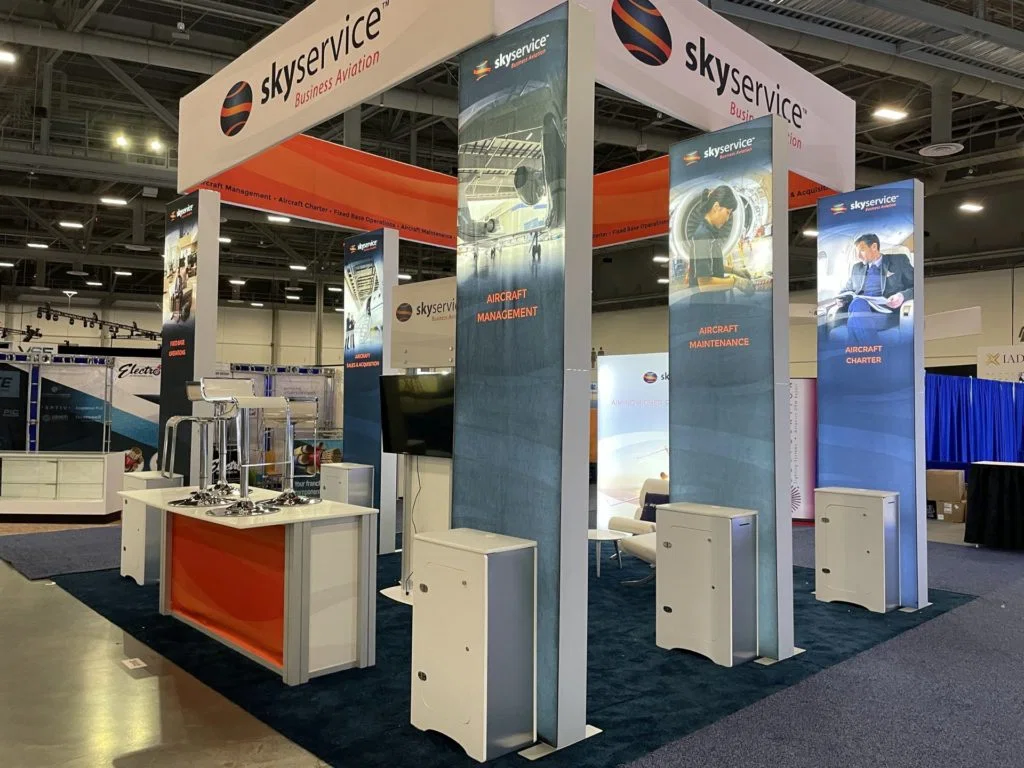
Turnkey trade show services combine booth design, fabrication, freight, installation labor, on-floor supervision, and strike into a single contract. For exhibitors working Phoenix Convention Center's North Building exhibit halls or WestWorld of Scottsdale's Equidome and Monterra spaces, this approach consolidates vendor coordination and reduces the number of phone calls and invoices between the RFP and the final pallet pickup after strike.
Strong coordination starts with turnkey trade show coordination typically covers, who delivers each piece of the workflow, and how exhibitors plan timelines and budgets when working Tempe-area conventions and expos. The project plan should turn venue rules, freight deadlines, labor windows, and exhibitor goals into a workable show schedule. The framework described here applies to both large citywide conventions at Phoenix Convention Center and consumer shows at Arizona State Fairgrounds or WestWorld.
Turnkey service models work best when the same contractor handles booth fabrication, freight coordination, and installation supervision. This reduces handoff errors between the shop that built the booth and the crew that installs it, and it allows the exhibitor to manage one contract instead of three. At Phoenix Convention Center, where load-in windows are tight and freight timing follows strict show-manual deadlines, a unified contract reduces the risk of missed deliveries or incomplete installation.
Why exhibitors choose turnkey coordination for Tempe-area shows
- Phoenix Convention Center freight timing between advance warehouse delivery and direct-to-show material handling, where a single contractor coordinates both the booth shipment and the installation crew's arrival schedule
- WestWorld of Scottsdale's outdoor and climate-controlled event spaces, where a turnkey provider manages booth setup across the Equidome and Monterra venues during multi-day consumer shows
- Omni Tempe Hotel at ASU and Tempe Mission Palms ballroom programs, where turnkey coordination includes scaled-down booth systems, tabletop displays, and hotel-specific AV and power requirements
- Phoenix Sky Harbor International Airport proximity to downtown Tempe venues, allowing exhibitors to route freight through air cargo and coordinate installation labor within a five-mile radius
- Mesa Convention Center's 19,000 square feet of exhibit area and separate meeting space, where turnkey services scale to smaller footprints and fewer installation hours than Phoenix Convention Center programs
What turnkey trade show services include
Turnkey trade show coordination covers booth design and fabrication, freight from the shop or storage facility to the venue, installation labor during load-in, on-floor supervision during the event, and strike labor at the end of the show. At Phoenix Convention Center, where exhibitors occupy island, peninsula, and inline booth spaces across 11 exhibit halls, a turnkey provider manages the full cycle from initial design consultation through the final freight pickup. At WestWorld of Scottsdale, the same contractor coordinates outdoor booth installations, tent systems, and climate-controlled indoor displays during events like the Barrett-Jackson Auto Auction.
The design phase includes footprint planning, structural engineering, graphics production, and AV integration. For a 20×20 island booth at Phoenix Convention Center, the contractor drawings must account for weight limits, rigging points, and electrical load requirements specific to the North Building's infrastructure. For hotel ballroom programs at Omni Tempe Hotel at ASU, which offers 36,000 square feet of meeting space across seven meeting rooms, the booth design scales to fit ceiling heights, carpet pad availability, and house AV systems.
Freight coordination includes crating, carrier selection, advance warehouse delivery, or direct-to-show material handling. Phoenix Convention Center's 20 climate-controlled loading docks serve targeted delivery windows, and exhibitors must coordinate with the official show contractor to schedule dock time and forklift support. At WestWorld, freight arrives at outdoor staging areas and moves to booth locations using flatbed trucks and telehandlers. Turnkey providers manage carrier contracts, pallet counts, weight documentation, and insurance certificates for both venue types.
- Booth fabrication and structural engineering, including frame systems, panel assemblies, rigging attachments, and weight calculations for island and peninsula configurations
- Graphics production and installation, covering large-format prints, fabric systems, backlit panels, and vinyl wraps applied during pre-show prep or at the venue during load-in
- Freight and logistics coordination, including advance warehouse shipments, direct-to-show deliveries, pallet counts, weight limits, and carrier scheduling with official show contractors
- Installation labor and supervision during load-in, managing crew schedules, tool inventories, and jurisdictional requirements for union labor at convention-center venues and Exhibitor Appointed Contractor coordination at hotel programs
Jurisdictional coordination at Tempe-area venues
Jurisdictional rules determine which contractor performs which tasks at different venue types. At Phoenix Convention Center, the official show contractor manages house services including booth cleaning, carpet installation, forklift operations, and freight delivery from the advance warehouse to the booth space. Exhibitor Appointed Contractors handle booth installation, graphics application, AV rigging, and electrical hookups after the official contractor delivers the booth materials to the assigned space. Turnkey providers operate as EACs at Phoenix Convention Center, coordinating directly with the official contractor for freight handoff and dock access.
At hotel ballroom venues like Omni Tempe Hotel at ASU, Tempe Mission Palms, or The Westin Tempe, the house AV and electrical teams manage in-house services, and exhibitors hire EACs for booth assembly and graphics installation. Turnkey contractors coordinate with hotel operations to schedule freight delivery through loading docks, service elevators, and ballroom access doors. At WestWorld of Scottsdale, the venue manages outdoor event infrastructure including tent systems, power distribution, and vehicle access, while turnkey contractors handle booth fabrication, graphics, and installation labor inside the assigned footprint.
Union labor requirements vary by venue. Phoenix Convention Center follows union jurisdiction for specific tasks, and exhibitors confirm labor rules with the official show contractor during the advance planning phase. At Mesa Convention Center, which offers 19,000 square feet of exhibit space and a separate 19,000 square feet of meeting space, exhibitors coordinate labor requirements with venue management and the official show contractor. Hotel ballroom programs typically allow non-union EAC labor for booth installation, but exhibitors verify house rules with each property before signing labor contracts.
- Official show contractor coordination at Phoenix Convention Center, including advance warehouse delivery deadlines, material handling fees, and dock scheduling for booth freight
- Exhibitor Appointed Contractor registration and insurance requirements, covering certificate-of-insurance filings, named-insured endorsements, and liability limits specified in the show manual
- Union labor jurisdiction at Phoenix Convention Center and Arizona State Fairgrounds, where specific tasks require union crew and other tasks allow EAC labor under the show manual's guidelines
Freight planning for Tempe-area events
Freight planning starts with determining whether the booth ships to an advance warehouse or directly to the show floor. Phoenix Convention Center advance warehouse windows open weeks before the event, allowing exhibitors to ship booth materials early and reduce direct-to-show freight costs. The official show contractor receives pallets at the advance warehouse, stores them, and delivers them to the booth space during load-in. Direct-to-show freight arrives during targeted delivery windows on the show floor, and exhibitors pay higher material handling fees for this option.
At WestWorld of Scottsdale, freight timing depends on the event schedule and outdoor staging availability. For multi-day consumer shows, exhibitors ship booth materials to a staging area near the Equidome or Monterra venue, and the turnkey contractor coordinates delivery to the booth location using flatbed trucks or telehandlers. At hotel ballroom programs like those at Omni Tempe Hotel at ASU, freight arrives through hotel loading docks and moves to the ballroom via service elevators, and exhibitors coordinate delivery windows with hotel operations to avoid conflicts with catering deliveries and housekeeping schedules.
Turnkey providers manage carrier selection, pallet counts, weight documentation, and shipping insurance for booth freight. For a 30×30 island booth at Phoenix Convention Center, freight typically includes eight to twelve pallets weighing between 4,000 and 8,000 pounds total. Carriers quote based on pallet count, weight, delivery window, and liftgate requirements. Exhibitors confirm weight limits with the venue before shipping, because Phoenix Convention Center's exhibit halls have floor-load limits that vary by hall and by specific booth location within each hall.
- Advance warehouse deadlines and material handling fees, where Phoenix Convention Center's official show contractor receives booth freight weeks before the event and delivers it to the booth space during load-in
- Direct-to-show freight windows and higher handling fees, typically reserved for last-minute changes, rental equipment, or exhibitors who missed the advance warehouse deadline
- Pallet count and weight calculations, including crate dimensions, forklift access requirements, and floor-load limits for specific halls at Phoenix Convention Center and WestWorld
- Carrier insurance certificates and named-insured endorsements, required by most show manuals to protect the venue, official contractor, and exhibitor from freight damage or loss
Installation and strike labor coordination
Installation labor during load-in includes booth assembly, graphics application, AV rigging, electrical hookups, and final cleaning before the show opens. At Phoenix Convention Center, load-in schedules follow strict windows defined in the show manual, and exhibitors coordinate crew arrival times with the official contractor to ensure booth materials are delivered to the booth space before the installation crew arrives. For a 20×20 island booth, installation typically requires a crew of two to four installers working six to ten hours, depending on booth complexity, AV requirements, and graphics volume.
At WestWorld of Scottsdale, installation crews work outdoors or inside climate-controlled spaces, depending on the event layout. Outdoor installations require weather contingency planning, and turnkey providers schedule installation labor to account for rain delays, high winds, or extreme heat. For hotel ballroom programs at Omni Tempe Hotel at ASU, which offers 36,000 square feet of meeting space, installation crews coordinate with hotel operations to schedule freight delivery, elevator access, and ballroom setup windows that do not conflict with other hotel events.
Strike labor at the end of the show disassembles the booth, packs graphics and AV equipment, and loads pallets onto trucks for return shipping or storage. Strike schedules are typically tighter than load-in schedules, because venues need to clear the floor quickly for the next event. At Phoenix Convention Center, strike begins immediately after the show closes, and exhibitors coordinate with the official contractor to schedule freight pickup from the booth space. Turnkey providers manage strike labor, pallet loading, and carrier scheduling to ensure booth materials leave the venue within the show manual's deadline.
- Load-in crew scheduling and tool inventories, including hand tools, power tools, rigging hardware, and ladders required for booth assembly and graphics installation at Phoenix Convention Center
- Show-floor supervision during the event, where the turnkey contractor's on-site lead monitors booth performance, coordinates last-minute repairs, and manages exhibitor requests for graphics changes or AV adjustments
- Strike labor and freight pickup coordination, including booth disassembly, pallet packing, and carrier scheduling to meet the show manual's freight departure deadlines at Phoenix Convention Center and WestWorld
Cost structure and budget planning for turnkey services
Turnkey service contracts bundle design, fabrication, freight, installation labor, and strike into a single bid. For exhibitors working Phoenix Convention Center, this approach simplifies invoicing and reduces the administrative overhead of managing separate contracts for booth fabrication, freight, and labor. Budgets vary by booth footprint, complexity, AV requirements, and show duration. A 20×20 island booth at Phoenix Convention Center typically costs between $25,000 and $60,000 for a complete turnkey package, including design, fabrication, freight, installation, and strike. Larger island booths, peninsula configurations, and multi-story structures increase costs significantly.
Freight costs depend on pallet count, weight, distance from the fabrication shop to the venue, and delivery timing. Advance warehouse shipments cost less per pound than direct-to-show freight, because the official contractor spreads material handling fees across a longer timeline. At WestWorld of Scottsdale, outdoor event freight may include additional costs for flatbed trucks, telehandlers, and staging-area access fees. Hotel ballroom programs at Omni Tempe Hotel at ASU or Tempe Mission Palms typically involve smaller booth footprints and lower freight costs, but higher labor rates for hotel-specific coordination and service-elevator scheduling.
Exhibitors review turnkey bids to confirm that all costs are itemized, including booth fabrication, graphics production, freight, installation labor, on-floor supervision, strike labor, and return freight or storage. Some turnkey providers include rental components like carpet, furniture, AV equipment, and lighting in the bid, while others coordinate rental orders through separate vendors. At Phoenix Convention Center, where the official show contractor provides house services like carpet and cleaning, exhibitors confirm which items are included in the turnkey bid and which items must be ordered separately through the show contractor.
- Booth fabrication and graphics production costs, covering materials, labor, structural engineering, and graphics printing for island, peninsula, and inline booth configurations
- Freight and logistics costs, including pallet counts, weight-based carrier quotes, advance warehouse fees, direct-to-show material handling, and insurance certificates
- Installation and strike labor costs, based on crew size, hourly rates, load-in duration, and jurisdictional requirements for union labor at Phoenix Convention Center and non-union labor at hotel ballroom programs
- On-floor supervision and contingency budgets, covering the turnkey contractor's on-site lead during the event, last-minute repairs, graphics changes, and AV adjustments requested by the exhibitor during the show
Turnkey Trade Show Services FAQ
What is the difference between turnkey trade show services and hiring separate vendors for booth fabrication, freight, and labor?
Turnkey services combine booth design, fabrication, freight coordination, installation labor, and strike into a single contract managed by one contractor. Separate vendor coordination requires the exhibitor to manage individual contracts for booth fabrication, freight carriers, and installation crews, which increases administrative overhead and the risk of handoff errors between vendors. At Phoenix Convention Center, a turnkey provider coordinates all deliverables under one contract, reducing the number of invoices and simplifying communication during load-in and strike.
How do exhibitors coordinate turnkey services with the official show contractor at Phoenix Convention Center?
The turnkey contractor registers as an Exhibitor Appointed Contractor with the official show contractor and coordinates freight delivery, material handling, and dock access. The official contractor manages house services including booth cleaning, carpet installation, and forklift operations, while the EAC handles booth installation, graphics application, and AV rigging. Exhibitors confirm freight deadlines, material handling fees, and dock scheduling with the official contractor during the advance planning phase, and the turnkey provider coordinates directly with the official contractor for booth material delivery to the assigned space.
What are the typical freight costs for a 20×20 island booth shipping to Phoenix Convention Center?
Freight costs depend on pallet count, weight, carrier selection, and delivery timing. A 20×20 island booth typically ships on four to eight pallets weighing between 2,000 and 5,000 pounds total. Advance warehouse shipments cost less per pound than direct-to-show freight, and carriers quote based on distance from the fabrication shop to Phoenix Convention Center. Material handling fees charged by the official show contractor add to the total freight cost, and exhibitors confirm these fees in the show manual before finalizing the freight contract.
Can turnkey services be used for hotel ballroom programs at Omni Tempe Hotel at ASU or Tempe Mission Palms?
Yes, turnkey contractors scale booth systems, graphics, and installation labor to fit hotel ballroom programs. Omni Tempe Hotel at ASU offers 36,000 square feet of meeting space across seven meeting rooms, and turnkey providers coordinate booth delivery through hotel loading docks and service elevators. Hotel ballroom programs typically involve smaller booth footprints, lower freight costs, and fewer installation hours than Phoenix Convention Center programs, but exhibitors must coordinate delivery windows with hotel operations to avoid conflicts with catering and housekeeping schedules.
How far in advance should exhibitors book turnkey services for a Phoenix Convention Center event?
Most exhibitors book turnkey services six to twelve weeks before the event to allow time for booth design, fabrication, graphics production, and freight coordination. Rush timelines are possible, but they reduce design options and increase freight costs. At Phoenix Convention Center, where advance warehouse deadlines open weeks before the event, early booking allows the turnkey contractor to ship booth materials to the advance warehouse and reduce direct-to-show freight fees. Hotel ballroom programs at Omni Tempe Hotel at ASU or Tempe Mission Palms typically require shorter lead times, but early booking improves vendor availability and reduces last-minute coordination stress.