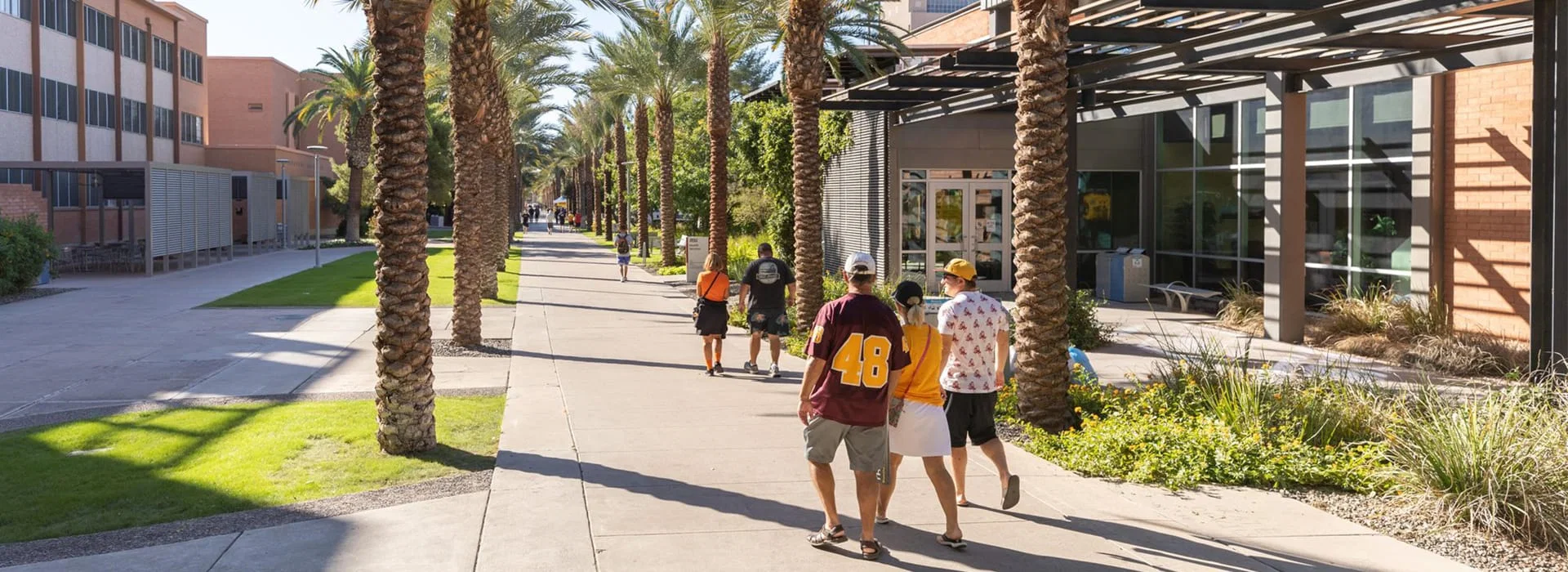
This page focuses on trade show and event planning in the ASU District of Tempe, a compact geography bounded by university venues, hotel conference programs, and the adjacent downtown Tempe meeting cluster. The district draws conference planners, sponsor activation teams, and exhibitors working academic conferences, technology symposia, healthcare innovation events, and corporate programs tied to Arizona State University partnerships or proximity.
The ASU District is not a city or neighborhood in the traditional sense but a planning zone defined by Arizona State University's campus footprint and the hotel, venue, and hospitality infrastructure clustered around it. Omni Tempe Hotel at ASU anchors the district's formal conference capacity with 330 rooms and seven meeting rooms totaling 36,000 square feet. Tempe Mission Palms, The Westin Tempe, and the campus's own event venues add layered options for breakout sessions, receptions, poster halls, and sponsor lounges.
The project plan should turn venue rules, freight deadlines, labor windows, and exhibitor goals into a workable show schedule. The page outlines venue realities, freight considerations for campus-adjacent events, ASU facility workflows, and how the district connects to the wider Phoenix Convention Center corridor, WestWorld of Scottsdale event programs, and Mesa Convention Center. Teams exhibiting at ASU District venues will coordinate hotel blocks, freight timing through surface-street constraints, and service jurisdictions that often differ from citywide convention-center workflows.
ASU District Event Planning Realities
- Omni Tempe Hotel at ASU with 36,000 square feet of meeting space and 330 rooms sits directly on campus, while Tempe Mission Palms and The Westin Tempe provide downtown-adjacent overflow for conference lodging and breakout sessions within a mile
- ASU 365 Community Union at Mountain America Stadium and campus event spaces like Old Main offer non-traditional venue options for sponsor activations, poster sessions, and reception programs tied to academic or industry conferences
- Surface-street freight through Mill Avenue, University Drive, and Apache Boulevard requires off-peak timing windows to avoid campus pedestrian traffic, game-day closures, and the predictable congestion between 7:30–9:00 AM and 4:00–6:30 PM on weekdays
- Phoenix Sky Harbor International Airport sits five miles northwest via University Drive and Sky Harbor Boulevard, making the ASU District one of the closest meeting clusters to the airport in the wider Phoenix metro
- Conference planners working ASU District venues often coordinate overflow or companion events at Phoenix Convention Center (twelve miles west via I-10), Mesa Convention Center (nine miles east via US-60), or Scottsdale's Talking Stick Resort (seventeen miles northeast via Loop 101)
ASU District Venue Landscape
Omni Tempe Hotel at ASU is the district's anchor conference venue. According to Tempe Tourism's 2025 Meeting Planner Guide, the property offers 330 guest rooms, seven meeting rooms, and 36,000 total square feet of meeting space. The hotel sits on the ASU campus footprint, which simplifies logistics for academic conferences, sponsor activations during university events, and corporate programs partnering with ASU research initiatives. House services at the Omni typically cover audio-visual, catering, and basic setup, while exhibitor-appointed contractors handle custom booth builds, specialty graphics, and technical installations that fall outside the hotel's standard package.
Tempe Mission Palms and The Westin Tempe sit within a mile of the campus core and serve as overflow lodging, breakout-session venues, and reception sites for conferences anchored at the Omni or campus facilities. The two hotels add ballroom, boardroom, and outdoor event capacity that complements ASU's academic-style spaces. Planners working multi-day conferences often use the Omni for general sessions and plenary programming, then route breakout tracks and poster sessions to the Mission Palms or Westin to distribute attendee flow and avoid single-venue congestion.
ASU 365 Community Union at Mountain America Stadium and campus venues like Old Main, Arizona Heritage Center, and Tempe Center for the Arts offer non-hotel event settings. These spaces support sponsor activations, reception programs, and networking events that benefit from campus architecture or outdoor settings. Facility workflows at university-owned venues differ from hotel patterns. Planners must verify insurance requirements, alcohol policies, security protocols, and whether the university requires specific approved vendors for catering, AV, or event staffing.
- Omni Tempe Hotel at ASU: 330 rooms, seven meeting rooms, 36,000 square feet of meeting space, on-campus location simplifies academic conference logistics and sponsor coordination
- Tempe Mission Palms and The Westin Tempe: downtown-adjacent overflow lodging and breakout capacity within one mile of campus core
- ASU 365 Community Union, Old Main, Arizona Heritage Center: university-controlled event spaces requiring separate facility agreements, insurance verification, and approved-vendor compliance
- Campus venues require advance review of alcohol permits, security staffing, parking allocations, and noise ordinances that differ from standard hotel-conference workflows
Freight and Load-In for ASU District Events
Freight delivery to ASU District venues relies on surface streets rather than freeway-direct loading docks. Mill Avenue, University Drive, and Apache Boulevard form the primary access corridors. These routes experience predictable congestion during weekday morning arrivals (7:30–9:00 AM) and late-afternoon peaks (4:00–6:30 PM) driven by student commutes, faculty schedules, and campus event activity. Freight carriers moving exhibit materials to the Omni or campus venues should plan deliveries outside these windows to avoid delays and maintain tight advance-receiving schedules.
Campus event days and ASU football games create temporary road closures and parking restrictions that complicate freight timing. Game-day closures around Mountain America Stadium can block surface-street access along portions of University Drive, Apache Boulevard, and Rio Salado Parkway. Planners scheduling conferences or sponsor activations during fall Saturdays must verify campus event calendars, coordinate with ASU Parking and Transit Services, and secure load-in windows that precede venue lockdowns or crowd arrivals.
Dock access at the Omni Tempe Hotel at ASU follows standard hotel-loading-dock protocols, but space is limited compared to citywide convention centers. Large exhibits requiring multiple truck deliveries, heavy equipment, or extended dock time should coordinate advance receiving with the hotel's event-services team to avoid conflicts with concurrent banquet deliveries, housekeeping shipments, or other conference programs running the same weekend. Campus venues like ASU 365 Community Union may require alternate loading zones, hand-cart transfers, or elevator coordination that add time and labor to move-in schedules.
- Mill Avenue, University Drive, and Apache Boulevard surface-street access; avoid weekday 7:30–9:00 AM and 4:00–6:30 PM windows to minimize campus-traffic delays
- ASU football game days and campus events create temporary road closures, parking restrictions, and venue access blocks; verify ASU event calendar before finalizing load-in dates
- Omni Tempe Hotel at ASU loading dock: limited dock space requires advance-receiving coordination for multi-truck deliveries or heavy equipment to avoid conflicts with concurrent hotel operations
- Campus venues like ASU 365 Community Union may require hand-cart transfers, elevator coordination, or alternate loading zones that extend move-in timelines compared to hotel-dock workflows
Hotel Blocks and Attendee Lodging
Tempe Tourism's 2025 Meeting Planner Guide reports more than 7,100 hotel rooms across Tempe, with the ASU District and downtown Tempe forming the highest concentration. Omni Tempe Hotel at ASU typically serves as the primary conference hotel for events held on-site, but its 330-room inventory can fill quickly during academic conference seasons, ASU homecoming weekends, or overlapping corporate programs. Planners should secure room blocks six to nine months in advance for events during peak university calendars (September–November and February–April).
Overflow blocks at Tempe Mission Palms, The Westin Tempe, DoubleTree by Hilton Phoenix Tempe, Embassy Suites by Hilton Phoenix Tempe, and Canopy by Hilton Tempe Downtown extend lodging capacity within one to two miles of the campus core. Shuttle coordination between overflow hotels and ASU District event venues becomes necessary when walking distances exceed comfort thresholds or when evening receptions require attendees to return to hotels after dark. Shuttle routes should account for Mill Avenue pedestrian traffic, downtown Tempe restaurant density, and campus-security checkpoints that slow vehicle movement during high-activity periods.
Phoenix Sky Harbor International Airport sits five miles northwest of the ASU District via University Drive and Sky Harbor Boulevard. Most attendees flying into the metro for ASU District conferences will take rideshare, rental cars, or hotel shuttles from the airport. Off-peak drive time runs twelve to eighteen minutes, while peak-hour traffic (7:00–9:30 AM inbound, 4:00–7:00 PM outbound) can extend the run to twenty-five or thirty minutes. Planners coordinating VIP arrivals or tight program schedules should build arrival buffers to account for airport exit congestion and surface-street timing.
- Omni Tempe Hotel at ASU: 330 rooms; book six to nine months in advance for events during peak academic conference seasons (September–November, February–April)
- Overflow blocks at Tempe Mission Palms, The Westin Tempe, DoubleTree by Hilton Phoenix Tempe, Embassy Suites, and Canopy by Hilton within one to two miles of campus
- Phoenix Sky Harbor International Airport five miles northwest; off-peak drive time twelve to eighteen minutes, peak-hour runs stretch to twenty-five or thirty minutes
- Shuttle coordination required for overflow hotels; account for Mill Avenue pedestrian density, downtown restaurant traffic, and campus-security checkpoints that slow vehicle movement
Service Jurisdictions and Contractor Workflows
ASU District event venues operate under different jurisdictional models depending on whether the venue is a hotel, a university facility, or a civic space. At the Omni Tempe Hotel at ASU, house services typically cover standard AV packages, catering, basic furniture, and event staffing. Exhibitor-appointed contractors handle custom booth fabrication, specialty lighting, rigging that exceeds hotel-ceiling capacity, and technical installations like interactive displays or product demonstration setups. The hotel's event-services agreement will specify which services fall under the house package and which require third-party vendors to submit certificates of insurance, facility access requests, and load-in timelines.
University-owned venues like ASU 365 Community Union, Old Main, and Arizona Heritage Center require separate facility-use agreements that outline approved-vendor lists, insurance minimums, security staffing, and alcohol permitting. Some ASU facilities mandate specific catering vendors or AV providers, while others allow exhibitor-appointed contractors but require advance approval and proof of compliance with university risk-management standards. Planners should confirm vendor restrictions, certificate-of-insurance requirements, and facility-access protocols at least sixty days before the event to avoid last-minute approvals or vendor substitutions.
Labor jurisdiction for ASU District events generally does not involve the same union protocols seen at Phoenix Convention Center or other IATSE-covered facilities. Hotel events at the Omni, Mission Palms, or Westin typically follow non-union labor structures, though exhibitor-appointed contractors may bring union crews from their own shops depending on the contractor's business model. Campus venues fall under university employment policies, which may require background checks, ASU-issued credentials, or facility-specific safety training for third-party labor working inside academic buildings.
- Omni Tempe Hotel at ASU: house services cover standard AV, catering, furniture; exhibitor-appointed contractors handle custom builds, specialty rigging, technical installations outside hotel package
- University-owned venues (ASU 365 Community Union, Old Main, Arizona Heritage Center): require separate facility-use agreements, approved-vendor verification, certificate-of-insurance compliance, and advance security coordination
- ASU facilities may mandate specific catering or AV vendors; confirm vendor restrictions and insurance minimums at least sixty days before the event
- Labor jurisdiction typically non-union at hotel venues; campus facilities follow university employment policies including background checks, ASU credentials, and facility-specific safety training for third-party labor
Connecting ASU District to the Wider Phoenix Event Market
The ASU District operates as a submarket within the wider Phoenix-Scottsdale-Mesa-Tempe event corridor. Planners working conferences or trade shows in the ASU District often coordinate companion events, overflow sessions, or sequential programs at Phoenix Convention Center (twelve miles west via I-10), Mesa Convention Center (nine miles east via US-60), WestWorld of Scottsdale (seventeen miles northeast via Loop 101), or Talking Stick Resort in Scottsdale. Understanding drive times, freeway access, and venue-to-venue shuttle logistics becomes critical when a single conference spans multiple locations.
Phoenix Convention Center sits twelve miles west of the ASU District via I-10. Off-peak drive time runs fifteen to twenty minutes, while morning and evening rush periods (6:30–9:30 AM and 3:30–7:00 PM) can extend the run to thirty-five or forty-five minutes depending on freeway volume. Conferences that split programming between the ASU District and Phoenix Convention Center must account for attendee travel time, shuttle frequency, and the likelihood that some attendees will skip sessions if inter-venue transfers require more than thirty minutes each direction.
Mesa Convention Center sits nine miles east via US-60. The facility offers 19,000 square feet of exhibit area and an additional 19,000 square feet of meeting space, making it a viable overflow or companion venue for conferences anchored in the ASU District. WestWorld of Scottsdale and Talking Stick Resort serve as premium-event settings for sponsor activations, VIP receptions, or outdoor programs that complement ASU District conference content. Drive time to WestWorld runs twenty-five to thirty-five minutes off-peak via Loop 101, stretching to forty-five or fifty minutes during peak travel windows.
- Phoenix Convention Center twelve miles west via I-10; off-peak drive fifteen to twenty minutes, peak-hour runs thirty-five to forty-five minutes; shuttle logistics required for split-venue conferences
- Mesa Convention Center nine miles east via US-60; 19,000 square feet of exhibit area and 19,000 square feet of meeting space supports overflow or companion-event programming
- WestWorld of Scottsdale seventeen miles northeast via Loop 101; premium outdoor event campus for sponsor activations and VIP receptions; drive time twenty-five to thirty-five minutes off-peak
- Talking Stick Resort in Scottsdale offers conference hospitality and ballroom capacity; planners coordinate ASU District academic sessions with Scottsdale networking or sponsor programs
ASU District Event Planning Questions
Which venue in the ASU District offers the largest formal meeting capacity?
Omni Tempe Hotel at ASU is the district's anchor conference venue, offering 330 guest rooms, seven meeting rooms, and 36,000 square feet of total meeting space. The hotel sits directly on the ASU campus, simplifying logistics for academic conferences, sponsor activations, and corporate programs tied to university partnerships.
How do freight deliveries to ASU District venues differ from Phoenix Convention Center workflows?
ASU District venues rely on surface-street access via Mill Avenue, University Drive, and Apache Boulevard rather than freeway-direct loading docks. Deliveries should avoid weekday peak windows (7:30–9:00 AM and 4:00–6:30 PM) and verify campus event calendars to sidestep game-day road closures. Dock space at the Omni is limited compared to Phoenix Convention Center, requiring advance-receiving coordination for multi-truck deliveries.
Do ASU-owned venues like ASU 365 Community Union require approved-vendor lists or specific insurance?
Yes. University-owned venues require separate facility-use agreements that outline approved-vendor lists, certificate-of-insurance minimums, security staffing, and alcohol permitting. Some facilities mandate specific catering or AV providers, while others allow exhibitor-appointed contractors but require advance approval and proof of compliance with ASU risk-management standards. Confirm vendor restrictions at least sixty days before the event.
How far is Phoenix Sky Harbor International Airport from ASU District event venues?
Phoenix Sky Harbor International Airport sits five miles northwest of the ASU District via University Drive and Sky Harbor Boulevard. Off-peak drive time runs twelve to eighteen minutes, while peak-hour traffic (7:00–9:30 AM inbound, 4:00–7:00 PM outbound) can extend the run to twenty-five or thirty minutes. Most conference attendees use rideshare, rental cars, or hotel shuttles for airport transfers.
What are the primary overflow hotel options when Omni Tempe Hotel at ASU is fully booked?
Tempe Mission Palms, The Westin Tempe, DoubleTree by Hilton Phoenix Tempe, Embassy Suites by Hilton Phoenix Tempe, and Canopy by Hilton Tempe Downtown provide overflow lodging and breakout-session capacity within one to two miles of the campus core. Shuttle coordination becomes necessary when walking distances exceed comfort thresholds or when evening receptions require attendees to return to hotels after dark, accounting for Mill Avenue pedestrian traffic and campus-security checkpoints.