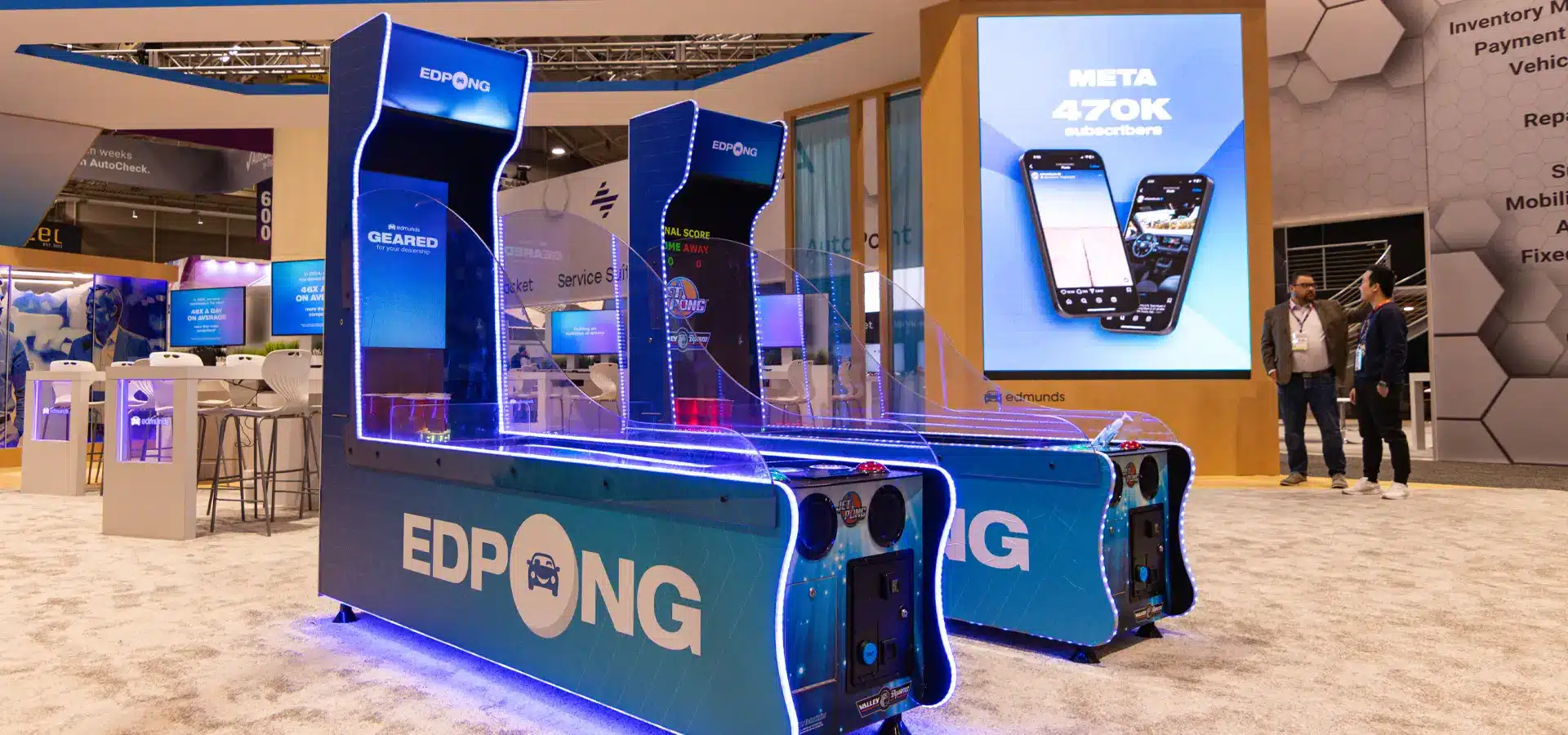
A product launch converts a reveal date and a demo into an event that educates buyers, generates press coverage, and supports sales conversations. Planning begins with the venue footprint and the launch format: whether the event runs as a standalone reveal at a hotel ballroom, a booth experience embedded in a trade show at Phoenix Convention Center or WestWorld of Scottsdale, or a regional roadshow stop coordinating freight across I-10 and US 60 into downtown Phoenix or the ASU District. The reveal date dictates the freight deadline, the demo requirements drive the booth layout and electrical plan, and the attendee list frames the hospitality sequence.
Phoenix and Tempe host product launches across semiconductors, software, aerospace and defense, biosciences, healthcare innovation, and advanced manufacturing sectors identified by the Greater Phoenix Economic Council. Downtown Tempe venues like the Omni Tempe Hotel at ASU with 36,000 square feet of meeting space and Tempe Mission Palms support smaller launches for university-adjacent technology companies, while Phoenix Convention Center and WestWorld anchor larger regional reveals that pull attendees from across the Southwest. Freight routes in from Sky Harbor International Airport five miles from downtown Tempe, with drayage and install windows timed to the venue's load-in calendar and the official show contractor's advance-order cutoff.
Strong planning covers product-launch planning for Tempe and Greater Phoenix events. The project plan should turn venue rules, freight deadlines, labor windows, and exhibitor goals into a workable show schedule. Final service questions should be confirmed with the venue, show organizer, and official contractor before budgets are approved. All venue facts, hotel inventory, freeway routes, and planning sequences below reference official sources and public venue manuals.
Product Launch Planning for Phoenix and Tempe Events
- Phoenix Convention Center, WestWorld of Scottsdale, Omni Tempe Hotel at ASU, and Tempe Mission Palms as anchor venues for product reveals, demos, and launch-day attendee flow
- I-10 and US 60 freight timing from Sky Harbor International Airport into downtown Phoenix and the ASU District, with drayage deadlines tied to venue load-in schedules and official show contractor cutoffs
- Demo logistics including electrical service, AV integration, network connectivity, and product handling from crate arrival through reveal sequence and post-event strike
- Attendee flow planning across registration, demo stations, hospitality areas, and breakout sessions, with square-footage allocation tied to expected turnout and venue fire-code limits
- Semiconductor, software, aerospace, bioscience, and healthcare-innovation launch formats, each with sector-specific compliance requirements, demo constraints, and press-coordination protocols
Venue Selection and Footprint Planning
Phoenix Convention Center offers 635,000 square feet of exhibit and meeting space across 11 exhibit halls, 56 meeting rooms, and 20 climate-controlled loading docks. Large-scale product launches that require breakout sessions, demo theaters, and press areas fit within the North Building halls, with electrical service coordinated through the official show contractor and rigging requests submitted at least 45 days before load-in. WestWorld of Scottsdale provides indoor and outdoor campus flexibility for automotive, aerospace, and outdoor-gear launches that benefit from open-air demonstration areas and vehicle access. Downtown Tempe hotel ballrooms at the Omni Tempe Hotel at ASU and Tempe Mission Palms support smaller launches for university-adjacent technology firms and software companies targeting regional buyers.
Footprint planning begins with the demo requirements and the attendee count. A seated demo theater for 150 attendees requires approximately 1,500 square feet plus staging and AV run space, while a hands-on product station layout for 50 simultaneous users demands 2,000 to 3,000 square feet depending on product size and safety clearances. Registration, hospitality, and press areas add another 1,000 to 2,000 square feet. Venue manuals at Phoenix Convention Center and WestWorld specify aisle width minimums, fire-code occupancy limits, and rigging-point availability. Hotel ballrooms in downtown Tempe typically cap at 10,000 to 15,000 square feet for combined meeting and event space, which constrains launch formats but simplifies permitting and load-in coordination.
Venue choice also determines jurisdictional questions. Phoenix Convention Center events follow the venue's official show contractor for general services, with Exhibitor Appointed Contractors allowed under specific guidelines. WestWorld operates with a mix of house services and preferred vendors depending on event scale. Hotel ballrooms at the Omni Tempe Hotel at ASU and Tempe Mission Palms handle setup through house AV and catering teams, with third-party booth vendors coordinating install timing through the hotel's event-services manager. Planners confirm jurisdiction, service deadlines, and contact protocols before signing booth or demo contracts.
- Phoenix Convention Center North Building with 635,000 square feet supports demo theaters, breakout sessions, press areas, and full-scale reveal events for aerospace, semiconductor, and healthcare-innovation launches
- WestWorld of Scottsdale campus layout accommodates automotive and outdoor-gear demos requiring vehicle access, open-air stations, and large-format product displays
- Omni Tempe Hotel at ASU and Tempe Mission Palms ballrooms fit smaller technology and software launches with combined meeting and demo footprints under 15,000 square feet and simplified hotel-based service coordination
- Footprint allocation at 10 square feet per attendee for standing demos, 15 square feet per attendee for seated presentations, plus registration and hospitality areas adding 20 to 30 percent to total square footage
Freight and Drayage Coordination
Product launches ship demo units, AV cases, staging materials, and hospitality supplies along I-10 westbound from Sky Harbor International Airport into downtown Phoenix or eastbound along US 60 into the ASU District and downtown Tempe. Drayage companies coordinate dock appointments at Phoenix Convention Center's 20 climate-controlled loading docks or deliver directly to hotel loading areas at the Omni Tempe Hotel at ASU and Tempe Mission Palms. Advance shipments arrive three to five days before the reveal date to allow crate unpacking, demo setup, AV integration, and rehearsal time. Shipping direct to the venue warehouse requires confirming the official show contractor's receiving calendar and labeling requirements. Shipping to an off-site warehouse for pre-event staging adds a second move-in window but provides flexibility for last-minute changes.
Demo units requiring climate control, security, or special handling get flagged during freight planning. Semiconductor wafer samples, bioscience prototypes, and medical-device units often carry temperature, humidity, or chain-of-custody requirements that dictate crate specifications and dock-to-floor timing. Phoenix Convention Center and WestWorld offer secure receiving and climate-controlled storage for advance shipments. Hotel ballrooms at the Omni Tempe Hotel at ASU and Tempe Mission Palms typically lack dedicated warehousing, so planners coordinate same-day or next-day delivery timed to the hotel's event-services schedule.
Outbound freight after the launch follows the same drayage routes in reverse. Demo units return to company warehouses, AV cases go back to rental vendors, and staging materials get consolidated for the next roadshow stop. Strike timing at Phoenix Convention Center ties to the venue's published move-out windows and the official show contractor's labor availability. Hotel ballrooms in downtown Tempe allow more flexible strike schedules but still require coordination with house staff and loading-dock access.
- I-10 westbound from Sky Harbor into downtown Phoenix or US 60 eastbound into downtown Tempe and the ASU District, with drayage timing outside peak windows of 6:30 to 9:30 AM and 3:30 to 7:00 PM
- Phoenix Convention Center advance receiving three to five days before reveal date, with labeled shipments directed to the official show contractor's warehouse and dock appointments confirmed in writing
- Climate-controlled handling for semiconductor samples, bioscience prototypes, and medical-device units, with temperature and humidity logs required from dock arrival through demo setup and post-event strike
- Hotel ballroom deliveries at Omni Tempe Hotel at ASU and Tempe Mission Palms coordinated same-day or next-day through the hotel's event-services manager, with no long-term warehousing available on-site
Demo Setup and Technical Integration
Demo setup begins with electrical service, network connectivity, and AV integration. Product launches at Phoenix Convention Center order electrical service through the official show contractor, specifying amperage, circuit count, and distribution-box placement on floor plans submitted at least 30 days before load-in. WestWorld of Scottsdale provides outdoor power access and generator hookup for open-air demos, with electrical permits and fire-marshal approval required for high-amperage or fuel-storage configurations. Hotel ballrooms at the Omni Tempe Hotel at ASU and Tempe Mission Palms include house power and basic AV packages, with third-party equipment coordinated through the hotel's preferred vendor list.
Network connectivity for software demos, live streaming, and remote participation requires dedicated bandwidth and backup internet lines. Phoenix Convention Center offers wired and wireless connectivity through the venue's technology partner, with service orders placed alongside booth electrical and rigging requests. WestWorld coordinates cellular and satellite backup for outdoor campus events where venue WiFi coverage is limited. Hotel ballrooms in downtown Tempe provide house WiFi but planners often bring dedicated hotspots or LTE modems for mission-critical presentations.
Rehearsal time gets scheduled between setup completion and doors-open for attendees. A full rehearsal includes demo script walk-throughs, AV cue checks, product handling sequences, and Q&A simulation. Phoenix Convention Center and WestWorld allow rehearsals during the afternoon or evening before the reveal date, with labor and security costs added to the event budget. Hotel ballrooms at the Omni Tempe Hotel at ASU and Tempe Mission Palms schedule rehearsals based on ballroom availability and prior-event strike timing.
- Electrical service orders at Phoenix Convention Center submitted 30 days before load-in, with amperage, circuit count, and distribution-box placement marked on CAD floor plans
- Network connectivity through the venue's technology partner at Phoenix Convention Center or dedicated LTE backup at WestWorld and downtown Tempe hotel ballrooms
- Rehearsal schedules coordinated the afternoon or evening before the reveal date, with demo script walk-throughs, AV cue checks, and Q&A simulation timed to labor windows
- AV integration including projection, sound reinforcement, confidence monitors, and recording feeds, with equipment rental coordinated through the official show contractor or hotel-preferred vendors
Attendee Flow and Hospitality Coordination
Attendee flow planning starts with registration, moves through demo stations and breakout sessions, and ends at hospitality areas or exit points. Registration desks at Phoenix Convention Center sit near hall entrances, with badge printing, list verification, and VIP check-in handled by event staff or the official show contractor's registration team. WestWorld campus layouts require wayfinding signage from parking areas to demo zones, with outdoor pathways and tent structures supporting event flow. Hotel ballrooms at the Omni Tempe Hotel at ASU and Tempe Mission Palms fit registration, demo, and hospitality areas within a single continuous space, simplifying attendee movement but requiring careful zone separation.
Demo stations get laid out to minimize bottlenecks and maximize throughput. A hands-on product demo with a five-minute cycle time and three simultaneous stations supports roughly 36 attendees per hour, while a seated presentation for 150 attendees runs every 45 minutes to one hour. Planners allocate square footage, station count, and staff coverage based on expected turnout and the demo format. Phoenix Convention Center and WestWorld layouts allow multiple concurrent demo zones with separate entry and exit flows. Hotel ballrooms in downtown Tempe require single-flow configurations that sequence registration, demo, and hospitality in a linear path.
Hospitality areas include coffee stations, light food service, networking zones, and VIP lounges. Phoenix Convention Center events coordinate catering through the venue's exclusive food-and-beverage provider, with menu options, service timing, and staffing confirmed at least 30 days before the reveal date. WestWorld allows outside catering with advance approval and insurance documentation. Hotel ballrooms at the Omni Tempe Hotel at ASU and Tempe Mission Palms include house catering as part of the ballroom rental, with menus and pricing negotiated through the hotel's event-services team.
- Registration desks near hall entrances at Phoenix Convention Center or integrated within hotel ballroom layouts at the Omni Tempe Hotel at ASU and Tempe Mission Palms
- Demo station layouts calculated at five-minute cycle times for hands-on units or 45-minute intervals for seated presentations, with throughput matched to expected attendee count
- Wayfinding signage and outdoor pathways at WestWorld campus events, with tent structures and climate control for Arizona summer launches
- Hospitality coordination through the venue's exclusive food-and-beverage provider at Phoenix Convention Center or house catering at downtown Tempe hotel ballrooms, with menus and timing confirmed 30 days before the reveal date
Sector-Specific Launch Formats and Compliance
Semiconductor and software launches in the Phoenix metro align with the region's technology and data-center sectors identified by the Greater Phoenix Economic Council. These launches often include live coding demonstrations, chip-architecture walkthroughs, and cloud-integration demos requiring secure network connectivity and real-time data feeds. Phoenix Convention Center and the Omni Tempe Hotel at ASU support these formats with dedicated bandwidth and on-site IT support. Compliance questions center on data privacy, export-control restrictions for certain chip technologies, and intellectual-property protection during public demonstrations.
Aerospace and defense launches follow stricter access-control and documentation protocols. Attendee lists get vetted against export-compliance databases, demo areas require badge checks and escort policies, and photography restrictions apply to prototype displays. WestWorld of Scottsdale and Phoenix Convention Center provide secure zones with controlled entry points and perimeter barriers. Defense contractors coordinate with venue security teams and, in some cases, bring private security for classified or ITAR-controlled product demonstrations.
Bioscience and healthcare-innovation launches introduce regulatory and safety considerations. Medical-device demos at Phoenix Convention Center or hotel ballrooms in downtown Tempe may require FDA compliance documentation, patient-data anonymization, and sterile handling protocols. Pharmaceutical product reveals often coordinate with press embargoes and investor-disclosure schedules. Planners confirm venue insurance coverage, safety protocols, and emergency-response procedures before finalizing booth layouts and demo plans.
- Semiconductor and software launches requiring secure network connectivity, real-time data feeds, and export-control compliance for chip-architecture demonstrations
- Aerospace and defense product reveals with badge checks, escort policies, photography restrictions, and ITAR-controlled demo areas at WestWorld and Phoenix Convention Center
- Bioscience and healthcare-innovation launches with FDA compliance documentation, patient-data anonymization, and sterile handling protocols at Phoenix Convention Center and downtown Tempe hotel ballrooms
- Press coordination including embargo schedules, investor-disclosure timing, and media-area access aligned to the reveal-date sequence and attendee-flow plan
Product Launch Planning FAQ
How far in advance should freight ship to Phoenix Convention Center for a product launch?
Freight ships three to five days before the reveal date to allow crate unpacking, demo setup, AV integration, and rehearsal time. Phoenix Convention Center advance receiving requires labeled shipments directed to the official show contractor's warehouse, with dock appointments confirmed in writing at least two weeks before the first delivery.
Can I bring my own AV vendor to a hotel ballroom launch at the Omni Tempe Hotel at ASU?
Hotel ballrooms at the Omni Tempe Hotel at ASU and Tempe Mission Palms include house AV packages as part of the rental. Third-party equipment and vendors require coordination through the hotel's event-services manager and may incur additional coordination fees. Planners confirm vendor access, load-in timing, and insurance requirements before booking outside AV support.
What electrical service is available for high-amperage demos at WestWorld of Scottsdale?
WestWorld of Scottsdale provides outdoor power access and generator hookup for high-amperage or open-air demos. Electrical permits and fire-marshal approval are required for configurations exceeding standard service levels. Planners submit electrical plans and equipment specifications to the WestWorld event-services team at least 45 days before load-in to confirm availability and permitting timelines.
How do I coordinate network connectivity for a software demo that requires real-time cloud access?
Phoenix Convention Center orders dedicated bandwidth through the venue's technology partner, with service requests submitted alongside electrical and rigging orders at least 30 days before the reveal date. Hotel ballrooms at the Omni Tempe Hotel at ASU and Tempe Mission Palms provide house WiFi, but mission-critical demos often require dedicated hotspots or LTE backup lines to ensure uninterrupted connectivity.
What compliance documentation is required for a medical-device product launch at Phoenix Convention Center?
Medical-device launches at Phoenix Convention Center may require FDA compliance documentation, patient-data anonymization protocols, and sterile handling procedures depending on the device classification and demo format. Planners coordinate with the official show contractor and venue risk-management teams to confirm insurance coverage, safety protocols, and emergency-response procedures before finalizing booth layouts and attendee-access plans.