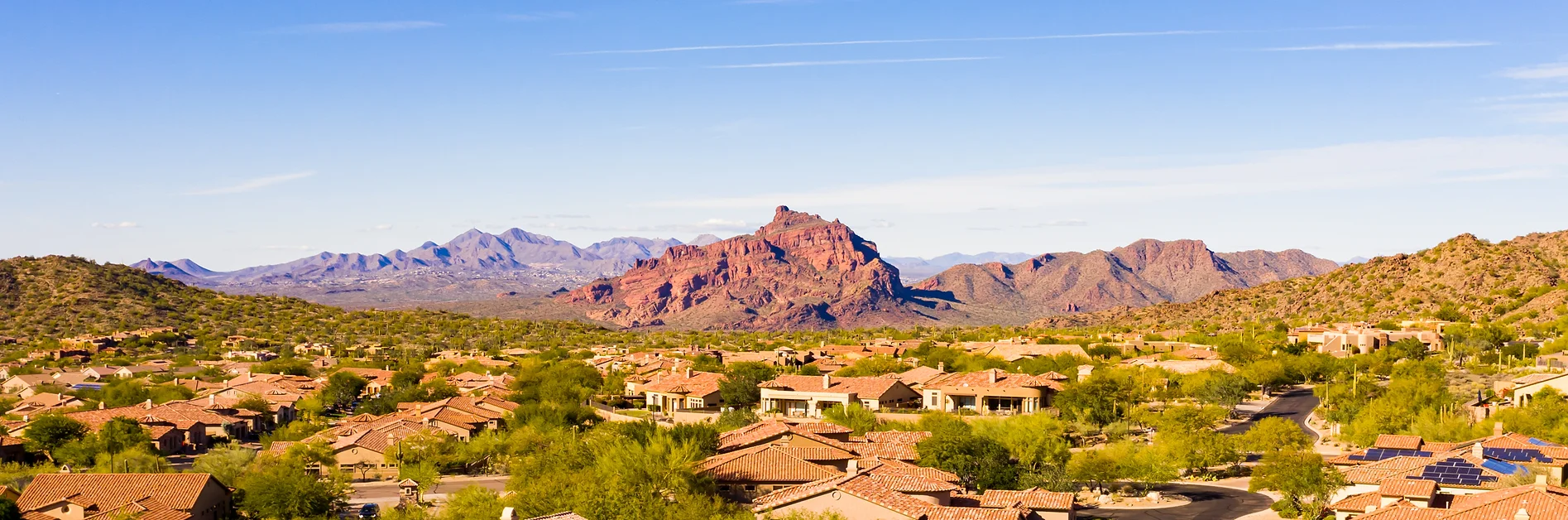
Strong planning covers Mesa as a planning reference for exhibitors and event teams working shows across the Phoenix metro. Mesa Convention Center anchors the East Valley's meetings infrastructure with 19,000 square feet of exhibit area and an equal amount of meeting space downtown. Teams building booths or coordinating graphics for Phoenix Convention Center, WestWorld of Scottsdale, Talking Stick Resort, or Tempe hotel ballrooms use US 60 and Loop 202 to connect Mesa origin points with those venues.
Visit Mesa positions the convention center as a full-service meeting and event facility. The Southeast Valley serves as a freight origin, hotel-block overflow, and exhibitor base for regional shows that draw from the Valley's semiconductors, aerospace, biosciences, advanced manufacturing, healthcare innovation, and software verticals identified by the Greater Phoenix Economic Council. Planners coordinating Mesa-based attendees or vendors into Tempe, Phoenix, or Scottsdale programs verify drive times along US 60 and Loop 202, tracking peak congestion between 6:30 and 9:30 AM and 3:30 to 7:00 PM.
Tempe sits five miles from Phoenix Sky Harbor International Airport according to Tempe Tourism. Mesa is roughly seventeen miles from the airport via Loop 202 and US 60. The distance adds fifteen to twenty-five minutes to freight timing and requires earlier load-in windows when delivering to East Valley venues from Sky Harbor cargo terminals. Exhibitors shipping booth components or graphics to Mesa Convention Center typically route through the airport's cargo facilities or arrange direct delivery from regional fabricators to the venue's loading zone.
Mesa Planning Context
- US 60 and Loop 202 Red Mountain connect Mesa to Phoenix Convention Center, Tempe hotel clusters, and WestWorld of Scottsdale, with typical off-peak transit times between twenty and thirty-five minutes
- Mesa Convention Center provides 19,000 square feet of exhibit area and 19,000 square feet of meeting space according to Visit Mesa's official hotels-and-venues section
- Phoenix Sky Harbor cargo routing adds fifteen to twenty-five minutes to East Valley freight timing compared to downtown Phoenix or Tempe deliveries, requiring earlier dock reservations
- East Valley hotel inventory supports overflow blocks for Phoenix Convention Center citywide shows, with planners verifying Loop 202 access and shuttle timing
- Visit Mesa's meeting-planner resources list local service providers, venues, and coordination contacts for teams building events across the Phoenix metro
Mesa Convention Geography
Mesa Convention Center sits downtown with 19,000 square feet of exhibit area and an additional 19,000 square feet of meeting space. Visit Mesa describes it as a full-service meeting and event facility. Exhibitors working smaller regional shows or corporate programs use the center for booth installations ranging from inline 10×10 units to island 20×20 configurations. The venue's exhibit area accommodates moderate-density floor plans without requiring the multi-hall coordination typical of Phoenix Convention Center's 635,000-square-foot North Building or WestWorld of Scottsdale's indoor-outdoor campus.
Downtown Mesa venues sit roughly twelve miles east of downtown Tempe and seventeen miles from Phoenix Sky Harbor International Airport. Loop 202 Red Mountain and US 60 provide the primary freeway connections. Teams delivering graphics, booth components, or AV equipment to Mesa Convention Center route through the airport's cargo terminals or coordinate direct delivery from Phoenix-area fabricators. Drive times from Sky Harbor cargo to the Mesa venue range from thirty to forty-five minutes outside peak congestion windows and can stretch past an hour during morning and evening commutes.
The city's position as an East Valley anchor makes it a relevant origin point for exhibitors and vendors working Phoenix Convention Center, Tempe hotel ballrooms, or Scottsdale venues. Visit Mesa positions the convention center and local service providers as part of the broader Phoenix metro meetings ecosystem. Planners coordinating teams or vendors based in Mesa verify freeway access and drive-time math when booking advance delivery slots at venues west along the US 60 and Loop 202 corridors.
- Mesa Convention Center's 19,000 square feet of exhibit area supports inline, peninsula, and island booth formats without requiring multi-hall coordination
- Loop 202 Red Mountain and US 60 connect Mesa to Phoenix Convention Center (roughly twenty-five to thirty-five minutes off-peak), downtown Tempe hotels (fifteen to twenty minutes), and WestWorld of Scottsdale (thirty to forty minutes)
- Sky Harbor cargo to Mesa Convention Center freight routing typically requires thirty to forty-five minutes outside peak windows, with timing extending past an hour between 6:30 and 9:30 AM and 3:30 to 7:00 PM
- Visit Mesa's official meetings section lists local service providers, venue contacts, and coordination resources for teams planning events across the Phoenix metro
Freight and Load-In Logistics
Exhibitors shipping booth components to Mesa Convention Center coordinate delivery timing with the venue's loading zone and dock schedule. The convention center's downtown location requires street-level access planning, particularly during citywide events or concurrent programs. Freight arriving from Sky Harbor cargo terminals typically routes via Loop 202 and US 60, with drive times between thirty and forty-five minutes under normal traffic conditions. Teams delivering graphics or AV equipment from Phoenix-area fabricators verify dock availability and advance reservation requirements.
Phoenix Convention Center shows generate Mesa-based freight because vendors, exhibitors, and service providers originate from the East Valley. Loop 202 Red Mountain provides the primary connection between Mesa and the Phoenix Convention Center campus, with typical off-peak drive times around twenty-five to thirty-five minutes. Morning load-in windows require earlier departure times to account for westbound congestion along the freeway corridor. Planners coordinating multi-city booth installations verify that Mesa-to-Phoenix freight timing aligns with the venue's advance warehouse schedule and official contractor dock slots.
Tempe hotel ballrooms draw exhibitors from Mesa for smaller conferences and corporate meetings. The Omni Tempe Hotel at ASU offers 36,000 square feet of meeting space and seven meeting rooms according to Tempe Tourism's 2025 Meeting Planner Guide. US 60 westbound to Loop 202 northbound provides the fastest Mesa-to-Tempe routing, with drive times typically between fifteen and twenty minutes off-peak. Exhibitors delivering portable displays or modular booth systems confirm hotel loading-dock hours and verify whether advance scheduling is required for ballroom setup.
- Mesa Convention Center freight routing from Sky Harbor cargo requires thirty to forty-five minutes under normal conditions, extending past an hour during peak commute windows
- Loop 202 Red Mountain westbound to Phoenix Convention Center takes twenty-five to thirty-five minutes off-peak, but morning load-in timing requires earlier departure to avoid 6:30 to 9:30 AM congestion
- US 60 to Loop 202 northbound connects Mesa to downtown Tempe hotel ballrooms in fifteen to twenty minutes, with exhibitors confirming hotel dock schedules and ballroom load-in coordination
- Multi-city booth installations originating in Mesa verify advance warehouse timing at Phoenix Convention Center and coordinate with official show contractors for dock slot alignment
Hotel Blocks and Attendee Coordination
Phoenix Convention Center citywide shows generate hotel-block overflow into the East Valley. Planners booking attendee lodging for large expos or multi-day conferences use Mesa hotels when downtown Phoenix and Tempe primary inventory reaches capacity. Loop 202 provides the primary connection between Mesa hotels and the Phoenix Convention Center campus, with typical one-way drive times around twenty-five to thirty-five minutes. Shuttle coordination becomes necessary for citywide blocks, requiring planners to verify pickup schedules, frequency, and return timing that aligns with show-floor hours.
Visit Mesa's meetings section lists local hotel inventory and coordination contacts for planners managing overflow blocks. The city's position along the US 60 corridor makes it a logical extension of the Southeast Valley hotel cluster that includes Tempe, Chandler, and Gilbert. Exhibitors booking rooms for booth crews or sales teams compare nightly rates and verify proximity to freeway access points that minimize morning drive time to the venue. Peak-season shows at Phoenix Convention Center or WestWorld of Scottsdale often push lodging demand into secondary markets, making Mesa a practical option when primary inventory sells out.
Tempe hotel programs occasionally draw attendees staying in Mesa, particularly for ASU-adjacent conferences or events hosted at the Omni Tempe Hotel at ASU or Tempe Mission Palms. The distance between downtown Mesa and downtown Tempe ranges from twelve to fifteen miles via US 60 and Loop 202, with drive times typically under twenty minutes outside peak congestion. Planners coordinating Mesa-based attendee blocks for Tempe events verify shuttle logistics or confirm parking availability at the venue to minimize last-mile coordination challenges.
- Phoenix Convention Center citywide shows push hotel-block overflow into Mesa when downtown Phoenix and Tempe primary inventory reaches capacity
- Loop 202 westbound connects Mesa hotels to Phoenix Convention Center in twenty-five to thirty-five minutes off-peak, requiring shuttle coordination for large attendee blocks
- Visit Mesa's official meetings resources list local hotel inventory and coordination contacts for planners managing overflow lodging during peak-season expos
- Mesa-to-Tempe hotel shuttles cover twelve to fifteen miles via US 60 and Loop 202, with typical drive times under twenty minutes outside morning and evening commute windows
Venue Access and Regional Coordination
Mesa serves as a planning reference for teams working shows at Phoenix Convention Center, WestWorld of Scottsdale, Talking Stick Resort, and Tempe hotel venues. The city's role in the Phoenix metro event market centers on freight origin, vendor coordination, and hotel-block overflow rather than large-scale convention hosting. Mesa Convention Center's 38,000 total square feet of space positions it for regional meetings, corporate events, and smaller expos that do not require the multi-hall capacity of Phoenix Convention Center's North Building or WestWorld's Equidome and Monterra campus.
Exhibitors based in Mesa verify freeway access and drive-time math when coordinating deliveries to venues west along the US 60 and Loop 202 corridors. Phoenix Convention Center sits roughly twenty-five to thirty-five minutes from Mesa via Loop 202 Red Mountain. WestWorld of Scottsdale requires a longer routing via Loop 202 and State Route 101, with typical drive times between thirty and forty minutes off-peak. Talking Stick Resort, located along Loop 101 in Scottsdale, sits about twenty-five to thirty-five minutes from Mesa depending on traffic conditions. Planners coordinating multi-venue programs across the Phoenix metro track these distances to align freight delivery, booth setup, and crew scheduling.
The Greater Phoenix Economic Council identifies semiconductors, aerospace, biosciences, advanced manufacturing, healthcare innovation, software, data centers, and autonomous vehicles as demand drivers in the metro. These verticals generate corporate events, trade shows, and technical conferences across the Valley's venue inventory. Mesa's business geography supports vendor origin points and exhibitor bases for regional programs, with planners verifying that East Valley coordination aligns with venue schedules and official contractor workflows at Phoenix Convention Center, WestWorld, and Tempe hotel ballrooms.
- Mesa Convention Center's 38,000 total square feet positions it for regional meetings and smaller expos, while Phoenix Convention Center's North Building offers 635,000 square feet for large citywide shows
- Loop 202 Red Mountain connects Mesa to Phoenix Convention Center in twenty-five to thirty-five minutes off-peak, with WestWorld of Scottsdale requiring thirty to forty minutes via Loop 202 and State Route 101
- Talking Stick Resort sits twenty-five to thirty-five minutes from Mesa along Loop 101, requiring planners to verify freeway access when coordinating multi-venue programs
- Phoenix metro demand drivers include semiconductors, aerospace, biosciences, advanced manufacturing, healthcare innovation, and software verticals that generate corporate events and technical conferences across the Valley's venue inventory
Planning Workflow and Coordination Points
Exhibitors coordinating booth installations at Phoenix Convention Center, Tempe hotel ballrooms, or Scottsdale venues verify advance warehouse deadlines, official contractor dock schedules, and freight routing from Mesa origin points. Phoenix Convention Center's North Building lists 20 climate-controlled loading docks according to Visit Phoenix. Teams delivering booth components from Mesa confirm dock slot availability and coordinate timing with the official show contractor to avoid delays during concentrated load-in windows. The advance warehouse deadline typically closes five to ten business days before show open, requiring Mesa-based vendors to plan delivery timing well ahead of the event.
Tempe hotel venues operate under different coordination rules than convention centers. The Omni Tempe Hotel at ASU, Tempe Mission Palms, The Westin Tempe, and other properties listed in Tempe Tourism's 2025 Meeting Planner Guide each manage ballroom load-in schedules and loading-dock access independently. Exhibitors delivering modular displays, portable graphics, or AV equipment to these venues confirm dock hours, elevator access, and ballroom setup timing with the hotel's event coordinator. Unlike Phoenix Convention Center's centralized contractor workflow, hotel ballrooms often allow exhibitors to coordinate directly with the venue rather than routing through an official show contractor.
WestWorld of Scottsdale operates as an indoor-outdoor event campus with the Equidome and Monterra spaces. The City of Scottsdale describes it as Scottsdale's premier venue, hosting equestrian events, car shows, festivals, and exhibitions year-round. Exhibitors delivering booth components or graphics to WestWorld verify outdoor setup requirements, weather contingencies, and load-in timing that aligns with the venue's event calendar. The campus's multi-space layout requires planners to confirm which hall or outdoor zone the booth will occupy and coordinate freight delivery accordingly. Mesa-based vendors routing to WestWorld via Loop 202 and State Route 101 confirm drive-time math and schedule delivery windows that avoid peak freeway congestion.
- Phoenix Convention Center's 20 climate-controlled loading docks require advance coordination with the official show contractor, with advance warehouse deadlines typically closing five to ten business days before show open
- Tempe hotel ballrooms manage load-in schedules independently, allowing exhibitors to coordinate directly with the hotel's event team rather than routing through a centralized contractor
- WestWorld of Scottsdale's indoor-outdoor campus requires planners to confirm booth placement, verify weather contingencies, and coordinate load-in timing that aligns with the venue's event calendar
- Mesa-to-WestWorld freight routing via Loop 202 and State Route 101 takes thirty to forty minutes off-peak, requiring earlier departure during morning and evening commute windows
Trade Show Planning FAQ for Mesa, AZ
How long does freight take from Mesa to Phoenix Convention Center?
Loop 202 Red Mountain westbound connects Mesa to Phoenix Convention Center in twenty-five to thirty-five minutes under normal traffic conditions. Morning load-in windows require earlier departure times to account for westbound congestion between 6:30 and 9:30 AM, which can extend drive times past an hour. Exhibitors verify advance warehouse deadlines and coordinate dock slot timing with the official show contractor to avoid delays.
What is the capacity of Mesa Convention Center?
Visit Mesa describes Mesa Convention Center as offering 19,000 square feet of exhibit area and an additional 19,000 square feet of meeting space. The venue supports inline, peninsula, and island booth formats for regional meetings and smaller expos without requiring the multi-hall coordination typical of larger convention centers like Phoenix Convention Center's North Building.
Do Mesa hotels serve as overflow for Phoenix Convention Center shows?
Yes. Phoenix Convention Center citywide shows generate hotel-block overflow into the East Valley when downtown Phoenix and Tempe primary inventory reaches capacity. Loop 202 provides the primary connection between Mesa hotels and the convention center campus, with typical one-way drive times around twenty-five to thirty-five minutes off-peak. Planners verify shuttle coordination, pickup schedules, and return timing that aligns with show-floor hours.
How do Tempe hotel ballrooms differ from Phoenix Convention Center for booth installations?
Tempe hotel ballrooms operate under independent coordination rules rather than centralized contractor workflows. Properties like the Omni Tempe Hotel at ASU and Tempe Mission Palms manage ballroom load-in schedules and loading-dock access through the hotel's event team. Exhibitors delivering portable displays or modular booth systems confirm dock hours, elevator access, and setup timing directly with the venue rather than routing through an official show contractor.
What demand drivers support Phoenix metro trade shows?
The Greater Phoenix Economic Council identifies semiconductors, aerospace, biosciences, advanced manufacturing, healthcare innovation, software, data centers, and autonomous vehicles as demand drivers in the metro. These verticals generate corporate events, trade shows, and technical conferences across the Valley's venue inventory, including Phoenix Convention Center, WestWorld of Scottsdale, Talking Stick Resort, and Tempe hotel ballrooms.