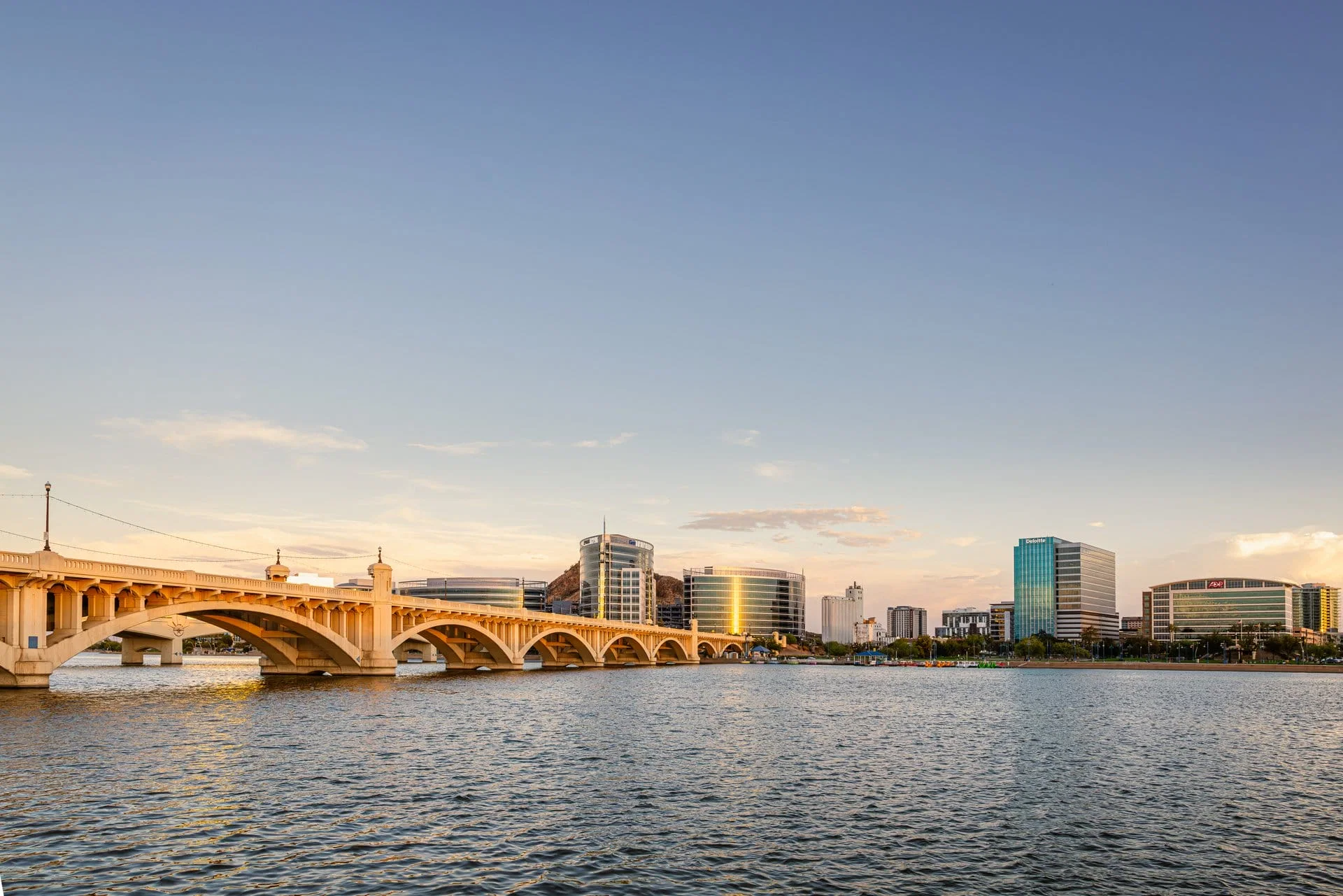
Strong planning covers trade-show event planning for programs that reference Tempe Town Lake as a geography or amenity, particularly those that use the waterfront for pre-show receptions, sponsor activations, or post-event gatherings tied to shows running at the Omni Tempe Hotel at ASU, Tempe Mission Palms, or other nearby conference properties. The project plan should turn venue rules, freight deadlines, labor windows, and exhibitor goals into a workable show schedule.
Tempe Tourism reports that Tempe has more than 7,100 hotel rooms, 140,000 square feet of meeting space, and 28-plus miles of rail and streetcar access, with Phoenix Sky Harbor International Airport sitting five miles northwest. The Town Lake corridor itself does not host major trade shows, but planners working shows in downtown Tempe frequently consider lakeside locations for evening events, outdoor activations, or hospitality programs that extend the conference footprint beyond ballroom walls.
The practical planning sequence involves locking the primary venue and move-in schedule first, then mapping outdoor or overflow programming to the Town Lake corridor if the show format, sponsor requirements, or attendee experience calls for it. Freight, power, and permitting for lakeside activations follow different workflows than hotel ballroom programs, so coordination with Tempe Parks and Recreation, the venue's event services team, and any official show contractor becomes critical before finalizing outdoor production commitments.
Planning focus for waterfront event programs near Tempe Town Lake
- Omni Tempe Hotel at ASU sits less than a mile south of the lake's western end and offers 36,000 square feet of meeting space and 330 rooms, making it the closest full-service conference property to the waterfront corridor
- Mill Avenue Bridge connects the lake's north and south shores and anchors the western end of the waterfront, with Tempe Center for the Arts sitting on the north bank and the downtown hotel cluster extending south along Mill Avenue
- Freight and power requirements for lakeside activations differ significantly from hotel ballroom programs; temporary power, generator permits, and equipment access routes must be confirmed with Tempe Parks and Recreation before committing to outdoor production
- Phoenix Sky Harbor International Airport sits five miles northwest via University Drive and Washington Street, providing direct access for exhibit freight and attendee arrivals, with drive times ranging from twelve to twenty minutes depending on time of day
- The waterfront corridor extends roughly two miles east from Mill Avenue to Priest Drive, offering multiple access points for outdoor programming, but each location carries different permitting requirements, parking constraints, and distance from primary hotel inventory
Primary venue context and hotel inventory near the lake
The Omni Tempe Hotel at ASU anchors the conference market closest to Tempe Town Lake, with 36,000 square feet of meeting space distributed across seven meeting rooms and a ballroom that can accommodate groups from fifty to eight hundred. The property sits at the intersection of Mill Avenue and University Drive, less than a mile south of the lake's western end, placing it within a short walk or shuttle run of waterfront activation sites. Tempe Tourism's 2025 Meeting Planner Guide lists this property as the largest single conference hotel in downtown Tempe, which means most shows that consider lakeside programming are anchored at the Omni or at Tempe Mission Palms, which sits three blocks east along Fifth Street.
Tempe Mission Palms offers a smaller meeting footprint but sits closer to the ASU campus and maintains a direct line of sight to the lake corridor from its upper floors. The Westin Tempe, Canopy by Hilton Tempe Downtown, DoubleTree by Hilton Phoenix Tempe, and Embassy Suites by Hilton Phoenix Tempe all sit within a one-mile radius of the lake's western access points, creating a hotel cluster that supports conference attendee housing and overflow meeting demand. Planners working shows that require lakeside receptions or sponsor activations typically confirm room blocks at two or three of these properties before finalizing outdoor programming, since shuttle coordination between the conference venue, hotel blocks, and the waterfront activation site becomes a critical logistics handoff.
The practical planning question is not whether the lake corridor is scenic, but whether the added complexity of outdoor permitting, temporary power, generator rental, and shuttle coordination delivers enough value to justify the workflow. Some shows find that a rooftop reception at the Omni or a terrace program at Tempe Mission Palms achieves the same hospitality goal with fewer moving parts, while others commit to lakeside activations because sponsors demand outdoor branding visibility or because the event format requires a larger footprint than any single hotel terrace can provide.
- Omni Tempe Hotel at ASU sits less than a mile south of the lake's western end, with 36,000 square feet of meeting space and seven meeting rooms that can accommodate groups from fifty to eight hundred
- Tempe Mission Palms, The Westin Tempe, Canopy by Hilton, DoubleTree, and Embassy Suites all sit within a one-mile radius of the lake's western access points, supporting conference housing and overflow meeting demand
- Shuttle coordination between the conference venue, hotel blocks, and waterfront activation sites becomes a critical logistics handoff for shows that commit to lakeside programming
- Some shows find that hotel terrace or rooftop programs achieve the same hospitality goal with fewer permitting and power complications than lakeside activations
Freight, power, and permitting for lakeside activations
Lakeside activations require different permitting workflows than hotel ballroom programs. Tempe Parks and Recreation manages outdoor event permits for the Town Lake corridor, and those permits typically require advance notice periods that range from thirty to ninety days depending on the size and scope of the program. Small receptions with fewer than fifty people and minimal infrastructure may move through the process faster, but sponsor activations that involve tents, stages, audio systems, or branded installations require detailed site plans, insurance certificates, and coordination with multiple city departments before permits are issued.
Temporary power is a common planning challenge. Most lakeside locations do not have permanent electrical service suitable for event production, which means planners must arrange generator rental, fuel delivery, and generator placement with enough lead time to clear permitting and noise restrictions. Generator permits in Tempe require decibel limits and operating-hour windows that vary by location, so confirming those constraints before finalizing production commitments prevents last-minute scrambles. Some shows bring generators in the day before the event to test power loads and distribution, which adds another day of rental cost but reduces the risk of on-site power failures during high-profile activations.
Freight access for lakeside programs varies by location. The western end of the lake near Mill Avenue Bridge offers better vehicle access than the central corridor, but parking restrictions and pedestrian traffic during peak hours can complicate load-in timing. Planners working larger activations typically schedule load-in windows between six and nine in the morning or after seven in the evening to avoid conflicts with commuter traffic and public park use, and they coordinate with Tempe Police if road closures or parking restrictions are required for equipment delivery.
- Tempe Parks and Recreation manages outdoor event permits for the Town Lake corridor, with advance notice periods ranging from thirty to ninety days depending on program size and infrastructure requirements
- Most lakeside locations lack permanent electrical service suitable for event production, requiring generator rental, fuel delivery, and generator permits that specify decibel limits and operating-hour windows
- Freight access near Mill Avenue Bridge offers better vehicle routing than the central corridor, but parking restrictions and pedestrian traffic complicate load-in timing during peak hours
- Some shows bring generators in the day before the event to test power loads and distribution, adding rental cost but reducing the risk of on-site power failures
Airport access and freight timing from Sky Harbor
Phoenix Sky Harbor International Airport sits five miles northwest of Tempe Town Lake via University Drive and Washington Street. Exhibit freight arriving by air typically clears cargo facilities at the airport and moves to the conference venue or to a staging warehouse along the East Valley corridor, with drive times ranging from twelve to twenty minutes outside of peak traffic windows. Peak-hour congestion along University Drive between the airport and downtown Tempe can stretch that drive time to thirty-five or forty minutes, so planners working tight load-in schedules typically route freight deliveries to arrive before seven in the morning or after seven in the evening.
Some shows arrange advance warehousing at facilities in Tempe or Mesa to separate freight arrival timing from venue load-in timing, which allows greater control over delivery windows and reduces the risk of airport cargo delays cascading into on-site production schedules. This approach adds drayage cost and requires coordination with a third-party warehouse provider, but it also insulates the show from airport congestion, cargo facility processing delays, and tight venue dock windows.
For shows that include lakeside activations, freight coordination becomes more complex because outdoor program materials often arrive separately from ballroom booth components and follow different load-in workflows. Planners typically designate a staging area near the lakeside activation site, confirm vehicle access and parking restrictions with Tempe Parks and Recreation, and schedule activation freight delivery at least one day before the outdoor program begins to allow time for setup, testing, and contingency adjustments.
- Phoenix Sky Harbor International Airport sits five miles northwest of Tempe Town Lake, with drive times ranging from twelve to twenty minutes outside peak traffic windows and up to forty minutes during peak hours
- Some shows arrange advance warehousing in Tempe or Mesa to separate freight arrival timing from venue load-in timing, reducing the risk of airport cargo delays cascading into on-site production schedules
- Freight coordination for lakeside activations requires separate staging areas, vehicle access confirmation with Tempe Parks and Recreation, and delivery schedules that allow at least one day for setup and testing before outdoor programs begin
Connecting lakeside programming to broader Valley conference infrastructure
Tempe's conference market sits within a broader Valley infrastructure that includes the Phoenix Convention Center campus nine miles northwest, WestWorld of Scottsdale eighteen miles northeast, and Mesa Convention Center eight miles east. Planners working shows at the Phoenix Convention Center or WestWorld occasionally consider Tempe Town Lake as a satellite activation site for sponsor hospitality or post-conference gatherings, particularly when attendee housing is split between downtown Phoenix and the Tempe hotel cluster. The practical challenge is shuttle coordination and drive time, since the run from downtown Phoenix to the Tempe lakefront takes twenty to thirty minutes depending on traffic, and the run from WestWorld to the lake takes thirty-five to forty-five minutes.
Some shows use the Tempe Town Lake corridor as a neutral meeting ground between Phoenix and Scottsdale hotel inventory, particularly for multi-day conferences that involve attendees staying in both submarkets. This approach requires careful shuttle scheduling and clear communication about activation start times, since attendees arriving from different hotel clusters will experience different travel durations and potential traffic delays. Planners who commit to this model typically build extra buffer time into the event schedule and arrange backup shuttle capacity to handle variations in attendee arrival patterns.
The broader Valley conference infrastructure also includes hotel ballroom programs at the JW Marriott Phoenix Desert Ridge Resort & Spa, Talking Stick Resort, and Arizona Grand Resort & Spa, all of which sit more than ten miles from Tempe Town Lake. Planners working shows at those properties generally do not use the Tempe lakefront for activations because the drive time and shuttle cost outweigh the waterfront amenity value, but there are occasional exceptions when sponsor requirements or event branding specifically call for a lakeside setting and the budget supports the additional logistics.
- Phoenix Convention Center sits nine miles northwest of Tempe Town Lake, with drive times ranging from twenty to thirty minutes depending on traffic, which complicates shuttle coordination for shows that use the lake as a satellite activation site
- Some shows use the Tempe Town Lake corridor as a neutral meeting ground between Phoenix and Scottsdale hotel inventory, requiring careful shuttle scheduling and extra buffer time to accommodate attendees arriving from different submarkets
- WestWorld of Scottsdale sits eighteen miles northeast of the lake, with drive times ranging from thirty-five to forty-five minutes, which makes lakeside activations less practical for shows anchored in North Scottsdale
What to confirm before committing to lakeside activations
Planners considering lakeside activations need to confirm three critical details before signing vendor contracts or finalizing sponsor commitments. First, the specific activation site within the Town Lake corridor, including vehicle access routes, parking restrictions, pedestrian traffic patterns, and distance from the primary conference venue. Some lakeside locations offer better access and shorter shuttle runs than others, and those differences directly affect load-in complexity, attendee convenience, and overall production cost.
Second, the permitting timeline and requirements from Tempe Parks and Recreation, including insurance certificates, site plan approval, generator permits, noise restrictions, and any road closure or parking coordination needed for load-in and strike. Permitting timelines can stretch to ninety days for larger programs, so confirming those deadlines early prevents last-minute permit denials or rushed applications that carry higher risk of rejection.
Third, the power and infrastructure requirements for the activation program, including temporary power capacity, generator placement, fuel delivery, audio system specifications, tent or stage footprints, and any lighting or branding installations that require dedicated circuits or backup power. Some shows discover late in the planning cycle that their activation program requires more power capacity than a single generator can deliver, which forces them to rent multiple generators, coordinate fuel delivery, and revise site plans to accommodate larger equipment footprints. Confirming those requirements at the start of the planning process prevents costly mid-cycle changes and reduces the risk of on-site technical failures during high-visibility sponsor events.
- Confirm the specific activation site within the Town Lake corridor, including vehicle access routes, parking restrictions, pedestrian traffic patterns, and shuttle distance from the primary conference venue
- Confirm the permitting timeline and requirements from Tempe Parks and Recreation, including insurance certificates, site plan approval, generator permits, and any road closure coordination needed for load-in and strike
- Confirm power and infrastructure requirements early, including temporary power capacity, generator placement, fuel delivery, and any installations that require dedicated circuits or backup power, to prevent mid-cycle changes and on-site technical failures
Common questions about trade-show planning near Tempe Town Lake
Which conference venue sits closest to Tempe Town Lake?
The Omni Tempe Hotel at ASU sits less than a mile south of the lake's western end and offers 36,000 square feet of meeting space distributed across seven meeting rooms and a ballroom. It is the largest single conference property in downtown Tempe and the closest full-service venue to the waterfront corridor.
What permitting is required for outdoor activations along the lake?
Tempe Parks and Recreation manages outdoor event permits for the Town Lake corridor. Permits typically require advance notice periods ranging from thirty to ninety days depending on program size and infrastructure, and larger activations require detailed site plans, insurance certificates, generator permits, and coordination with city departments before permits are issued.
How far is Phoenix Sky Harbor International Airport from Tempe Town Lake?
Phoenix Sky Harbor International Airport sits five miles northwest of Tempe Town Lake via University Drive and Washington Street. Drive times range from twelve to twenty minutes outside peak traffic windows and can stretch to thirty-five or forty minutes during peak hours, so planners working tight load-in schedules typically route freight deliveries before seven in the morning or after seven in the evening.
Do lakeside activation sites have permanent electrical service?
Most lakeside locations do not have permanent electrical service suitable for event production, which means planners must arrange generator rental, fuel delivery, and generator permits. Generator permits in Tempe require decibel limits and operating-hour windows that vary by location, so confirming those constraints before finalizing production commitments prevents last-minute scrambles.
How do planners coordinate shuttle service between conference venues and lakeside activations?
Shuttle coordination between the conference venue, hotel blocks, and waterfront activation sites is a critical logistics handoff for shows that commit to lakeside programming. Planners typically confirm room blocks at two or three properties before finalizing outdoor programming, since attendees arriving from different hotel clusters will experience different travel durations and potential traffic delays. Building extra buffer time into the event schedule and arranging backup shuttle capacity helps handle variations in attendee arrival patterns.