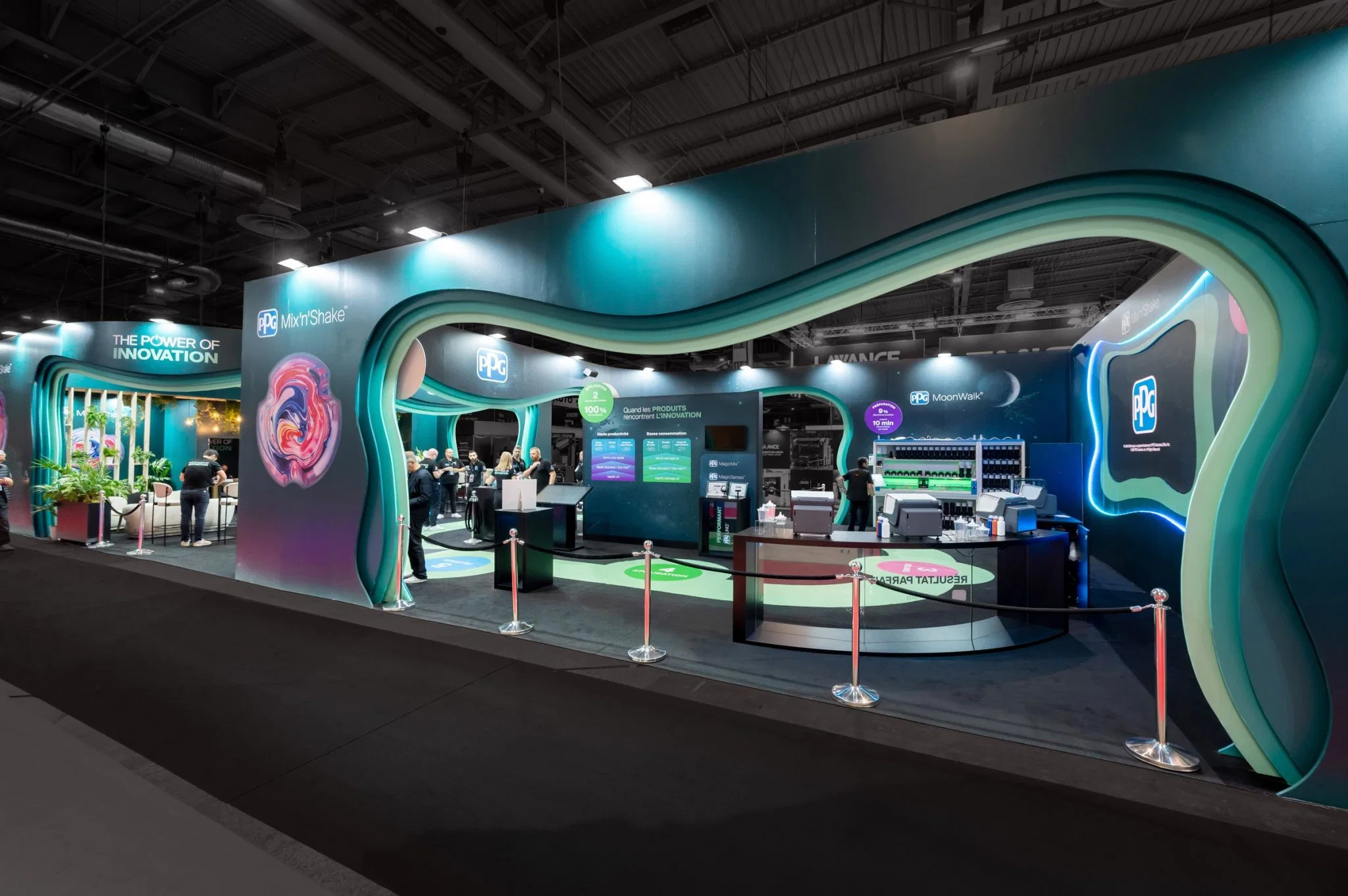
Automotive trade shows in the Tempe market range from electric-vehicle launches at Phoenix Convention Center to classic-car auctions at WestWorld of Scottsdale and aftermarket parts expos at the Arizona State Fairgrounds. Each venue brings a different loading-dock arrangement, union jurisdiction question, and overnight-security protocol. Strong planning covers the planning sequence for automotive exhibitors, what to verify before signing booth contracts, and the delivery-timing realities at the region's primary event facilities.
Phoenix Convention Center has 635,000 square feet of meeting and exhibition space across 11 exhibit halls and 20 climate-controlled loading docks, which sounds like ample capacity until you realize most automotive shows cluster in the same January-to-April window, making advance dock reservations and vehicle-shipment timing critical. WestWorld of Scottsdale hosts equestrian events, car shows, festivals, and exhibitions year-round, but the Equidome and Monterra indoor spaces require separate freight planning than outdoor display zones. The Arizona State Fairgrounds handles public shows with high turnstile counts and tight setup windows that compress what would be a three-day install into two shifts.
Automotive exhibitors often underestimate the complexity of moving a 4,500-pound prototype, a custom-fabricated island booth, and eight cases of branded collateral through three separate dock schedules. The show manual might specify a single target delivery window, but the venue's dock team, the official contractor's material-handling crew, and any Exhibitor Appointed Contractor you hire all operate on slightly different handoff timelines. A realistic booth plan names the vehicle count, crate count, and rigging-load requirements before freight gets booked, because changing dock slots or adding a forklift the week before load-in costs more than most booths.
What Automotive Exhibitors Need to Plan Around in Tempe
- Phoenix Convention Center dock-reservation protocol and vehicle-delivery windows for shows running in the North Building's 11 exhibit halls during the January-to-April automotive calendar
- WestWorld of Scottsdale indoor versus outdoor vehicle-display logistics, particularly for shows splitting inventory between the Equidome and open-air zones that require separate security and overnight protocols
- Arizona State Fairgrounds public-show load-in rhythm, where compressed setup windows and high attendee turnstile counts force exhibitors to finish booth builds in two shifts instead of three days
- Vehicle-freight coordination along I-10 between the Phoenix metro and Southern California origin markets, with timing windows that avoid 6:30–9:30 AM and 3:30–7:00 PM rush-hour congestion on surface routes feeding venue districts
- Booth-type selection for automotive displays: 20×20 islands can fit a sedan and demo kiosk, 30×30 islands accommodate an SUV plus graphics wall, but anything larger requires early rigging consultation and venue-specific load calculations
Venue Selection and Dock-Access Planning
Phoenix Convention Center's interconnected campus includes three ballrooms, 99 meeting and breakout rooms, a 2,300-seat performance hall, and an Executive Conference Center, but automotive shows typically book the North Building because of its 20 climate-controlled loading docks and direct access to 11 exhibit halls. Visit Phoenix says the North Building has 635,000 square feet of meeting and exhibition space, which translates to flexibility for large-footprint displays and vehicle positioning. The dock-reservation system operates on a first-come, first-served basis within the official contractor's master schedule, so exhibitors who wait until two weeks before move-in often get assigned to tail-end delivery slots that compress setup time.
WestWorld of Scottsdale offers versatile indoor and outdoor spaces including the Equidome and Monterra, which makes it a good fit for consumer-facing automotive shows and collector-car auctions that want a resort-district backdrop. The City of Scottsdale describes WestWorld as Scottsdale's premier venue, hosting equestrian events, car shows, festivals, and exhibitions year-round. Indoor vehicle displays require coordination with the venue's material-handling team because the Equidome's entry points have specific clearance limits, while outdoor zones need separate overnight security and weather-protection planning. A classic-car auction running in March might start with indoor staging Friday morning and move vehicles to outdoor display zones by Saturday afternoon, which means your booth crew has to plan around two separate setup sequences.
The Arizona State Fairgrounds handles public shows with tight setup windows and high attendee turnstile counts, which compresses what would be a three-day install at Phoenix Convention Center into two shifts. The official venue-rental section says the fairgrounds offers versatile indoor and outdoor spaces, but automotive exhibitors need to confirm dock access and material-handling timelines before signing the show contract. Public shows often run Saturday and Sunday, which means load-in starts Thursday evening and continues Friday morning, leaving minimal margin for delayed freight or missing booth components.
- Phoenix Convention Center North Building dock slots book early in the show cycle; request your delivery window when you confirm booth space, not two weeks before move-in
- WestWorld of Scottsdale Equidome entry points have specific vehicle-clearance limits; verify interior ceiling height and door width before committing to a lifted truck or tall prototype display
- Arizona State Fairgrounds public-show load-in windows compress three-day installs into two shifts, so plan your freight arrival and booth-assembly sequence accordingly
- Hotel ballroom programs at Omni Tempe Hotel at ASU and Tempe Mission Palms can host small automotive product launches, but vehicle delivery requires advance coordination with the hotel's loading-dock schedule and insurance requirements
Freight Timing and Vehicle Delivery Logistics
Greater Phoenix sits at the intersection of I-10 running east-west and I-17 running north-south, with Phoenix Sky Harbor International Airport five miles from Tempe. Most automotive freight originates in Southern California and runs I-10 eastbound, which means delivery timing has to account for border-inspection delays near Yuma and rush-hour congestion on surface routes feeding downtown Phoenix and the Scottsdale corridor. A prototype shipment leaving Los Angeles at 6:00 AM typically arrives at Phoenix Convention Center between 2:00 PM and 4:00 PM outside peak traffic windows, but the same run during Friday afternoon rush can stretch past 7:00 PM.
Vehicle-delivery logistics require separate planning from standard booth freight because most common carriers will not handle single-unit automobile shipments on the same truck as crated display materials. Enclosed transport is standard for prototype vehicles, concept cars, and high-value collector inventory, which adds cost and scheduling complexity. The official show contractor's material-handling team will unload the vehicle at the dock and position it on the show floor, but you need to confirm whether your booth crew or the contractor's riggers are responsible for final placement and leveling. Disputes over who owns the last twenty feet of vehicle movement are common, and they cost time during load-in.
Advance warehouse receiving is available through most official show contractors and several third-party logistics providers in the Phoenix metro, but automotive exhibitors should confirm whether the warehouse can accommodate vehicle storage and what the per-day holding fee includes. A 30×30 island booth with a sedan, eight freight cases, and a custom graphics wall might run $400 to $800 in advance-receiving fees depending on how many days early the shipment arrives. That cost is often justified because it removes the risk of a delayed Friday delivery forcing your install crew to work overnight.
- I-10 eastbound freight from Southern California should avoid Friday afternoon and Sunday evening windows when weekend traffic compounds rush-hour congestion on surface routes into Phoenix and Scottsdale
- Enclosed vehicle transport typically books two to three weeks in advance during the January-to-April automotive show season; confirm your carrier and delivery window when you finalize booth space
- Advance warehouse receiving removes delivery-day risk but costs $50 to $150 per day depending on crate count and vehicle storage; calculate whether early arrival justifies the holding fee
- Vehicle unloading at Phoenix Convention Center docks requires coordination between the freight carrier, the official contractor's material-handling crew, and your booth installer to clarify who owns final positioning and leveling
Booth Design and Footprint Selection for Automotive Displays
Automotive exhibitors face a footprint-selection question that most other industries skip: whether the vehicle is part of the booth or the booth is part of the vehicle presentation. A 20×20 island can fit a compact sedan, a demo kiosk, and minimal branded graphics, but anything larger than a midsize SUV forces the exhibitor into a 30×30 or larger configuration. The vehicle's weight, tire footprint, and whether it sits on a raised platform all affect load calculations and rigging requirements, which means booth design needs to happen before you sign the floor plan.
Phoenix Convention Center's exhibit halls have standard 22-foot ceiling heights in most zones, but rigging points and load limits vary by hall and by specific grid location. A suspended truss carrying branded lighting and a 12-foot video wall might work in one hall and require redesign in another. The venue's rigging guidelines specify maximum point loads and advance-approval timelines, so exhibitors who wait until load-in week to submit rigging drawings often get rejected or rescheduled. WestWorld of Scottsdale's Equidome has a different structural configuration than its outdoor zones, which means a booth designed for indoor display may not translate to an outdoor setup without modification.
Modular booth systems are common in the automotive vertical because they allow exhibitors to reconfigure the same components for a 20×20 island at Mesa Convention Center, a 30×30 island at Phoenix Convention Center, and a 10×20 inline at a hotel ballroom program. The trade-off is that modular systems require advance planning to ensure the graphic panels, kiosk stations, and vehicle positioning work across all three formats. A custom-fabricated booth built for a single 30×30 footprint at WestWorld of Scottsdale delivers higher visual impact but cannot be reused at smaller shows without significant rework.
- A 20×20 island fits a compact sedan and minimal branded graphics, but a midsize SUV or larger vehicle requires a 30×30 or 40×40 footprint with advance rigging consultation
- Phoenix Convention Center rigging guidelines require advance approval for suspended truss and video walls; submit drawings at least three weeks before load-in to avoid rejection or rescheduled installation
- Modular booth systems allow reconfiguration across multiple footprints, but the design must account for vehicle positioning and graphic-panel flow at each show format
- Raised vehicle platforms add visual impact but increase load calculations and floor-protection requirements; confirm weight limits and insurance coverage before committing to elevated displays
Show-Services Jurisdiction and Contractor Coordination
Automotive shows in the Phoenix metro operate under a mix of house services, official show contractor services, and Exhibitor Appointed Contractor workflows, which means exhibitors need to verify jurisdiction before hiring labor or ordering material handling. Phoenix Convention Center's house services cover utilities, rigging, and certain facility access, but booth setup, freight handling, and vehicle positioning typically fall under the official show contractor's scope. Some shows allow Exhibitor Appointed Contractors for booth installation and graphics, but vehicle unloading and final placement on the show floor usually requires the official contractor's material-handling crew.
WestWorld of Scottsdale and the Arizona State Fairgrounds have different contractor relationships than Phoenix Convention Center, so the same exhibitor working three shows in one quarter might encounter three separate workflows. The show manual should specify which services are exclusive to the official contractor, which services require venue approval, and which services are open to third-party providers. Exhibitors who assume their preferred booth installer can handle everything often discover mid-load-in that vehicle positioning or rigging work requires the official contractor, which adds unplanned costs and delays.
Electrical, AV, and internet services are almost always exclusive to the official show contractor or the venue's house provider, which means exhibitors cannot bring their own electrician or AV technician without advance approval. A 30×30 automotive display might require three 20-amp circuits, a 60-inch monitor, and hardwired internet, which can run $1,200 to $2,500 depending on the show and the advance-order deadline. Ordering services after the advance deadline typically doubles the cost, so exhibitors should submit utility orders within two weeks of receiving the exhibitor manual.
- Phoenix Convention Center show contracts specify whether booth installation, vehicle positioning, and rigging work fall under official-contractor jurisdiction or permit Exhibitor Appointed Contractor participation
- WestWorld of Scottsdale and Arizona State Fairgrounds have separate contractor-approval workflows than Phoenix Convention Center; verify the show manual before hiring third-party labor
- Electrical, AV, and internet services are typically exclusive to the official contractor or house provider; ordering after the advance deadline doubles the cost in most cases
- Vehicle unloading and final floor placement usually require the official contractor's material-handling crew even if your booth installer handles graphics and kiosk assembly
Security, Insurance, and Prototype-Handling Protocols
Automotive exhibitors displaying prototype vehicles, concept cars, or high-value collector inventory need to confirm overnight security and insurance coverage before load-in. Phoenix Convention Center provides general venue security during show hours, but overnight vehicle monitoring and specific prototype-protection protocols are the exhibitor's responsibility unless the show organizer arranges supplemental coverage. A $500,000 prototype sitting in an unlocked 30×30 island overnight is a liability risk that most standard booth insurance policies do not fully cover.
WestWorld of Scottsdale outdoor vehicle displays require separate security planning because the campus has open-air zones that are accessible outside show hours. Classic-car auctions and collector shows often hire dedicated overnight security teams to patrol vehicle rows and monitor high-value inventory, which adds $800 to $2,000 per night depending on the vehicle count and coverage area. Indoor displays in the Equidome have better perimeter control, but exhibitors should still verify what the venue's security team monitors and what falls under exhibitor responsibility.
Vehicle-transport insurance and on-floor liability coverage are separate policies with different exclusions and claim processes. The enclosed-transport carrier should provide cargo insurance during shipment, but that policy ends when the vehicle is unloaded at the venue dock. The exhibitor's booth insurance should cover the vehicle while it sits on the show floor, but most standard policies have exclusions for mechanical failure, theft of components, or damage caused by attendee interaction. Reading the policy's automotive-specific exclusions before the show prevents post-event claim disputes.
- Phoenix Convention Center provides general venue security during show hours, but overnight prototype monitoring is the exhibitor's responsibility unless the show organizer arranges supplemental coverage
- WestWorld of Scottsdale outdoor vehicle displays require dedicated overnight security teams for high-value inventory; budget $800 to $2,000 per night depending on vehicle count
- Enclosed-transport cargo insurance ends when the vehicle is unloaded at the dock; confirm that your booth insurance covers on-floor liability, theft, and attendee-interaction damage
- Read your insurance policy's automotive-specific exclusions before the show to verify coverage for mechanical failure, component theft, and prototype-related claims
Common Questions About Automotive Trade Show Planning in Tempe
Can I deliver a prototype vehicle directly to Phoenix Convention Center the morning of load-in?
Phoenix Convention Center allows direct delivery during the official load-in window specified in the show manual, but you need a confirmed dock-reservation slot from the official show contractor before the vehicle carrier arrives. If your freight arrives without a dock slot, the carrier may have to circle or wait offsite until space opens, which delays your install and costs detention fees. Most exhibitors book dock slots when they confirm booth space, not the week before move-in.
What is the ceiling height at WestWorld of Scottsdale's Equidome, and can I rig a truss over a vehicle display?
The City of Scottsdale and the official WestWorld event-spaces section do not publish a single ceiling-height spec because the Equidome has variable rigging points depending on the event layout. Exhibitors planning suspended truss or overhead lighting should request a venue diagram and rigging consultation from the show organizer or the official contractor at least three weeks before load-in. Outdoor zones at WestWorld do not have overhead rigging options, so any elevated branding or lighting requires ground-supported structures.
Do automotive shows at the Arizona State Fairgrounds allow Exhibitor Appointed Contractors for booth setup?
Contractor jurisdiction at the Arizona State Fairgrounds depends on the specific show contract and the official show organizer's policies, not on a single venue rule. Some shows allow Exhibitor Appointed Contractors for booth assembly and graphics installation but require the official contractor's material-handling crew for vehicle unloading and positioning. The exhibitor manual should specify which services are exclusive and which are open to third-party providers. If the manual is unclear, contact the show organizer before hiring your installer.
How much does advance warehouse receiving cost for a 30×30 automotive booth with one vehicle in Phoenix?
Advance warehouse receiving for a 30×30 booth with a sedan, eight freight cases, and a custom graphics wall typically runs $400 to $800 depending on how many days early the shipment arrives and whether the warehouse charges separate vehicle-storage fees. Most third-party logistics providers in the Phoenix metro charge $50 to $150 per day for standard freight and an additional $75 to $200 per day for enclosed vehicle storage. The cost is often justified because it removes the risk of a delayed Friday delivery forcing overnight installation work.
What insurance coverage do I need for a prototype vehicle on the show floor at Phoenix Convention Center?
You need on-floor liability coverage that includes automotive-specific risks such as attendee interaction, component theft, mechanical failure, and transport-related damage that occurs after the vehicle is unloaded at the dock. Most standard booth-insurance policies have exclusions for high-value prototypes, so exhibitors should request a rider or separate automotive policy that covers the vehicle's declared value during setup, show days, and strike. The enclosed-transport carrier's cargo policy ends when the vehicle leaves the truck, so do not assume shipment insurance covers floor time.