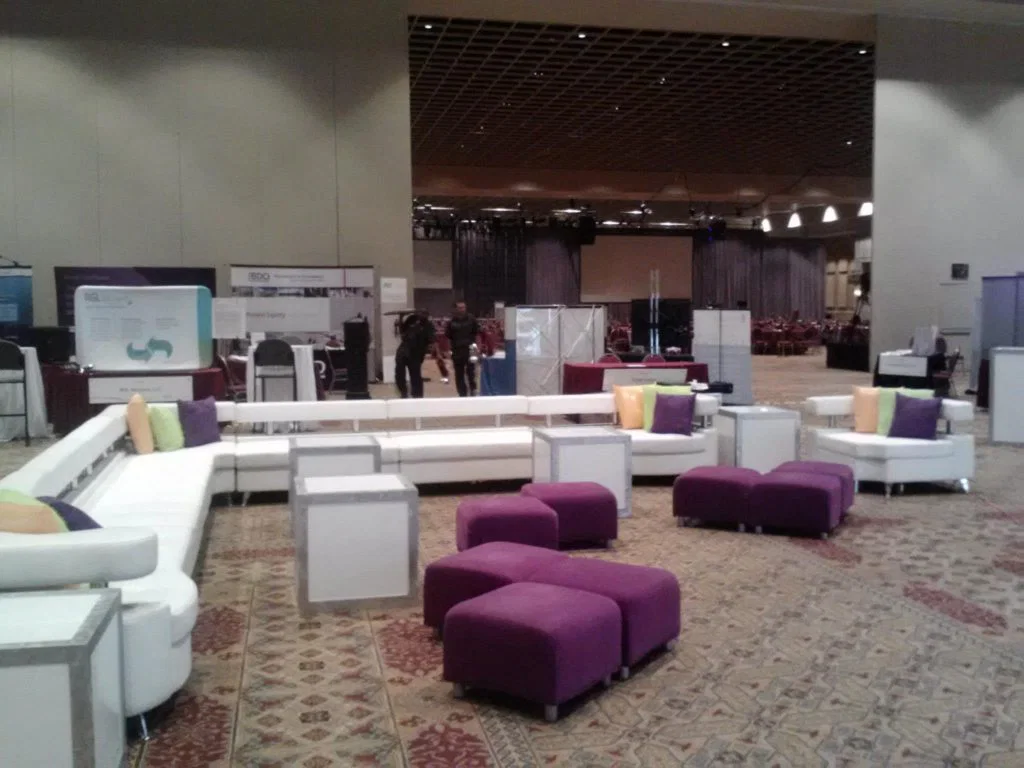
Convention services for the Tempe market operate across three venue tiers. Phoenix Convention Center anchors citywide programs with its interconnected campus (three ballrooms, ninety-nine meeting rooms, a 2,300-seat hall, twenty climate-controlled docks), Omni Tempe Hotel at ASU and Talking Stick Resort handle mid-scale conference programs with full-service meeting inventory, and Mesa Convention Center supports East Valley regional conventions. Each venue follows a different planning sequence: citywide shows run multi-year advance cycles with housing blocks across downtown Phoenix and Tempe, hotel-based conferences compress into ninety-day windows, and Mesa programs typically book six to twelve months out.
Jurisdictional responsibility varies by venue and event. Phoenix Convention Center programs follow official show contractor protocols, including labor through the local IATSE jurisdiction and coordination with house services for utilities and rigging. Hotel-based convention programs at Omni Tempe or Talking Stick operate through each property's in-house services team, with Exhibitor Appointed Contractors requiring advance approval and certificate of insurance filing. Mesa Convention Center sits between those models, with some programs designating an official contractor and others allowing open EAC access after advance coordination with facility management.
Strong planning covers convention-service planning specific to Tempe and the surrounding Phoenix metro. The project plan should turn venue rules, freight deadlines, labor windows, and exhibitor goals into a workable show schedule. Convention planners coordinate booth installation, general session staging, breakout-room AV, registration setup, freight routing, and labor scheduling across whichever venues and contractors the program requires. The sections below outline venue behavior, planning rhythm, freight logistics, and compliance considerations that apply to conventions in this market.
Convention Planning Focus Areas
- Phoenix Convention Center North Building freight coordination through twenty climate-controlled docks, with I-10 access from eastbound exhibitors routing past Sky Harbor and northbound teams using the downtown exits
- Omni Tempe Hotel at ASU's seven meeting rooms and 36,000 total square feet support association conventions with registration, breakout programming, and ballroom general sessions in a single building
- Mesa Convention Center's 19,000 square feet of exhibit area and 19,000 square feet of meeting space create a combined 38,000-square-foot campus for East Valley regional conventions
- Talking Stick Resort convention programs combine meeting space with on-property lodging, eliminating shuttle logistics but requiring advance coordination with the resort's in-house services team for booth setup and AV deployment
- Freight timing between Phoenix Convention Center, Omni Tempe, and Mesa Convention Center follows I-10 corridor patterns, with fifteen-minute off-peak runs expanding to forty minutes during Phoenix rush windows (6:30 to 9:30 AM, 3:30 to 7:00 PM)
Venue Tier and Event Footprint
Phoenix Convention Center serves as the metro's citywide anchor. Visit Phoenix reports the campus includes three ballrooms, ninety-nine meeting rooms, a 2,300-seat hall, and an Executive Conference Center. The North Building offers 635,000 square feet of meeting and exhibition space, eleven exhibit halls, fifty-six meeting rooms, and twenty climate-controlled loading docks. Programs at this scale run multi-year advance planning cycles, with housing blocks extending across downtown Phoenix, Tempe, and Scottsdale. Show management designates an official show contractor for installation, labor, rigging, and coordination with house services. Exhibitors may appoint their own contractor but must follow the show manual's EAC protocols and coordinate with the official contractor for shared resources.
Omni Tempe Hotel at ASU and Talking Stick Resort anchor the mid-scale tier. Tempe Tourism lists Omni Tempe with 330 rooms, seven meeting rooms, and 36,000 square feet of meeting space. This footprint supports association conventions with registration, breakout sessions, and general sessions in the primary ballroom. Talking Stick Resort offers similar configuration but adds on-property lodging, eliminating shuttle logistics. Both properties operate through in-house services teams that handle tables, chairs, basic AV, internet, and coordination with approved EACs. Planners coordinate directly with the hotel's convention-services manager.
Mesa Convention Center supports East Valley regional conventions. Visit Mesa describes the center as a full-service facility with 19,000 square feet of exhibit area and 19,000 square feet of meeting space. This 38,000-square-foot combined footprint fits programs that need downtown Mesa access, proximity to East Valley corporate sponsors, or a lower-cost alternative to Phoenix or Scottsdale venues. Mesa programs typically book six to twelve months in advance, with some designating an official contractor and others allowing open EAC access after coordination with facility management. The venue sits near US 60 and Loop 202, making it accessible from Tempe, Chandler, and Gilbert without routing through central Phoenix congestion.
- Phoenix Convention Center citywide programs follow multi-year planning cycles with housing blocks across Phoenix, Tempe, and Scottsdale, official show contractor designation, and IATSE labor jurisdiction
- Omni Tempe and Talking Stick Resort mid-scale conventions compress into ninety-day windows, operate through in-house services teams, and require advance EAC approval with insurance certificates
- Mesa Convention Center regional programs book six to twelve months out, sit between official-contractor and open-EAC models, and offer East Valley access via US 60 and Loop 202 without central Phoenix routing
Planning Sequence and Deadlines
Citywide conventions at Phoenix Convention Center start with venue hold and housing block negotiations twelve to thirty-six months before the event. Once signed, show management designates the official show contractor, opens exhibitor sales, and publishes the exhibitor services manual. The manual includes advance order deadlines (typically thirty to sixty days before move-in), labor rates, rigging procedures, and EAC guidelines. Exhibitors who miss advance order deadlines pay premium rates for onsite orders. The official contractor coordinates with house services for utilities, rigging points, and shared equipment.
Hotel-based conventions at Omni Tempe or Talking Stick compress the timeline. Planners book six to twelve months out, finalize room blocks ninety days before arrival, and submit floor plans and AV requirements thirty days before load-in. The hotel's in-house team handles basic setup, and any exhibitor-appointed contractor must coordinate timing with the hotel's convention-services manager. These programs rarely designate a single official contractor. Instead, each exhibitor hires their own installer, submits insurance, and schedules setup within the hotel's move-in window (often a single day rather than multi-day load-in).
Mesa Convention Center programs sit between those models. Regional conventions may designate an official contractor if the program includes significant booth installation or general session staging, or they may allow open EAC access with advance coordination. Either way, the facility requires exhibitors and contractors to submit insurance certificates, coordinate freight timing with the loading dock schedule, and follow the venue's setup and strike hours. Planners should confirm whether the program follows an official-contractor model or open-EAC model early in the planning process, because that decision affects vendor selection, advance order deadlines, and onsite coordination protocols.
- Phoenix Convention Center programs publish exhibitor services manuals with advance order deadlines thirty to sixty days before move-in, EAC guidelines, and coordination protocols with the official show contractor
- Omni Tempe and Talking Stick conventions finalize floor plans and AV requirements thirty days before load-in, with each exhibitor hiring and coordinating their own contractor within the hotel's compressed move-in window
- Mesa Convention Center planners confirm official-contractor versus open-EAC model early, because that decision drives vendor selection, advance order timing, and onsite coordination workflows
- Hotel-based programs often compress multi-day load-in schedules into single-day windows, requiring tighter freight coordination and faster booth installation than convention-center programs allow
Freight Routing and Dock Access
Freight routing for Phoenix Convention Center follows I-10 corridor patterns. Exhibitors shipping from California take I-10 eastbound past Sky Harbor and exit at Washington or Jefferson for the downtown campus. Teams from Tucson use I-10 northbound. The convention center's twenty climate-controlled docks accommodate tractor-trailers, straight trucks, and sprinter vans, with marshaling yards for oversized loads. Dock access is scheduled by the official show contractor, and exhibitors who miss their assigned window may face delays or handling fees.
Tempe hotel freight routing depends on the venue. Omni Tempe Hotel at ASU sits near University Drive and Mill Avenue in downtown Tempe, accessible from I-10 via the University Drive exit or from Loop 202 via the Mill Avenue exit. The hotel has limited dock space compared to a convention center, so freight deliveries follow a tight schedule coordinated by the convention-services team. Exhibitors shipping large crates or multiple pallets should confirm dock access timing and any size restrictions (overhead clearance, turn radius) before finalizing shipment. Talking Stick Resort sits northeast of Tempe near Loop 101 and Pima Road in Scottsdale, with freight access from Loop 101 southbound to the Pima exit. The resort's loading area serves both convention freight and daily hotel operations, so delivery windows are closely managed.
Mesa Convention Center freight access follows US 60 and Loop 202 routing. Exhibitors coming from Tempe or central Phoenix take Loop 202 eastbound to the Country Club Drive exit, then route north into downtown Mesa. Teams coming from Chandler or Gilbert use US 60 westbound to the Country Club exit. The facility has dedicated loading docks for convention programs, with marshaling space for multi-exhibitor shows. Freight timing between Phoenix Convention Center and Mesa Convention Center runs fifteen to twenty minutes off-peak, stretching to forty minutes during Phoenix rush windows. Exhibitors who need to move equipment or materials between those venues should plan around 6:30 to 9:30 AM and 3:30 to 7:00 PM congestion.
- Phoenix Convention Center's twenty climate-controlled docks accommodate tractor-trailers and straight trucks, with marshaling yards for oversized loads and dock access scheduled by the official show contractor
- Omni Tempe Hotel at ASU freight deliveries follow a tight schedule due to limited dock space, requiring exhibitors to confirm timing and size restrictions (overhead clearance, turn radius) before shipment
- Talking Stick Resort loading area serves both convention freight and daily hotel operations, so delivery windows are closely managed and exhibitors should coordinate access with the resort's services team
- Mesa Convention Center freight access via Loop 202 and US 60 supports fifteen to twenty-minute off-peak runs from Phoenix Convention Center, expanding to forty minutes during 6:30 to 9:30 AM and 3:30 to 7:00 PM rush windows
Labor and Contractor Coordination
Labor jurisdiction for Phoenix Convention Center programs follows IATSE protocols. The official show contractor coordinates installation, dismantle labor, rigging, and equipment operation. Exhibitors who hire an Exhibitor Appointed Contractor must follow the show manual's EAC guidelines, which include submitting insurance naming the convention center and show management as additional insureds, coordinating with the official contractor for shared resources, and following the same labor rules. Some programs allow exhibitor self-installation for small booths, but larger island booths or structures with rigging points require contractor coordination.
Hotel-based conventions at Omni Tempe and Talking Stick operate through each property's in-house services team. The hotel provides tables, chairs, linens, basic AV, and internet setup. Exhibitors who need custom booth installation or specialized staging hire their own contractor, submit insurance, and coordinate timing with the hotel's convention-services manager. These programs do not follow a single official-contractor model, so each exhibitor handles their own vendor selection. The hotel's services team manages move-in access and ensures contractors follow facility rules (floor protection, wall protection, noise restrictions).
Mesa Convention Center labor coordination depends on whether the program designates an official contractor. If the event follows an official-contractor model, labor and equipment coordination mirror Phoenix Convention Center protocols. If the program allows open EAC access, each exhibitor hires their own contractor, submits insurance, and coordinates directly with facility management. Either way, the venue requires advance notice for rigging (if the program uses hanging signage or structures), forklift rental, or scissor-lift access. Planners should confirm the labor model and coordination protocols during the initial venue contract negotiation to avoid onsite surprises.
- Phoenix Convention Center EAC guidelines require insurance certificates naming the convention center and show management as additional insureds, coordination with the official contractor for shared resources, and compliance with IATSE labor protocols
- Omni Tempe and Talking Stick in-house services teams handle tables, chairs, linens, basic AV, and internet setup, with exhibitors hiring their own contractors for custom booth installation and coordinating timing with the hotel's services manager
- Mesa Convention Center programs confirm official-contractor versus open-EAC model during initial venue negotiation, affecting labor coordination, equipment rental, and rigging approval workflows
Compliance and Venue-Specific Requirements
Phoenix Convention Center programs require compliance with city fire codes, ADA standards, and venue rules outlined in the exhibitor services manual. Booth structures must meet height restrictions (sixteen feet for island booths, eight feet for inline booths), maintain aisle clearances, and follow fire marshal inspection protocols if the booth includes fabric structures, enclosed spaces, or cooking equipment. Rigging points require engineering drawings and advance approval from the official show contractor and the technical services team. Exhibitors using pyrotechnics, open flame, or pressurized gas must obtain permits from Phoenix Fire Department and coordinate with show management.
Hotel conventions at Omni Tempe and Talking Stick follow each property's facility rules. These include floor protection requirements (plywood, Masonite, or carpet padding under heavy equipment), wall protection if booth setup involves leaning materials against walls, and noise restrictions during guest hours. AV and internet setup follow the hotel's house services pricing unless the planner negotiates third-party AV. Exhibitors who bring their own AV equipment should confirm compatibility with the hotel's power and connectivity infrastructure.
Mesa Convention Center compliance includes fire code inspections, ADA accessibility verification, and coordination with the venue's technical services team for rigging or electrical loads above standard booth power (most booths receive 110V 20-amp circuits; anything above that requires advance coordination and may incur additional fees). The facility's setup and strike hours are posted in the venue contract, and exhibitors or contractors who need access outside those hours must request approval and may pay overtime facility fees. Insurance requirements apply to all contractors and exhibitors, with certificates due at least two weeks before move-in.
- Phoenix Convention Center booth structures meet height restrictions (sixteen feet island, eight feet inline), maintain ten-foot aisle clearances, and follow fire marshal inspection protocols for fabric, enclosed spaces, or cooking equipment
- Omni Tempe and Talking Stick facility rules include floor protection (plywood, Masonite, carpet padding) under heavy equipment, wall protection during setup, and noise restrictions during guest hours near meeting-room corridors
- Mesa Convention Center rigging and electrical loads above 110V 20-amp circuits require advance coordination with the venue's technical services team, with insurance certificates due two weeks before move-in
- Phoenix programs using pyrotechnics, open flame, or pressurized gas obtain permits from Phoenix Fire Department and coordinate with show management and the official contractor before load-in
Convention Services FAQ
How far in advance should I book Phoenix Convention Center for a citywide convention?
Citywide conventions at Phoenix Convention Center typically book twelve to thirty-six months in advance. That timeline allows venue hold, housing block negotiation across downtown Phoenix and Tempe hotels, and coordination with the official show contractor for labor and services scheduling. Association conventions with recurring annual dates may book even farther out to secure preferred windows.
Can I use my own contractor for booth installation at a Phoenix Convention Center program?
Yes, but you must follow the exhibitor services manual's Exhibitor Appointed Contractor guidelines. This includes submitting a certificate of insurance naming the convention center and show management as additional insureds, coordinating with the official show contractor for shared resources (forklifts, freight staging, rigging), and complying with IATSE labor protocols. Small inline booths may qualify for self-installation depending on the show's rules.
What is the freight timing between Phoenix Convention Center and Mesa Convention Center?
Off-peak runs between Phoenix Convention Center and Mesa Convention Center take fifteen to twenty minutes via Loop 202 eastbound. During Phoenix rush windows (6:30 to 9:30 AM and 3:30 to 7:00 PM), that timing stretches to forty minutes or longer depending on traffic density. Exhibitors moving equipment or materials between those venues should plan around those congestion windows.
Do Tempe hotel conventions follow the same labor model as Phoenix Convention Center programs?
No. Hotel-based conventions at Omni Tempe Hotel at ASU or Talking Stick Resort operate through each property's in-house services team rather than a single official show contractor. Each exhibitor hires their own contractor for booth installation, submits insurance, and coordinates setup timing with the hotel's convention-services manager. The hotel provides tables, chairs, linens, basic AV, and internet setup as part of the venue package.
What compliance requirements apply to convention programs at Mesa Convention Center?
Mesa Convention Center programs follow city fire codes, ADA accessibility standards, and venue-specific rules for rigging, electrical loads above 110V 20-amp circuits, and setup hours. All contractors and exhibitors must submit insurance certificates at least two weeks before move-in. Rigging points and high-power electrical requirements need advance coordination with the venue's technical services team, and access outside posted setup hours requires approval and may incur overtime facility fees.