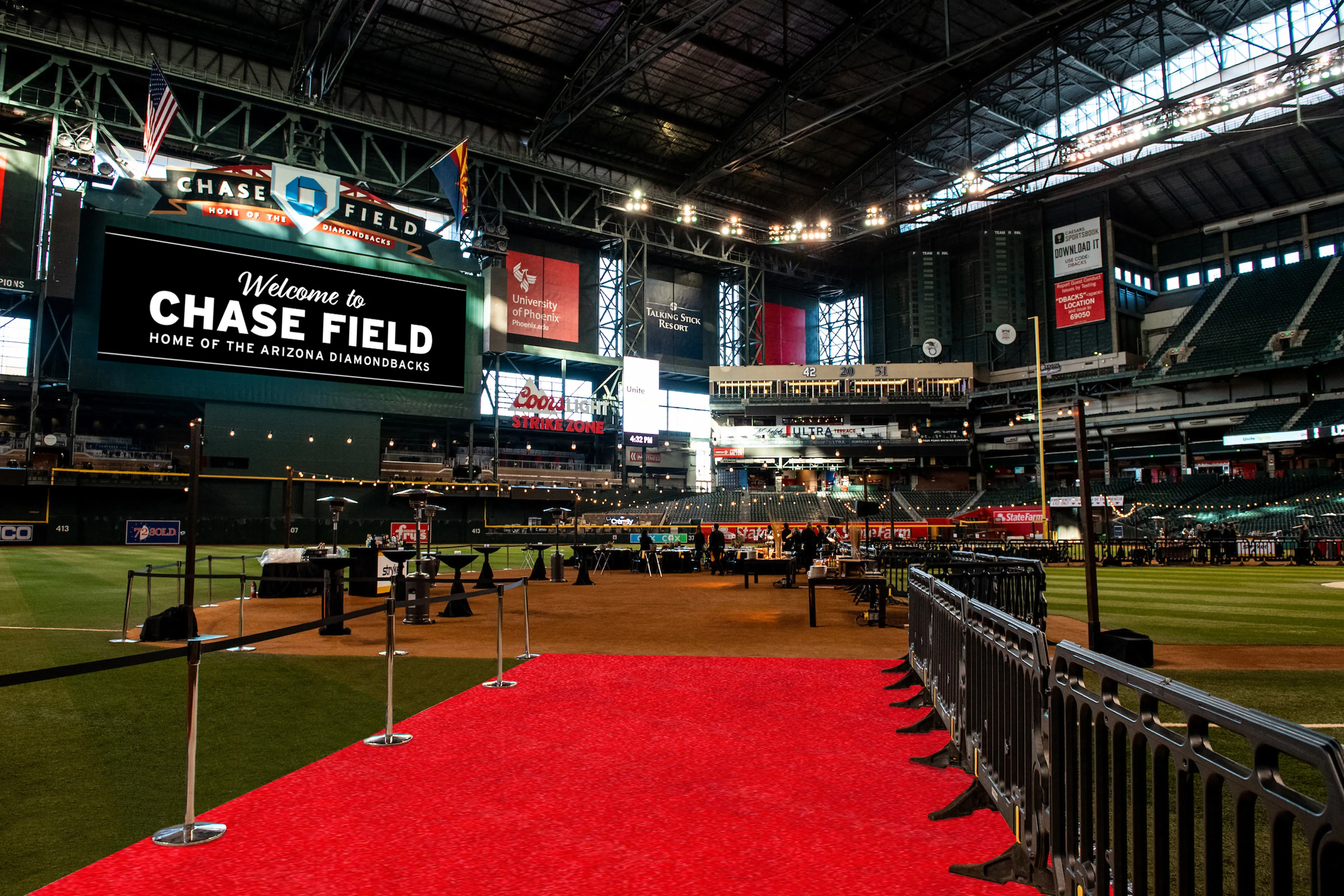
Strong planning covers Chase Field as a trade show and corporate event venue, explaining how the stadium's layout, freight access, and downtown Phoenix location shape planning, vendor coordination, and load-in schedules for sponsor activations, experiential programs, and large corporate gatherings. The project plan should turn venue rules, freight deadlines, labor windows, and exhibitor goals into a workable show schedule.
Chase Field is home to the Arizona Diamondbacks. The retractable roof creates a climate-controlled option for summer programs, and the downtown location puts the stadium within walking distance of the Sheraton Phoenix Downtown, the Renaissance Phoenix Downtown, and the Phoenix Convention Center campus. Most teams coordinate Chase Field programs with Valley-wide event calendars that include Phoenix Convention Center expos, WestWorld of Scottsdale consumer shows, and the Omni Tempe Hotel at ASU conference blocks.
The stadium's I-10 access and proximity to Phoenix Sky Harbor International Airport support freight and labor routing from Tempe, Mesa, and Chandler. Load-in through the Jefferson Street and Fourth Street gates follows stadium event operations and often runs on weekday mornings before game-day schedules compress dock availability. Planning requires clarity on what the stadium provides, what the official event contractor handles, and what scope an exhibitor-appointed contractor carries.
Venue facts to confirm before move-in
- Chase Field says it is home to the Arizona Diamondbacks.
- The stadium says it seats approximately 48,686.
- Chase Field says it features a retractable roof and is located in downtown Phoenix.
Chase Field Planning Context
- I-10 and downtown Phoenix placement puts Chase Field eight miles northwest of Tempe, twelve miles west of Mesa Convention Center, and fourteen miles southwest of WestWorld of Scottsdale, so freight and labor routing often coordinates with the broader Valley event calendar and Phoenix Convention Center programs
- The retractable roof and 48,686-seat capacity shape what fits logistically and what doesn't, so verify early whether your activation uses concourse space, a suite level, the field itself, or a combination, because each zone has different load-in protocols, electrical service points, and vendor access rules
- Load-in timing around Diamondbacks game schedules and other stadium events compresses available dock windows, so coordinate advance access requests with the stadium operations team and the official event contractor, especially for programs that require overnight rigging or multi-day setup cycles
- Downtown parking and hotel logistics differ from suburban venues like Talking Stick Resort or WestWorld, so plan for valet programs, shuttle routes, or validated parking when your activation draws VIP guests or overnight setup crews who need predictable vehicle access and secure equipment staging
- Jurisdictional boundaries at Chase Field between house services, official event contractors, and exhibitor-appointed contractors follow event type and contract terms, so clarify who provides power distribution, rigging points, internet uplinks, and janitorial service before finalizing your production budget or load-in schedule
Stadium Layout and Venue Context
Chase Field occupies a downtown Phoenix block bounded by Jefferson Street to the north, Fourth Street to the west, and Seventh Street to the east. The retractable roof spans the field and creates a controlled environment when closed, which matters for summer activations and programs sensitive to heat or weather. The stadium's concourse levels, suite inventory, and field access points each have different freight paths, electrical infrastructure, and setup windows. Most corporate activations use concourse activations for sponsor booths, suite-level hospitality for VIP programs, or field layouts for product reveals and large-scale brand experiences.
The 48,686-seat capacity reflects baseball configuration. Corporate events and sponsor activations often use a fraction of that footprint, concentrating activity in specific concourse zones, club areas, or field sections. The stadium's proximity to the Phoenix Convention Center campus allows planners to layer Chase Field programs into broader convention schedules. Teams exhibiting at the convention center's North Building or attending conferences at the Sheraton Phoenix Downtown sometimes add Chase Field evening activations to extend attendee engagement and provide differentiated sponsor touchpoints.
Downtown Phoenix hotel inventory includes the Renaissance Phoenix Downtown, the Westin Phoenix Downtown, and properties along Central Avenue. These hotels provide overflow lodging for Phoenix Convention Center events and support VIP housing for Chase Field programs. Freight access from Tempe, Mesa, and Chandler follows I-10 westbound, with dock staging near Jefferson Street and vehicle routing that avoids peak downtown congestion between 7:00 AM and 9:00 AM and again between 4:00 PM and 6:30 PM.
- Concourse activations use perimeter space around the seating bowl and require coordination with stadium operations on electrical drops, floor protection, and attendee flow during concurrent baseball events or public tours
- Suite-level programs draw on existing hospitality infrastructure but often need supplemental AV, branded overlays, and catering coordination that the stadium's official event contractor or an exhibitor-appointed team handles depending on contract scope
- Field access for product launches, vehicle displays, or large scenic builds requires advance rigging review, turf protection protocols, and load-in schedules that avoid conflicts with Diamondbacks game prep or other stadium bookings
- Dock access near Jefferson Street and Fourth Street serves most freight, but overnight security, dock scheduling, and vehicle staging need to align with stadium operations and any active baseball calendar constraints
Freight and Load-In Logistics
Most Chase Field load-ins route through the Jefferson Street loading area, which accommodates box trucks and smaller freight vehicles. Larger tractor-trailers and oversized deliveries sometimes stage off-site and shuttle material in smaller increments, especially during baseball season when dock availability compresses around game-day operations. Coordination with the stadium's operations team and the official event contractor clarifies when docks open, how long vehicles can occupy loading zones, and where overflow freight stages if multiple activations overlap.
I-10 connects Chase Field to Tempe, Mesa, Chandler, and the broader East Valley, so freight originating from warehouse facilities near Phoenix Sky Harbor International Airport or along the Loop 202 corridor typically follows I-10 westbound to the Jefferson Street exit. Off-peak timing avoids the worst downtown congestion. Morning windows before 6:30 AM and late-afternoon windows after 7:00 PM provide the smoothest access, though overnight load-ins require separate approval and often involve additional security or stadium staffing fees.
Rigging for hanging elements, truss structures, or large-format video walls requires advance coordination with the stadium's rigging points and load capacity documentation. The retractable roof structure provides rigging options, but not every point is rated for heavy loads or accessible without specialized lifts. Teams planning overhead installations submit rigging plans early and coordinate with the venue's technical services or the official contractor's rigging crew to confirm point availability, load ratings, and installation schedules that avoid conflicts with other events or stadium maintenance.
- Box-truck access works for most concourse activations and suite-level programs, while field builds with scenic elements, vehicle displays, or large product installations may need tractor-trailer deliveries staged off-site and shuttled in smaller loads
- Dock scheduling around Diamondbacks home games compresses available windows, so load-ins for programs within twenty-four hours of a scheduled game often require overnight access or early-morning slots coordinated weeks in advance
- Turf protection and floor covering for field activations add cost and setup time, so budget for ground protection systems, installation labor, and removal schedules that leave the field ready for the next baseball event or stadium program
- Vehicle staging for production crews, AV techs, and exhibitor teams during multi-day setups needs to account for limited downtown parking and potential conflicts with public parking demand during concurrent events at the Phoenix Convention Center or Footprint Center
Jurisdictional Scope and Contractor Roles
Chase Field programs operate under a jurisdictional framework formed by the stadium's house services, the official event contractor (when one is designated), and any exhibitor-appointed contractors the client engages. House services typically include baseline electrical infrastructure, facility access, and janitorial coverage. The official event contractor may provide rigging, AV systems, power distribution, and labor coordination for contracted event elements. Exhibitor-appointed contractors handle custom booth builds, branded installations, and specialized technical systems the official contractor does not cover.
Clarity on who provides what prevents duplication, cost overruns, and load-in conflicts. A common mistake is assuming the stadium or the official contractor will handle power distribution to individual activation booths when the contract assigns that scope to the exhibitor. Another is ordering rigging services from an outside vendor without confirming that the stadium allows exhibitor-appointed rigging teams. Reading the event manual, the facility use agreement, and any official contractor agreements before finalizing vendor bids eliminates most of these issues.
Labor jurisdiction follows the event type and contract terms. Some Chase Field events operate under union labor agreements that require specific trade classifications for electrical work, rigging, carpentry, and AV installation. Other programs allow non-union exhibitor-appointed crews. Verify labor requirements early, especially for multi-day setups or programs that overlap with Diamondbacks games, because stadium operations may impose additional crew credentialing or background-check requirements when baseball-season security protocols are active.
- Electrical service beyond house-provided outlets often requires advance orders through the official event contractor or a licensed exhibitor-appointed electrician, depending on contract terms and local code requirements for temporary power distribution
- Rigging coordination involves the stadium's structural engineering documentation, load-capacity verification, and scheduling around other events that may already have rigging elements in place or scheduled for installation in overlapping windows
- Internet and data connectivity for interactive exhibits, live-streaming setups, or registration kiosks may require dedicated uplinks coordinated through the stadium's IT department or the official event contractor, because standard WiFi bandwidth does not always support high-traffic activations
- Waste removal, floor cleaning, and restroom service for multi-day programs need to be scheduled with the stadium's janitorial team or added to the official contractor's scope, so clarify what house services cover and what requires separate payment or coordination
Hotel and Attendee Logistics
Downtown Phoenix hotels provide lodging for VIP guests, production crews, and exhibitor teams working Chase Field programs. The Sheraton Phoenix Downtown connects directly to the Phoenix Convention Center campus and sits less than a mile north of the stadium. The Renaissance Phoenix Downtown and the Westin Phoenix Downtown offer additional inventory within walking distance or a short rideshare trip. Hotel room blocks for multi-day programs often coordinate with Phoenix Convention Center event calendars, because citywide conventions compress downtown hotel availability and drive up rates during peak event windows.
Parking for attendees, VIPs, and setup crews follows stadium event protocols. Public parking garages near Chase Field serve baseball games and downtown events, but availability fluctuates with the Diamondbacks schedule and concurrent events at the Footprint Center or the Phoenix Convention Center. Valet programs, shuttle routes from designated hotel pickup points, or validated parking at nearby garages provide more predictable access for VIP guests and overnight setup teams who need secure vehicle staging and reliable departure timing.
Attendee transportation from Tempe, Scottsdale, or Mesa often layers into broader event logistics. Teams running conference programs at the Omni Tempe Hotel at ASU or expos at WestWorld of Scottsdale sometimes charter shuttles or arrange rideshare credits to move attendees between venues. The Valley Metro Light Rail connects Tempe to downtown Phoenix, but most corporate programs rely on dedicated shuttle schedules or individual rideshare for tighter timing and private branding opportunities during the transit experience.
- Hotel room blocks during Phoenix Convention Center citywide shows require early booking, because downtown inventory tightens and rates rise when the convention center's North Building, West Building, and connected ballrooms operate at capacity
- Parking validation or prepaid garage access for VIP guests and production crews eliminates confusion and ensures reliable vehicle staging during load-in, show hours, and strike, especially when multiple events overlap downtown
- Shuttle coordination from airport terminals, East Valley hotels, or Scottsdale resort properties requires advance routing with the stadium's security team to confirm vehicle access points, drop-off zones, and departure schedules that avoid conflicts with baseball game traffic or other stadium events
- Valley Metro Light Rail serves downtown Phoenix and connects to Tempe, but most corporate teams prefer dedicated shuttles or rideshare for branded transit experiences and tighter control over attendee arrival timing and departure flow
Planning Rhythm and Vendor Coordination
Planning a Chase Field activation starts with confirming the event date, the specific venue zones you will use (concourse, suites, or field), and the stadium's availability around the Diamondbacks schedule. Once those elements lock, the next step is reviewing the event manual and any facility use agreement to clarify what the stadium provides, what the official event contractor handles, and what scope remains open for exhibitor-appointed vendors. That clarity shapes the RFP process and prevents duplicate services or missed essentials.
Vendor selection for Chase Field programs often involves comparing the official event contractor's pricing against exhibitor-appointed options for booth builds, AV systems, power distribution, and rigging. The official contractor knows the stadium's infrastructure and has established dock access and labor relationships, which can streamline coordination. Exhibitor-appointed contractors may offer lower pricing or specialized capabilities, but they need to confirm stadium approval, obtain facility access credentials, and coordinate their schedules with house operations and any concurrent baseball events.
Final production budgets include line items for turf protection, rigging engineering, electrical service, internet connectivity, and any overtime labor triggered by compressed load-in windows or strike schedules that extend past standard stadium hours. Advance orders placed four to six weeks before the event date typically lock favorable pricing and ensure material availability. Last-minute changes often trigger rush fees and may face inventory constraints, especially during busy event seasons when Phoenix Convention Center expos, WestWorld shows, and hotel ballroom programs compete for the same labor pool and rental inventory.
- Event manuals and facility use agreements from Chase Field operations clarify dock schedules, electrical infrastructure, rigging protocols, and labor jurisdiction, so read those documents before finalizing vendor contracts or production schedules
- Comparing official contractor pricing against exhibitor-appointed bids requires including all costs — freight, labor, insurance, facility access fees, and any stadium-specific credentialing or safety training the exhibitor team must complete
- Advance orders for power distribution, rigging points, internet uplinks, and janitorial service lock in pricing and confirm availability, while last-minute adds risk higher costs, limited inventory, and scheduling conflicts with other stadium events
- Coordination calls with the stadium operations team, the official event contractor, and any exhibitor-appointed vendors align load-in timing, dock access, vehicle staging, and strike schedules so every party knows when docks open, where freight stages, and what equipment moves when
Frequently Asked Questions
What is the typical load-in window for Chase Field corporate activations?
Load-in windows depend on the event calendar and the Diamondbacks game schedule. Weekday mornings before 6:30 AM often provide open dock access, while windows within twenty-four hours of a scheduled game require advance coordination and sometimes overnight access. Most multi-day setups request dock time two to three days before the event to allow for rigging, AV installation, and branded overlays without conflicts with baseball operations.
How does the retractable roof affect planning for summer events?
The retractable roof provides climate control when closed, which eliminates heat concerns for summer programs and allows for predictable environmental conditions for AV equipment, product displays, and attendee comfort. Planners specify roof status (open or closed) during the event contract phase, because open-roof programs may need contingency plans for monsoon weather or intense afternoon sun that affects field activations and concourse sight lines.
Can exhibitor-appointed contractors handle rigging and electrical work at Chase Field?
It depends on the event contract and stadium policy. Some Chase Field programs allow exhibitor-appointed rigging and electrical contractors if they carry appropriate licensing, insurance, and stadium-approved credentials. Others require that all rigging and electrical work flow through the official event contractor or stadium-designated vendors. Review the facility use agreement and coordinate with stadium operations before contracting outside vendors for technical services.
How do hotel and parking logistics differ from suburban Valley venues?
Downtown Phoenix concentrates hotel inventory within walking distance of Chase Field, but public parking is more constrained and more expensive than at suburban venues like Talking Stick Resort or WestWorld of Scottsdale. Most corporate programs arrange valet service, validated parking at nearby garages, or shuttle routes from designated hotel pickup points to provide predictable access for VIP guests and production crews. Overnight vehicle staging for multi-day setups often requires advance coordination with stadium security and nearby garage operators.
What freight routing works best from Tempe or the East Valley?
I-10 westbound from Tempe, Mesa, or Chandler to the Jefferson Street exit provides the most direct route to Chase Field's loading area. Off-peak windows before 6:30 AM or after 7:00 PM avoid the heaviest downtown congestion. Freight originating near Phoenix Sky Harbor International Airport or along the Loop 202 corridor follows I-10 west and exits at Jefferson Street, staging vehicles near the Fourth Street dock entrance. Larger tractor-trailers may need to stage off-site and shuttle material in box trucks if the dock schedule or vehicle size limits direct access.