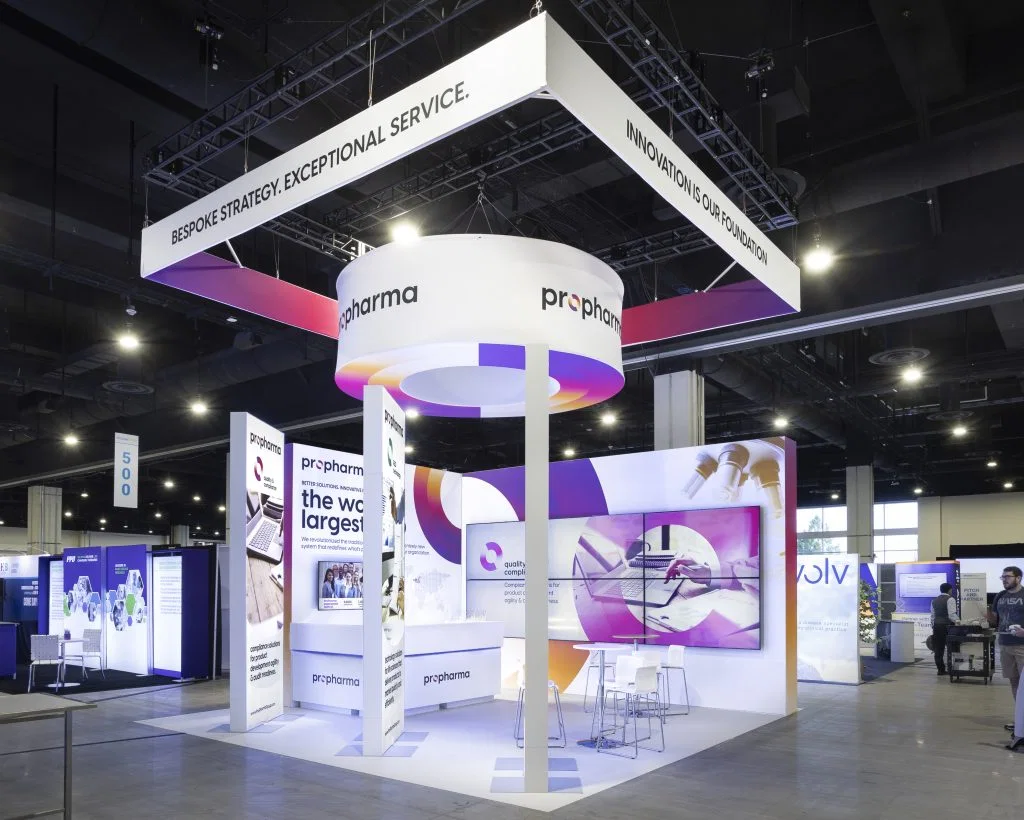
Portable display units range from backwall kits that pack into three rolling cases and assemble in twenty minutes to modular structures requiring installation crews, advance freight coordination, and electrical permits from venue operations. The difference matters at Phoenix Convention Center where the official show contractor handles most labor and drayage through union jurisdiction, at Mesa Convention Center where move-in sequences are shorter and exhibitor-appointed contractors coordinate directly with house staff, and at hotel ballrooms like Omni Tempe Hotel at ASU where setup happens inside smaller freight elevators and confined loading zones. Strong planning covers portable display planning for Tempe-area shows.
Planning portable displays begins with booth space assignment and venue rules, not with hardware catalogs or graphics quotes. Phoenix Convention Center publishes exhibitor manuals that specify labor jurisdiction, electrical cutoff dates, and advance warehouse receiving windows. WestWorld of Scottsdale and Arizona State Fairgrounds operate under different labor protocols where smaller exhibitors sometimes handle their own setup if the booth qualifies as hand-carry, while larger modular structures trigger contractor coordination and rigging approval. The Westin Tempe and Tempe Mission Palms allow exhibitor crews to install most portable systems as long as freight arrives during designated hotel loading hours and teams coordinate with catering, AV vendors, and ballroom event managers who share the same service corridors.
The booth type dictates freight volume, case count, dock timing, and graphics handling. A ten-foot backwall display ships in two or three cases weighing less than two hundred pounds total, fits on a single pallet, and assembles without tools in most venue environments. A twenty-by-twenty island exhibit built from modular frames, tension fabric panels, monitor mounts, and custom counters generates eight to fifteen cases, requires advance warehouse delivery to avoid show-floor material handling surcharges, and involves electrical permits, carpet installation, and lighting connections that follow venue-specific deadlines. Portable does not mean simple, and underestimating case count or labor requirements leads to dock delays, unexpected drayage fees, and installation schedules that collide with other exhibitors sharing the same move-in slot.
What planners track when coordinating portable display systems across Greater Phoenix venues
- Booth space assignment and aisle exposure determine backwall height limits, sightline rules, and whether the venue allows overhead graphics or hanging elements without rigging approval
- Labor jurisdiction varies by venue and show organizer, where Phoenix Convention Center enforces union install for most configurations while hotel ballrooms permit exhibitor crews if freight weight and assembly complexity stay below facility thresholds
- Freight handling deadlines split into advance warehouse windows that close two weeks before show open and direct-to-show-floor delivery that triggers higher drayage rates and tighter dock appointment schedules
- Graphics production timelines account for fabric panel printing, rigid substrate output, mounting hardware assembly, and quality inspection before freight leaves the production facility or third-party fulfillment warehouse
- Electrical and AV integration requires advance service orders filed through the official show contractor or venue operations, where monitor power, lighting circuits, and network drops follow cutoff dates that precede general move-in by five to ten business days
Booth Assignment and Venue Footprint Rules
Booth assignments appear in exhibitor confirmation packets that include space number, aisle exposure, neighboring exhibitors, and height restrictions. A corner booth at Phoenix Convention Center allows taller backwalls and open sightlines on two sides, while an inline ten-by-ten space limits backwall height to eight feet and restricts hanging signage unless the exhibitor applies for rigging approval. WestWorld of Scottsdale publishes floor plans showing column locations, electrical grid access points, and fire-lane clearances that affect booth layout before display production begins. Ignoring these constraints results in last-minute backwall trimming or booth reconfiguration on the show floor.
Venue manuals specify whether portable systems can include overhead elements, hanging monitors, or cantilevered structures. Phoenix Convention Center requires rigging drawings for any element suspended from ceiling grids. Mesa Convention Center has lower ceiling heights in certain areas, so a twelve-foot backwall that works at Phoenix may exceed clearance limits in Mesa's main hall. Tempe hotel ballrooms restrict ceiling attachments entirely, which eliminates hanging banners and forces freestanding backwall designs.
Aisle exposure and neighboring booth configurations determine whether side panels are visible or blocked. An island booth surrounded by ten-foot inline spaces benefits from four-sided branding, while a booth placed between two larger exhibits loses two side exposures and needs stronger front-facing graphics. Show organizers sometimes shift booth assignments after initial floor plans publish, so confirming final placement two weeks before move-in prevents wasted graphics production and ensures display design matches the actual space.
- Corner booths at Phoenix Convention Center allow taller structures and two-sided exposure, while inline spaces enforce eight-foot backwall limits and restrict hanging elements without rigging permits
- WestWorld floor plans show column placements and electrical grid locations that dictate booth layout before display production begins, preventing dock-day surprises
- Mesa Convention Center ceiling heights vary by hall, so verifying clearance limits early avoids backwall height conflicts discovered during installation
- Hotel ballrooms prohibit ceiling rigging, which eliminates hanging banners and requires freestanding backwall stability without overhead support
Labor Jurisdiction and Installation Protocols
Labor jurisdiction determines whether exhibitor crews can assemble portable displays or whether the official show contractor and union install teams handle setup. Phoenix Convention Center operates under union jurisdiction for most events, where exhibitors hand-carry small displays weighing under two hundred pounds total and assemble them without power tools, but anything heavier or requiring tools triggers contractor involvement and labor fees itemized in the exhibitor services manual. WestWorld of Scottsdale and Arizona State Fairgrounds allow more exhibitor self-install if the show organizer permits it, though larger modular structures still require contractor coordination to avoid bottlenecks at shared loading docks and freight marshaling zones.
Hotel ballroom programs at Omni Tempe Hotel at ASU, Tempe Mission Palms, and The Westin Tempe generally permit exhibitor crews to install portable systems as long as freight delivery schedules align with hotel loading hours and setup does not interfere with catering operations or other ballroom events. These venues enforce strict loading-zone timing because the same service elevators serve conference sessions, banquet setups, and guest deliveries. Missing the move-in window forces exhibitors to wait or reschedule for late evening when hotel operations approve after-hours access.
Understanding jurisdiction before ordering display hardware prevents budget surprises. A modular twenty-by-twenty booth that an exhibitor crew could assemble at a hotel ballroom might require eight hours of union labor at Phoenix Convention Center, with separate line items for setup, electrical connections, carpet installation, and strike. Budgeting for worst-case labor jurisdiction and adjusting downward if the venue allows self-install is safer than discovering jurisdiction rules two days before move-in.
- Phoenix Convention Center enforces union labor for most booth configurations beyond simple hand-carry setups, while hotel ballrooms allow exhibitor crews if freight and timing align with facility protocols
- WestWorld of Scottsdale and Arizona State Fairgrounds provide more exhibitor flexibility, though larger modular structures still require contractor coordination to manage dock access and freight flow
- Hotel move-in windows overlap with catering and AV setup schedules, so confirming installation timing with venue operations prevents delays caused by shared loading corridors
- Labor jurisdiction varies by event organizer even at the same venue, making it necessary to review each show's exhibitor manual rather than relying on past experience
Freight Coordination and Drayage Deadlines
Freight handling splits into advance warehouse delivery and direct-to-show-floor shipments with different cost structures. Phoenix Convention Center offers advance warehouse receiving that closes two weeks before show open, where exhibitors ship cases to the official contractor's warehouse and pay lower per-hundredweight drayage rates. Missing that deadline forces direct-to-show-floor delivery during move-in days, which triggers premium drayage fees that can double or triple the base rate and requires tighter dock appointment scheduling because every exhibitor competing for limited dock doors converges during the same forty-eight-hour window. WestWorld of Scottsdale and Mesa Convention Center publish similar advance-receiving windows, though warehouse locations and cutoff dates vary by event.
Case count and pallet configuration affect drayage costs more than most exhibitors expect. A portable display system that ships in five cases on two pallets pays drayage based on total weight and the number of pieces handled. Consolidating cases onto fewer pallets reduces piece count charges, but only if the resulting pallet dimensions fit within venue freight-elevator and corridor clearances. Phoenix Convention Center freight elevators handle standard forty-by-forty-eight-inch pallets without issue, but oversized crates or oddly shaped cases may require special handling and incur surcharges that do not appear in initial quotes.
Tracking numbers, bill-of-lading details, and shipment timing must align with the official contractor's receiving protocols. Freight arriving without proper show name, booth number, and exhibitor contact information gets held in overflow storage until someone claims it, which delays installation and adds retrieval fees. Shipping directly to hotel ballrooms like Omni Tempe or Tempe Mission Palms requires advance coordination with hotel receiving staff, who accept freight only during business hours and reject shipments that arrive unannounced or exceed loading-dock capacity. Confirming receipt before leaving the origin warehouse ensures freight actually arrived and prevents last-minute scrambles to locate missing cases on move-in day.
- Advance warehouse delivery to Phoenix Convention Center's official contractor closes two weeks before show open and offers lower drayage rates than direct-to-show-floor shipments during move-in
- Case count and pallet configuration determine per-piece handling charges, so consolidating shipments onto fewer pallets reduces costs if dimensions fit venue elevator and corridor limits
- Hotel ballroom freight must coordinate with facility receiving hours and loading-dock capacity, where unannounced shipments get rejected and rescheduled for later delivery windows
- Tracking numbers and bill-of-lading documentation prevent freight from landing in overflow storage, which triggers retrieval fees and installation delays on move-in day
Graphics Production and Quality Control
Graphics production for portable display systems involves fabric panel printing, rigid substrate output, lamination, mounting hardware attachment, and final inspection. Fabric panels for tension-frame backwalls ship as single-piece dye-sublimation prints that slide over frame edges and zip or Velcro into place. Rigid panels for modular structures use direct-to-substrate printing on PVC, foam board, or aluminum composite, then get trimmed to exact dimensions and fitted with extrusion mounting channels or Velcro strips that attach to display frames. Production timelines vary by substrate and print technology, but most shops need five to seven business days for fabric output and three to five days for rigid panels, assuming artwork files arrive print-ready with correct bleed, resolution, and color profiles.
Quality control catches color shifts, registration errors, and mounting hardware misalignment before freight ships. A fabric panel that prints short because the artwork file lacked proper bleed cannot be fixed on the show floor, and a rigid panel with visible seams looks unprofessional under ballroom lighting at Omni Tempe or exhibit-hall LEDs at Phoenix Convention Center. Requesting printed proofs before final shipment adds two days but prevents expensive reprints when defects appear during installation.
Mounting hardware and frame compatibility must be verified before graphics leave the production facility. Tension-frame systems use specific zipper profiles or silicone-edge graphics that only fit compatible frame models, and ordering the wrong edge finish makes the graphic unusable. Rigid panels require mounting channels, standoffs, or Velcro strips positioned to align with frame extrusion slots, and even small misalignments cause installation delays when crews discover that panels do not seat properly. Testing a sample panel on the actual frame before full production begins eliminates compatibility issues and confirms that graphics fit as designed.
- Fabric panel production requires five to seven business days for dye-sublimation printing and finishing, while rigid panels need three to five days depending on substrate and lamination requirements
- Print-ready artwork files with correct bleed, resolution, and color profiles prevent production delays and avoid color shifts or registration errors visible under venue lighting
- Mounting hardware compatibility must be confirmed before graphics ship, because tension-frame zippers, silicone edges, and rigid panel channels only fit specific frame models
- Quality-control photos or printed proofs catch defects before freight leaves the production facility, saving reprint costs and rushed shipping fees when issues appear on-site
Electrical and AV Service Orders
Electrical and AV integration requires advance service orders filed through the official show contractor or venue operations. Phoenix Convention Center publishes electrical order deadlines five to ten business days before general move-in, and late orders incur premium fees or get declined if the venue's electrical load capacity is already allocated. Service orders specify outlet type, amperage, circuit quantity, and booth location so electricians can pre-wire connections before exhibitors arrive. Ordering a twenty-amp circuit when the display actually needs two separate fifteen-amp circuits for monitors and lighting causes installation delays while electricians run additional lines and exhibitors wait for power to go live.
Monitor mounts, LED lighting strips, and integrated charging stations built into portable displays all require electrical connections that follow venue-specific voltage and grounding standards. Phoenix Convention Center provides standard 120-volt service for most exhibitors, but large displays with multiple monitors or high-wattage lighting may need 208-volt circuits and dedicated breaker panels. Hotel ballrooms at Omni Tempe and Tempe Mission Palms offer floor-box electrical access in some rooms and require extension cords or temporary power drops in others, so confirming power-source locations during site walks prevents last-minute cable runs that cross aisles and create tripping hazards.
Network connectivity and AV cabling often fall under separate service providers or venue IT departments. Phoenix Convention Center coordinates internet drops, Wi-Fi access points, and hardwired network connections through its technology services team, which requires separate order forms and installation scheduling. Hotel ballrooms handle AV through in-house teams or preferred vendors who manage projector rentals, screen placement, and audio feeds, but portable displays with integrated monitors or interactive kiosks may need direct HDMI or DisplayPort connections that do not appear in standard AV packages. Confirming which vendor owns each connection type before placing orders avoids finger-pointing when monitors remain dark on opening day.
- Electrical service orders at Phoenix Convention Center close five to ten business days before move-in, and late orders incur premium fees or get declined if load capacity is fully allocated
- Specifying correct outlet type, amperage, and circuit quantity prevents installation delays when actual power requirements exceed what was ordered, forcing electricians to run additional lines mid-setup
- Hotel ballroom electrical access varies by room configuration, so confirming floor-box locations or temporary power-drop requirements during site walks avoids aisle-crossing cable runs
- Network and AV connectivity may involve multiple vendors or venue IT departments, making it necessary to clarify which provider handles monitor connections, Wi-Fi drops, and interactive kiosk cabling
Common questions about portable display systems for Tempe-area trade shows and events
What qualifies as a portable display versus a custom exhibit at Phoenix Convention Center?
Portable displays typically assemble from modular frames, tension fabric panels, or rigid graphic inserts that pack into rolling cases and require minimal tools for installation. Custom exhibits involve fabricated structural elements, built-in cabinetry, or permanent finishes that ship on crates rather than in cases and often require contractor assembly. Phoenix Convention Center labor jurisdiction treats most portable systems as exhibitor-installable if total weight stays under two hundred pounds and no power tools are needed, but heavier modular structures or anything requiring electrical connections usually trigger union labor requirements.
How do advance warehouse deadlines affect portable display freight planning?
Advance warehouse receiving windows close two weeks before show open at Phoenix Convention Center and most Valley venues. Shipping cases to the official contractor's warehouse before that deadline qualifies for lower per-hundredweight drayage rates and guarantees freight arrives on-site before move-in begins. Missing the deadline forces direct-to-show-floor delivery during move-in days, which doubles or triples drayage costs and compresses dock appointments into tight windows shared by all exhibitors. Hotel ballrooms operate on different timelines where freight must coordinate with facility receiving hours rather than show-contractor schedules.
Can exhibitor crews install portable displays at WestWorld of Scottsdale and Arizona State Fairgrounds?
WestWorld of Scottsdale and Arizona State Fairgrounds generally allow exhibitor crews to install portable displays if the show organizer permits it and the booth configuration qualifies as hand-carry or simple assembly. Larger modular structures still require coordination with the official show contractor to manage dock access, freight marshaling, and material handling. Labor jurisdiction varies by event even at the same venue, so reviewing the exhibitor manual for each show clarifies whether self-install is allowed and what weight or complexity limits apply.
What graphics production timeline should exhibitors plan for fabric and rigid panel displays?
Fabric panels for tension-frame backwalls need five to seven business days for dye-sublimation printing, finishing, and quality inspection. Rigid panels printed on PVC, foam board, or aluminum composite require three to five days depending on substrate, lamination, and mounting hardware attachment. These timelines assume artwork files arrive print-ready with correct bleed, resolution, and color profiles. Adding quality-control proofs or printed samples extends the schedule by two days but catches color shifts, registration errors, or mounting misalignment before freight ships.
How do electrical service orders work for portable displays with integrated monitors and lighting at hotel ballrooms?
Hotel ballrooms at Omni Tempe Hotel at ASU, Tempe Mission Palms, and The Westin Tempe coordinate electrical access through in-house operations or preferred vendors. Floor-box locations vary by room configuration, so confirming power-source placement during site walks prevents last-minute extension cords crossing aisles. Integrated monitors and LED lighting built into portable displays require dedicated circuits specified in advance service orders, and late requests may get declined if ballroom electrical capacity is already allocated to catering, AV production, or other concurrent events sharing the same service corridors.