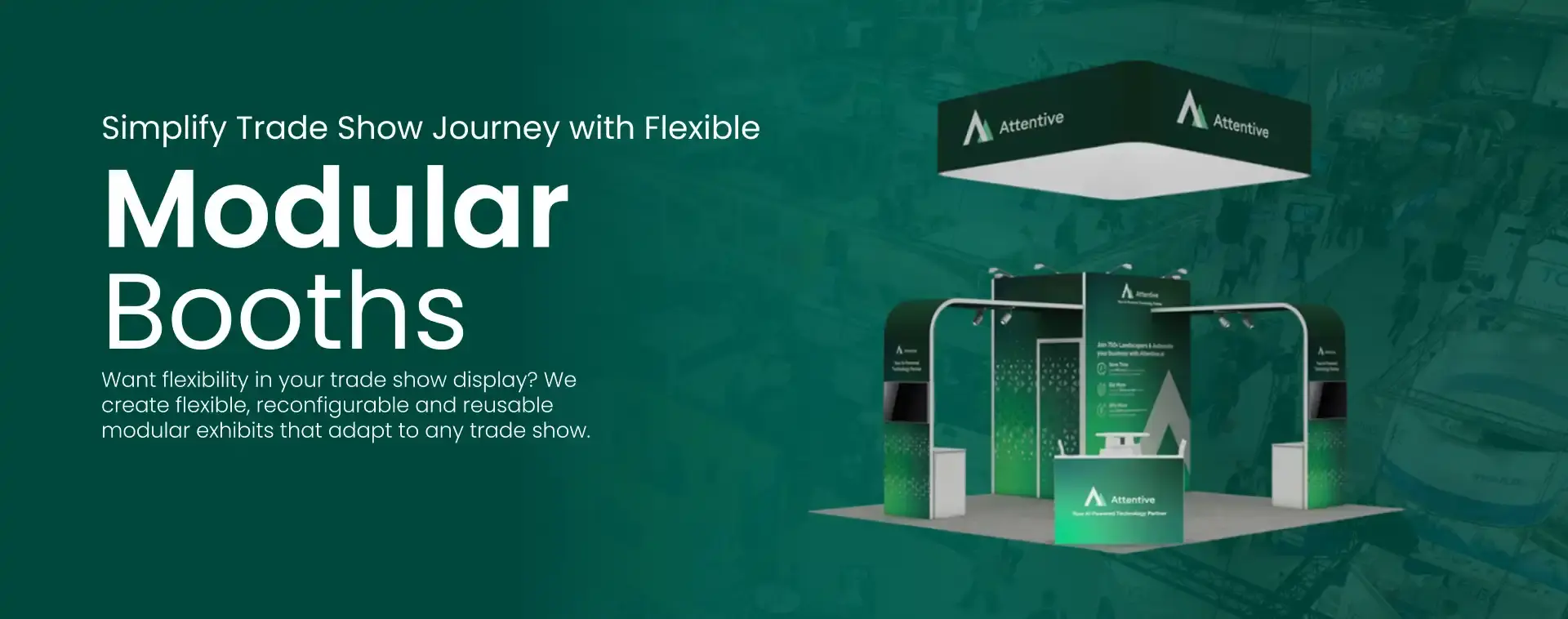
Experiential brand activations at convention-center expos and hotel ballroom conferences are production events that create participant touchpoints beyond a traditional booth perimeter. A semiconductor exhibitor at Phoenix Convention Center might run a VR product demo alongside their 20×30 island. A software company at the Omni Tempe Hotel at ASU might host an interactive challenge zone in a breakout corridor. A consumer brand at WestWorld of Scottsdale might deploy a multi-station sampling experience that spans two outdoor pavilions. Each activation involves a design brief, a fabrication or rental plan, AV and technology integration, participant flow modeling, staffing coordination, and a strike sequence that meets the venue's close deadline.
Strong planning covers activation planning for exhibitors, sponsors, and brand teams working trade shows and conferences in the Tempe metro. The project plan should turn venue rules, freight deadlines, labor windows, and exhibitor goals into a workable show schedule. It walks through activation scope definition, venue and sponsor-package coordination, production vendor selection, participant-capacity planning, rehearsal and run-of-show logistics, and post-event debrief practices. The content draws from publicly available venue specs at Phoenix Convention Center, WestWorld of Scottsdale, Talking Stick Resort, Mesa Convention Center, and Omni Tempe Hotel at ASU, plus documented activation workflows and industry planning standards.
An experiential activation is not a booth with nicer furniture. It is a choreographed participant experience that delivers a brand message through interaction, not signage. That distinction changes every aspect of the planning timeline. A booth ships two weeks early and installs in six hours. An activation might require rehearsal time on-site the day before doors open, technology integration testing, staff training for participant flow, and real-time adjustments during the first session. The production team needs to know whether the venue will allow a tech rehearsal window, whether house AV can patch into a custom video wall, whether sponsor insurance covers participant liability, and whether the official show contractor requires union labor for installation of interactive elements that plug into floor power.
Activation Planning Components
- Venue footprint verification at Phoenix Convention Center, WestWorld of Scottsdale, Talking Stick Resort, and Omni Tempe ballrooms to confirm that the activation design fits the assigned space, respects aisle clearances, and meets fire-marshal egress rules
- Advance production coordination with AV vendors, fabricators, technology integrators, and staffing agencies to lock installation schedules, rehearsal windows, tech-check appointments, and strike timelines before the exhibitor kit deadline
- Participant flow modeling and capacity planning based on expected attendee counts, session durations, queue management strategies, and peak-hour surge scenarios to prevent bottlenecks and maintain brand experience quality
- Sponsor package integration and show organizer approval when the activation is part of a paid sponsorship tier that grants naming rights, logo placement, or exclusive category protection within the event marketing plan
- Run-of-show staffing and real-time adjustment protocols for activation managers, demo operators, registration greeters, and crowd-control staff to respond to technology failures, participant surges, or last-minute schedule changes during the live event
Activation Scope and Venue Compatibility
Activation scope begins with a design brief that defines the participant journey, the brand message, the technology touchpoints, and the physical footprint. A semiconductor company activating at Phoenix Convention Center might propose a cleanroom-themed demo pod with AR headsets and a live product assembly station. A healthcare startup at Mesa Convention Center might design a diagnostic challenge game with tablet stations and a leaderboard wall. A consumer brand at WestWorld of Scottsdale might plan a multi-station sampling experience with photo booths and a DJ stage. Each concept must map to a physical footprint, a power and data requirement, a staffing plan, and a timeline that fits the venue's move-in and rehearsal availability.
Venue compatibility checks against the show's floor plan, the venue's technical specs, and the official contractor's rules. Phoenix Convention Center has 20 climate-controlled loading docks and structured install windows for large activations, but house AV and rigging require advance coordination through the official show contractor. WestWorld of Scottsdale offers outdoor pavilion space and flexible layout options, but outdoor activations must account for February temperature swings and dust management. The Omni Tempe Hotel at ASU has 36,000 square feet of meeting space across seven rooms, but corridor activations in high-traffic zones require fire-marshal approval and dedicated egress monitoring. A planner who submits an activation design without verifying venue ceiling height, electrical drop locations, and union jurisdiction will face change orders, installation delays, or outright denial from the show organizer.
Sponsor package integration matters when the activation is part of a paid sponsorship tier. A title sponsor at a Phoenix Convention Center citywide conference might receive exclusive activation rights in the main lobby, logo placement on digital signage, and a dedicated rehearsal window the evening before general move-in begins. A platinum sponsor at a Talking Stick Resort corporate summit might secure a poolside activation zone with house AV support and catering integration. The sponsorship agreement defines what the brand receives, what the show organizer provides, and where the brand's production vendor takes over. A planner who assumes the sponsor package includes rigging labor, electrical drops, or internet access without reading the contract will discover unbudgeted costs during the final walk-through.
- Design brief deliverables include participant journey map, technology and AV requirements, staffing roles and headcount, physical footprint sketch, and a one-page narrative that explains the activation's message and how it ties to the brand's conference goals
- Venue compatibility checklist covers ceiling height for hanging elements, floor loading capacity for heavy equipment, electrical and data drop locations relative to the activation footprint, fire-egress compliance for high-traffic zones, and rehearsal window availability for technology testing
- Sponsor package reconciliation involves reading the full agreement to identify what the show organizer provides (booth space, signage, house AV, logo placement) versus what the brand must procure separately (custom fabrication, technology integration, staffing, catering, participant giveaways)
Production Vendor Selection and RFP Process
Production vendor selection for a brand activation typically involves three to five specialized firms. A fabricator builds custom structures and interactive stations. An AV integrator delivers video walls, sound systems, and lighting control. A technology vendor supplies VR headsets, tablet kiosks, RFID badges, or gamification platforms. A staffing agency recruits activation managers, demo operators, and crowd-control personnel. Some activations consolidate these roles under a single turnkey provider, while others break them into separate contracts to maintain budget control.
The RFP process starts four to six months before the event for complex activations and two to three months out for simpler programs. The RFP document includes the design brief, the venue's technical specs, the show's installation and rehearsal schedule, the participant-capacity target, the staffing plan, and the budget range. Responses should itemize labor, materials, technology rental, freight, drayage, electrical and internet hookup, insurance, and contingency reserves.
Vendor vetting focuses on metro-area experience and venue-specific references. A fabricator who has installed at Phoenix Convention Center before knows the loading-dock protocol and the union steward's expectations. An AV integrator who has worked WestWorld outdoor events understands dust mitigation and generator backup. A staffing agency that has supported Omni Tempe ballroom activations can recruit from the ASU student pool.
- RFP deliverable requirements include itemized budget by category, installation and strike timeline with crew size and union classification, technology integration plan with testing and rehearsal milestones, and a risk-mitigation section that addresses common failure modes (power outages, technology crashes, participant surges)
- Vendor capability checklist covers venue-specific installation references, portfolio examples of activations similar in footprint and complexity, proof of liability insurance with the event organizer named as additional insured, and references from recent clients who ran activations at Phoenix metro venues
- Budget line-item review should separate fabrication and materials, labor by trade and shift, technology rental and integration, freight and drayage through the official show contractor, electrical and data hookup via house services, on-site supervision and contingency labor, and post-show storage or disposal
Participant Capacity Planning and Flow Modeling
Participant capacity planning begins with expected attendee counts, session durations, and peak-hour traffic patterns. A 20×40 activation at Phoenix Convention Center hosting a VR product demo might run six stations with four-minute sessions, handling 90 participants per hour at full capacity. If the show draws 8,000 attendees over two days and 15 percent express interest, the math projects 1,200 total participants. Spread across 16 exhibit hours, that averages 75 per hour, which fits the capacity model with buffer time.
Flow modeling maps the participant journey from initial approach through registration, queue wait, activation experience, data capture, and exit hand-off. A well-designed activation at WestWorld of Scottsdale might funnel participants through a branded entrance arch, past a greeter station that scans badges, into a waiting lounge with product video content, through three interactive stations, and out via a gift-redemption counter that captures email opt-in. Each touchpoint has a duration estimate and a staffing requirement.
Capacity adjustments during the live event respond to real-time observation. If the activation is running behind schedule, the team might shorten session duration, add parallel stations, or shift staff from low-traffic touchpoints to high-demand zones. If technology fails at one station, redirect participants to alternate experiences. If a competitor activation is drawing overflow traffic, deploy roving brand ambassadors earlier in the attendee floor walk.
- Capacity calculation formula: (number of stations) × (participants per hour per station) × (total exhibit hours) = maximum throughput; compare against projected demand to identify shortfall or excess capacity and adjust station count or session duration accordingly
- Flow-model deliverables include a participant journey diagram with time estimates at each touchpoint, a staffing matrix that assigns roles (greeter, station operator, queue manager, exit surveyor) by hour and location, and a contingency plan for technology failure, crowd surge, or staff shortage scenarios
- Real-time adjustment triggers include queue wait time exceeding ten minutes, participant complaints about session length or content clarity, technology downtime lasting more than five minutes, or competitor activity diverting traffic from the planned approach path
Installation Timeline and Rehearsal Coordination
Installation timeline for a brand activation follows the venue's move-in schedule but adds technology testing and rehearsal windows that most exhibitors skip. A standard booth at Phoenix Convention Center might install in six hours using a six-person crew. A brand activation with video walls, RFID badge scanners, and interactive kiosks needs a two-day install: day one for structural build and power hookup, day two for technology integration and system testing. The official show contractor controls dock access and rigging schedules, while house AV manages power distribution and network drops.
Rehearsal coordination involves blocking participant flow, testing every technology touchpoint, training staff on run-of-show protocols, and running failure-mode drills. A rehearsal at the Omni Tempe Hotel at ASU ballroom might simulate 20 mock participants walking through the full activation sequence while the production team times each station and verifies data-capture integration with the CRM platform.
Move-in contingency planning addresses late freight, vendor no-shows, and venue access delays. If the activation's primary video wall ships from California and misses the advance warehouse deadline, the planner needs a backup content plan that runs on smaller screens. If Phoenix Convention Center's loading dock is backed up because a previous exhibitor is still striking, the planner needs real-time communication with the dock supervisor and a revised install sequence.
- Install sequencing milestones include crate delivery and dock clearance (day minus two), structural build and electrical rough-in (day minus one morning), AV and technology rack-in (day minus one afternoon), system integration testing (day minus one evening), and full rehearsal with mock participants (opening morning or evening before if venue allows)
- Rehearsal checklist covers participant flow simulation with timing at each station, technology system checks including reboot and failure-mode drills, staff role-playing for opening procedures and participant hand-offs, and coordination with show organizer on emergency contact protocols and crowd-control boundaries
- Contingency scenarios to plan for include late freight requiring alternate content or simplified activation design, vendor crew delays requiring after-hours install or reduced feature scope, technology integration failures requiring backup systems or manual workarounds, and venue access restrictions requiring revised install sequencing or overnight labor
Run-of-Show Management and Post-Event Debrief
Run-of-show management during the live event involves opening procedures, shift supervision, real-time troubleshooting, and closing protocols. The activation manager arrives one hour before show floor opens to verify that all technology systems are live, staffing is at full count, and participant materials are stocked. During exhibit hours, the manager monitors queue length, participant feedback, technology uptime, and staff morale. If a video wall crashes, the manager coordinates with the AV vendor to reboot the system and redirects participants to alternate stations.
Shift handoff protocols ensure continuity when activation staff rotate during multi-day shows. A handoff at WestWorld of Scottsdale might include a five-minute briefing where the outgoing shift lead reports participant counts, technology issues, and any adjustments made during the prior session. The activation manager logs issues in a shared document that all vendors and the brand team can access in real time.
Post-event debrief within 72 hours of strike captures lessons learned, vendor performance notes, participant feedback, and budget reconciliation. The debrief agenda reviews what worked (participant engagement scores, technology uptime, staff performance), what failed (queue bottlenecks, system crashes, freight delays), and what to change for the next activation (adjust session duration, add queue entertainment, simplify technology stack). The brand team, activation manager, and lead vendors participate.
- Opening procedure checklist includes technology system boot and connectivity test, staffing roll call and role confirmation, participant material stock check (giveaways, brochures, lead-capture forms), emergency contact verification with venue security and show organizer, and final walk-through with brand team stakeholders
- Real-time issue response protocols assign authority by issue type: activation manager handles participant flow and staffing adjustments, AV vendor handles technology crashes and system reboots, show organizer handles crowd-control escalations or neighboring-exhibitor conflicts, and brand team approves message or content changes that affect participant experience
- Debrief deliverable format includes a one-page executive summary with key metrics (total participants, peak-hour throughput, technology uptime percentage, budget variance), a lessons-learned section organized by category (design, technology, staffing, vendor performance), and a recommendation list for the next activation prioritized by impact and feasibility
Common Questions About Experiential Brand Activations
What is the difference between a booth and a brand activation at Phoenix Convention Center?
A booth is a display space where attendees approach a counter, collect literature, and have brief conversations with staff. A brand activation is a choreographed participant experience that delivers a message through interaction, not signage. The activation might include VR demos, gamification challenges, product sampling stations, or photo experiences that require participant flow modeling, technology integration, rehearsal time, and run-of-show staffing that a traditional booth does not need.
How far in advance should I start planning an activation for a WestWorld of Scottsdale consumer show?
Start planning four to six months before the event for complex activations that involve custom fabrication, technology integration, and multi-vendor coordination. Simpler activations using rental elements and off-the-shelf technology can begin two to three months out. The timeline must account for design approval, vendor RFP and selection, sponsor package integration if applicable, venue technical coordination, staff recruitment and training, and rehearsal scheduling.
Do I need union labor to install an activation at Phoenix Convention Center or Talking Stick Resort?
Union jurisdiction follows the venue and the official show contractor's agreement, not the activation vendor's preference. Phoenix Convention Center typically requires union labor for rigging, electrical work, and material handling through the official contractor. Talking Stick Resort as a conference hotel may allow non-union labor for certain tasks, but house AV and electrical hookup still go through venue-managed providers. The exhibitor kit from the show organizer specifies which services must be ordered through the official contractor and which tasks the exhibitor's vendor can self-perform.
How do I calculate participant capacity for an activation with multiple interactive stations?
Calculate capacity by multiplying the number of stations times the throughput per station per hour times total exhibit hours. For example, six VR stations running four-minute sessions handle 90 participants per hour at full capacity. Over 16 exhibit hours across two days, that delivers 1,440 total throughput. Compare that number against projected demand based on total attendee count and expected interest percentage. If demand exceeds capacity, add stations, shorten session duration, or deploy queue management strategies to spread traffic across off-peak hours.
What happens if technology fails during the live event at Mesa Convention Center or Omni Tempe?
The activation manager coordinates with the AV vendor to diagnose and reboot the system while redirecting participants to alternate stations or distributing apology gifts. The run-of-show plan should include backup technology for critical touchpoints, manual workarounds for data-capture steps, and clear authority assignments so the brand team knows who makes the call to pause the activation, continue with reduced features, or pivot to an entirely different participant experience. A rehearsal that includes failure-mode drills prepares the team to respond without escalating to the brand stakeholder during live exhibit hours.