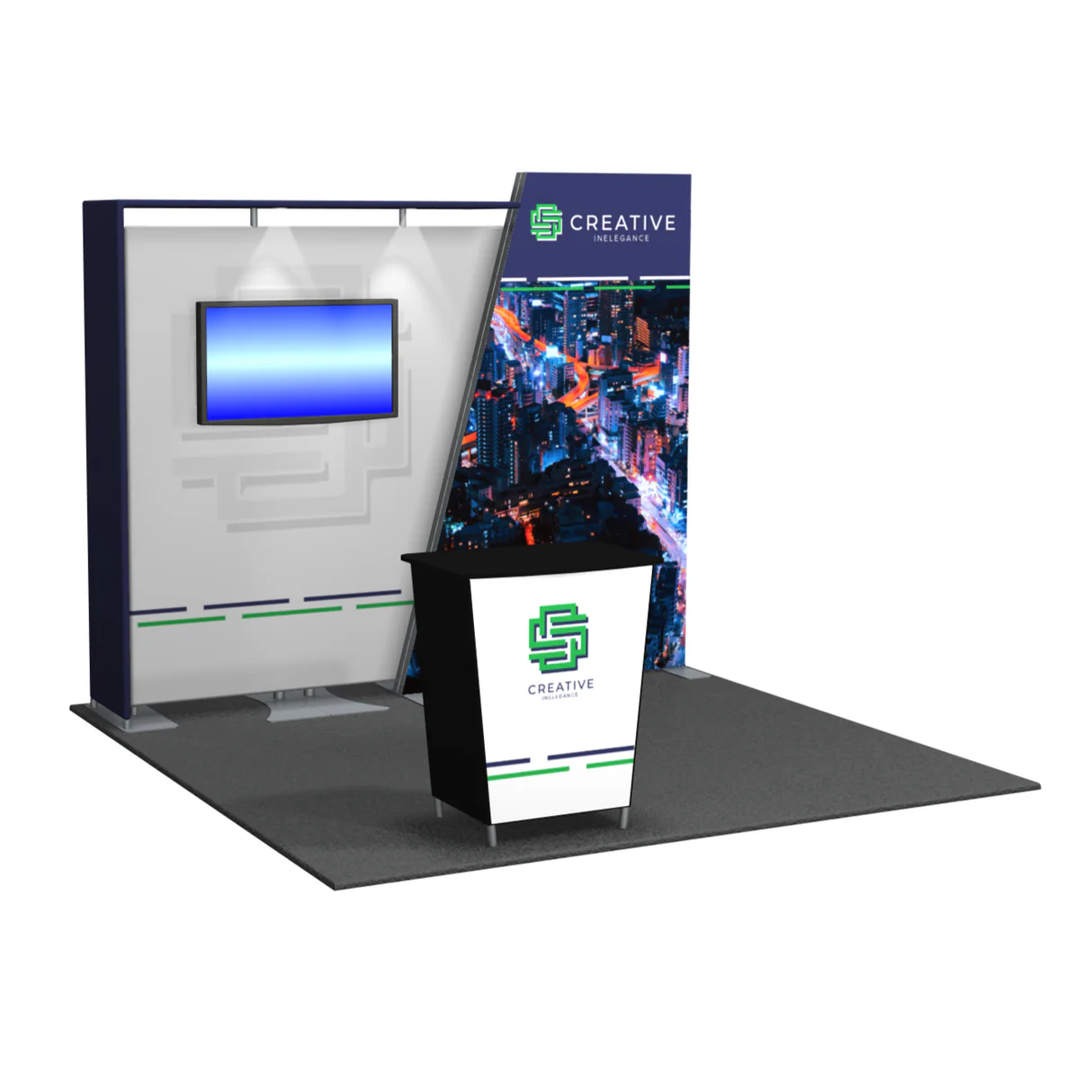
Portable displays support rapid freight cycles, frequent show schedules, and hotel ballroom programs where dock space and move-in windows rarely exceed three hours. Teams working Tempe rely on portable formats when the show runs on a tight advance-order calendar, when freight originates from multiple markets along I-10, or when venue loading hours push exhibitors to consolidate shipments.
Phoenix Convention Center hosts shows that fill the North Building's 635,000 square feet with a mix of inline and island booths. Many of those island booths fit into portable shipping kits because the exhibitor runs four or five shows per quarter and freight cost disciplines case count. Hotel ballroom programs at Tempe Mission Palms and The Westin Tempe often specify portable displays because the venue assigns a single loading slot and dock access ends before the show opens.
Strong planning covers portable display planning for Tempe and the broader East Valley market. The project plan should turn venue rules, freight deadlines, labor windows, and exhibitor goals into a workable show schedule. Topics include case planning, footprint fit, freight timing, venue dock requirements, and AV coordination for shows at Phoenix Convention Center, WestWorld of Scottsdale, Mesa Convention Center, and hotel ballrooms throughout downtown Tempe.
Portable Display Planning for Tempe Programs
- Case count and weight constraints for Phoenix Convention Center's twenty climate-controlled loading docks and hotel ballrooms with single-cart move-in windows
- Freight timing along I-10 and US-60 into downtown Phoenix and Tempe, outside peak congestion between 6:30 and 9:30 AM and 3:30 and 7:00 PM
- Inline-to-island footprint flexibility when portable kits need to scale from 10x10 inline at Omni Tempe Hotel at ASU to 20x20 island configurations at Phoenix Convention Center
- AV and electrical integration for portable displays at venues with varied rigging access, from the Equidome at WestWorld to hotel ballrooms with limited overhead clearance
- Advance-order deadlines at Phoenix Convention Center, Talking Stick Resort, and Mesa Convention Center where official show contractors require forty-eight to seventy-two hours for labor and equipment confirmations
Case Count and Freight Discipline
Portable displays succeed when the exhibitor controls case count and freight weight. A four-case portable kit with a combined weight around one hundred eighty pounds fits into a single freight pallet and clears Phoenix Sky Harbor cargo inspection in under thirty minutes. The same kit ships via commercial carrier along I-10 from Los Angeles or Las Vegas without requiring dedicated lift-gate service, which cuts transit cost by twenty to thirty percent compared to dedicated truck freight.
Phoenix Convention Center's climate-controlled docks accept deliveries between 7:00 AM and 6:00 PM during move-in, and most official show contractors enforce a four-hour offload window per exhibitor. Portable kits that exceed eight cases often trigger labor surcharges because the carrier needs additional dock time or a second cart trip from the loading zone to the booth footprint. Hotel ballroom programs at DoubleTree by Hilton Phoenix Tempe and Embassy Suites by Hilton Phoenix Tempe typically assign a single loading window between 8:00 AM and 11:00 AM, so portable displays with more than six cases rarely finish on time without advance labor coordination.
Teams working multiple shows per quarter use portable displays to standardize freight. A six-case modular kit ships to Phoenix Convention Center in February, Mesa Convention Center in March, and WestWorld of Scottsdale in April without redesign or reconfiguration. The exhibitor pays shipping on the same pallet footprint each cycle, and the carrier assigns a consistent rate card because weight and case dimensions do not vary.
- Four-case portable kits with combined weight under two hundred pounds fit single-pallet freight and avoid lift-gate surcharges along I-10 from Los Angeles or US-60 from Tucson
- Phoenix Convention Center's four-hour offload window per exhibitor often triggers labor surcharges for portable displays that exceed eight cases or require more than one cart trip to the booth footprint
- Hotel ballroom programs at Omni Tempe Hotel at ASU and Tempe Mission Palms assign single loading slots between 8:00 AM and 11:00 AM, making six-case portable displays the practical upper limit without advance labor coordination
- Multi-show schedules benefit from standardized six-case modular kits that ship to Phoenix Convention Center, Mesa Convention Center, and WestWorld of Scottsdale without reconfiguration or rate-card changes
Footprint Flexibility and Booth Layout
Portable displays reconfigure between inline and island footprints. A modular kit designed for a 10x10 inline booth at Tempe Center for the Arts expands to a 20x20 island configuration at Phoenix Convention Center by doubling graphics panels and adding corner towers. The same hardware mounts both configurations without custom fabrication, so the exhibitor ships identical case counts to hotel ballrooms and convention-center programs.
Inline footprints at hotel ballrooms rarely exceed 10x10 or 8x10 because ballroom aisles follow banquet spacing and venue fire codes cap booth depth at ten feet. Phoenix Convention Center and WestWorld allocate island booths starting at 20x20, and the venue show manual allows exhibitors to cluster multiple 10x10 portable kits into a unified island presence. That approach keeps case count low while meeting the square-footage threshold for island placement, which opens priority placement near main aisles or high-traffic entrance corridors.
Corner and peninsula placements at Phoenix Convention Center require three-sided graphics visibility, and portable displays fit that requirement when the kit includes graphics panels on three faces. Peninsula booths at WestWorld's Equidome follow the same three-sided rule because audience flow wraps the booth on three edges. Portable kits designed for inline-only shows often fail peninsula placement audits because one face lacks finished graphics or structural backing, so teams working both inline and peninsula schedules spec portable displays with four-sided finish from the start.
- Modular portable kits reconfigure from 10x10 inline at Omni Tempe Hotel at ASU to 20x20 island at Phoenix Convention Center by doubling graphics panels and adding corner towers without custom fabrication
- Hotel ballroom aisles follow banquet spacing and fire codes that cap inline booth depth at ten feet, limiting portable configurations to 10x10 or 8x10 footprints at venues like Tempe Mission Palms and The Westin Tempe
- Phoenix Convention Center and WestWorld allow exhibitors to cluster multiple 10x10 portable kits into unified island presence, keeping case count low while meeting square-footage thresholds for priority placement near main aisles
- Peninsula and corner placements at Phoenix Convention Center and WestWorld's Equidome require three-sided graphics visibility, so portable kits for both inline and peninsula schedules should spec four-sided finish to pass venue audits
Freight Timing and Valley Corridor Windows
Freight timing into downtown Phoenix and Tempe follows morning and evening congestion windows. Inbound carriers along I-10 from Los Angeles and Tucson avoid the 6:30 to 9:30 AM and 3:30 to 7:00 PM windows because highway speed drops from sixty-five miles per hour to thirty or lower through the downtown interchange. Outside those windows, a carrier hauling portable display cases from Phoenix Sky Harbor to Phoenix Convention Center completes the six-mile run in under twenty minutes. Inside peak hours, the same run stretches past fifty minutes.
US-60 connects Mesa, Tempe, and downtown Phoenix, and carriers hauling portable displays from Mesa Gateway or East Valley assembly points use US-60 westbound to reach Phoenix Convention Center. Morning congestion between 7:00 and 9:00 AM doubles transit time from Mesa Convention Center to Phoenix Convention Center, so carriers schedule deliveries before 7:00 AM or after 10:00 AM to maintain reliable dock arrival windows. Hotel ballroom programs at downtown Tempe venues specify delivery windows between 7:30 and 10:00 AM, which falls inside the peak window, so exhibitors coordinate with carriers to stage portable cases at a local warehouse the night before and complete the final delivery at 7:30 AM sharp.
Arizona State Fairgrounds and WestWorld of Scottsdale sit outside the dense downtown corridor, and freight timing to those venues follows lighter traffic patterns. Carriers hauling portable displays from Phoenix Sky Harbor to WestWorld via Loop 101 avoid the downtown interchange entirely, keeping transit time predictable even during afternoon congestion. The fairgrounds sits north of downtown along I-17, and inbound freight from Los Angeles along I-10 transitions to I-17 northbound without entering the central Phoenix corridor, which shortens dock arrival variability.
- Inbound freight along I-10 from Los Angeles and Tucson avoids 6:30 to 9:30 AM and 3:30 to 7:00 PM windows because downtown Phoenix interchange congestion drops highway speed from sixty-five miles per hour to thirty or lower
- US-60 westbound from Mesa Gateway or East Valley assembly points doubles transit time to Phoenix Convention Center between 7:00 and 9:00 AM, so carriers schedule deliveries before 7:00 AM or after 10:00 AM to maintain dock windows
- Hotel ballroom delivery windows at downtown Tempe venues between 7:30 and 10:00 AM fall inside peak congestion, requiring exhibitors to stage portable cases at local warehouse the night before for 7:30 AM sharp delivery
- WestWorld of Scottsdale freight via Loop 101 and Arizona State Fairgrounds freight via I-17 northbound avoid downtown Phoenix interchange, keeping portable display dock arrival windows predictable even during afternoon congestion
AV and Electrical Integration at Valley Venues
Portable displays at Phoenix Convention Center typically require power drops and monitor mounts. The official show contractor provides electrical service through floor boxes or overhead drops, and the venue assigns a single power location per 10x10 booth footprint. Portable displays with integrated monitor brackets need advance coordination to verify that the power drop location aligns with the monitor mount, or the exhibitor adds extension cords and cable management to bridge the gap. Island booths at Phoenix Convention Center often include overhead rigging for spotlights or hanging signs, and portable kits with overhead attachment points require rigging drawings and load calculations submitted to the venue forty-eight hours before move-in.
Hotel ballroom programs at Omni Tempe Hotel at ASU and Tempe Mission Palms rarely provide overhead rigging because ballroom ceiling clearance runs between ten and fourteen feet with fixed chandeliers and HVAC ducts blocking attachment points. Portable displays in hotel ballrooms rely on floor-supported lighting, and exhibitors coordinate power requirements with the venue's house AV team rather than the official show contractor. House AV teams at downtown Tempe hotels enforce strict advance-order deadlines, typically seventy-two hours before event start, so portable display specs must finalize electrical requirements before the exhibitor confirms freight delivery.
WestWorld of Scottsdale and Mesa Convention Center offer varied rigging access depending on the event space. The Equidome at WestWorld provides overhead rigging points for hanging signs and spotlights, and portable displays with lightweight hanging elements submit rigging plans to the venue's technical director at least one week before move-in. Mesa Convention Center's 19,000 square feet of exhibit area includes ceiling-mounted rigging tracks, and portable kits with overhead signage coordinate with the venue to verify track load capacity before shipping hanging elements.
- Phoenix Convention Center assigns single power location per 10x10 footprint, requiring portable displays with integrated monitor brackets to coordinate power drop alignment with official show contractor or add extension cords and cable management
- Hotel ballroom programs at Omni Tempe Hotel at ASU and Tempe Mission Palms lack overhead rigging because ceiling clearance between ten and fourteen feet includes fixed chandeliers and HVAC ducts, so portable displays rely on floor-supported lighting coordinated with house AV teams
- House AV teams at downtown Tempe hotels enforce seventy-two-hour advance-order deadlines, requiring portable display electrical specs to finalize before exhibitor confirms freight delivery
- WestWorld's Equidome and Mesa Convention Center's exhibit area provide overhead rigging points for hanging signs and spotlights, requiring portable kits to submit rigging plans and load calculations to venue technical directors one week before move-in
Advance Orders and Official Show Contractor Workflow
Official show contractors at Phoenix Convention Center, WestWorld, and Mesa Convention Center publish advance-order deadlines in the exhibitor service manual. Advance orders for electrical, labor, and freight handling typically close forty-eight to seventy-two hours before move-in, and exhibitors miss that deadline face surcharges between twenty-five and fifty percent. Portable display teams submit advance orders as soon as the show manual arrives, usually six to eight weeks before the event, to lock base pricing and avoid last-minute labor scrambles.
Labor coordination for portable displays at Phoenix Convention Center follows union jurisdiction. The official show contractor assigns union labor for offload, booth placement, and electrical connections, and the exhibitor specifies portable display assembly requirements in the advance-order form. Small portable kits with tool-free assembly allow exhibitors to complete setup without additional labor charges, but portable displays with tension-fabric frames or tool-required connections trigger minimum labor charges starting at one hundred fifty dollars per hour with a two-hour minimum.
Hotel ballroom programs at Embassy Suites by Hilton Phoenix Tempe and DoubleTree by Hilton Phoenix Tempe operate under different jurisdictional rules. Hotel venues coordinate freight handling and booth placement through house labor rather than an official show contractor, and advance-order deadlines follow hotel event-planning timelines rather than convention-center protocols. Exhibitors working hotel ballrooms confirm labor availability directly with the hotel's event coordinator at least two weeks before the event, and portable displays with heavy cases or complex setups require on-site hotel staff supervision during move-in.
- Advance-order deadlines at Phoenix Convention Center, WestWorld, and Mesa Convention Center close forty-eight to seventy-two hours before move-in, and missed deadlines trigger surcharges between twenty-five and fifty percent on electrical, labor, and freight handling
- Union labor at Phoenix Convention Center charges minimum one hundred fifty dollars per hour with two-hour minimum for portable displays with tension-fabric frames or tool-required connections, while tool-free portable kits avoid additional labor charges
- Hotel ballroom programs at Embassy Suites by Hilton Phoenix Tempe and DoubleTree by Hilton Phoenix Tempe coordinate freight handling and booth placement through house labor rather than official show contractors, requiring advance confirmation two weeks before the event
- Exhibitors working hotel ballrooms submit portable display labor requirements directly to hotel event coordinator, and heavy cases or complex setups require on-site hotel staff supervision during move-in with separate coordination from convention-center protocols
Frequently Asked Questions
What case count works for Phoenix Convention Center and Tempe hotel ballrooms?
Six-case portable kits cover both convention-center and hotel ballroom schedules. Phoenix Convention Center's four-hour offload window accommodates up to eight cases before triggering labor surcharges, but hotel ballrooms at Omni Tempe Hotel at ASU and Tempe Mission Palms assign single loading slots between 8:00 AM and 11:00 AM, making six cases the practical upper limit without advance labor coordination.
How do freight timing windows affect portable display delivery along I-10?
Carriers hauling portable displays along I-10 avoid the 6:30 to 9:30 AM and 3:30 to 7:00 PM windows because downtown Phoenix interchange congestion drops highway speed from sixty-five miles per hour to thirty or lower. Outside peak windows, the six-mile run from Phoenix Sky Harbor to Phoenix Convention Center completes in under twenty minutes. Inside peak hours, the same run stretches past fifty minutes.
Can portable displays reconfigure between inline and island footprints?
Modular portable kits reconfigure from 10x10 inline to 20x20 island by doubling graphics panels and adding corner towers without custom fabrication. Phoenix Convention Center and WestWorld allow exhibitors to cluster multiple 10x10 portable kits into unified island presence, keeping case count low while meeting square-footage thresholds for priority placement near main aisles.
What electrical coordination do portable displays require at Phoenix Convention Center?
Phoenix Convention Center assigns a single power location per 10x10 booth footprint, and portable displays with integrated monitor brackets need advance coordination to verify that the power drop aligns with the monitor mount. Island booths with overhead rigging for spotlights or hanging signs require rigging drawings and load calculations submitted to the venue forty-eight hours before move-in.
How do advance-order deadlines differ between Phoenix Convention Center and hotel ballrooms?
Phoenix Convention Center advance orders for electrical, labor, and freight handling close forty-eight to seventy-two hours before move-in, and missed deadlines trigger surcharges between twenty-five and fifty percent. Hotel ballroom programs at Embassy Suites by Hilton Phoenix Tempe and DoubleTree by Hilton Phoenix Tempe coordinate through house labor and require exhibitors to confirm portable display labor requirements directly with the hotel event coordinator two weeks before the event.