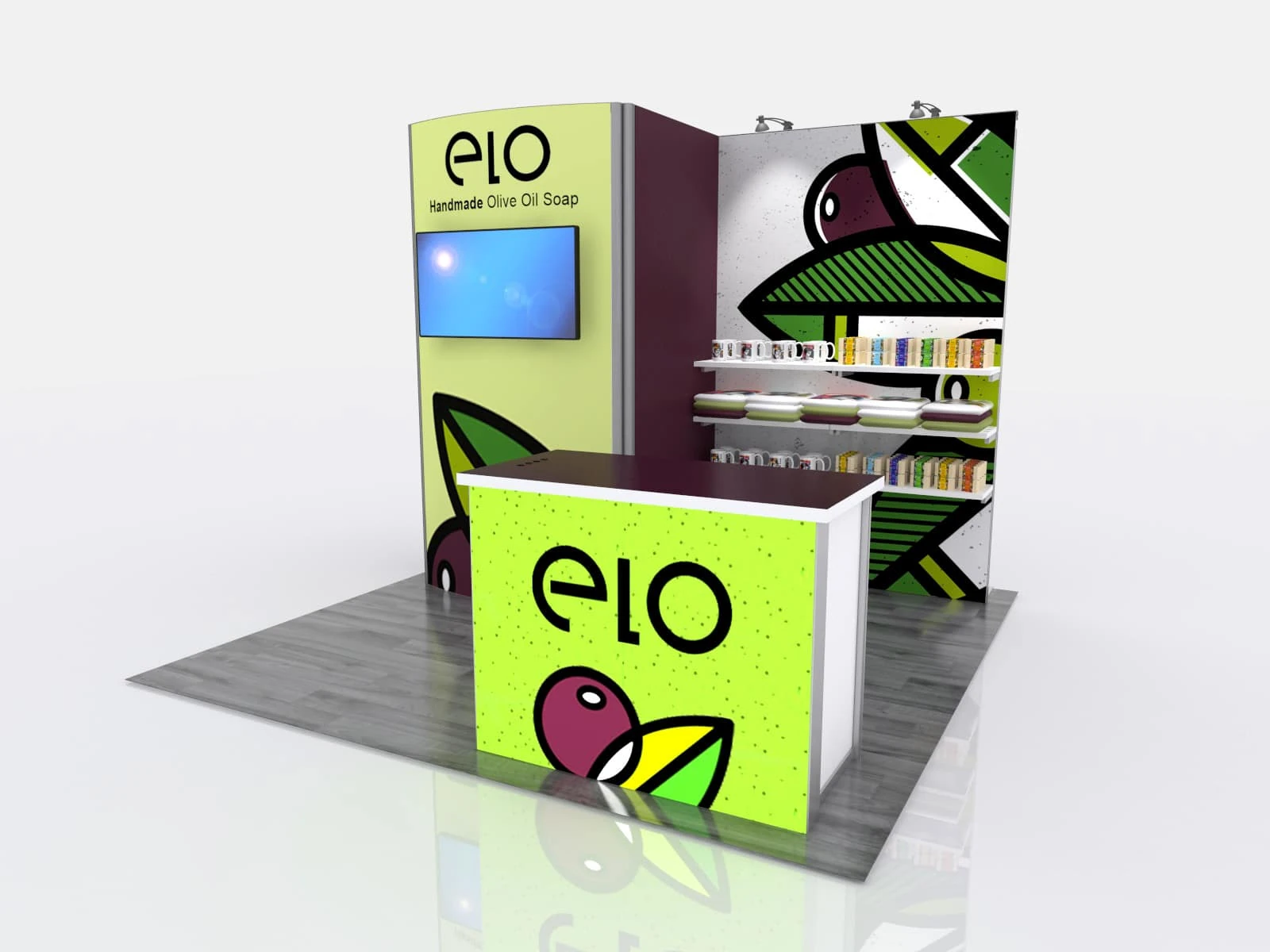
Strong planning covers inline booth displays for Tempe-area trade shows and conferences. An inline booth is a linear footprint with neighbors on both sides and a single aisle exposure, typically ten feet wide by ten feet deep or a multiple thereof. The format accounts for sixty to seventy percent of floor assignments at Phoenix Convention Center, Mesa Convention Center, and WestWorld of Scottsdale. The project plan should turn venue rules, freight deadlines, labor windows, and exhibitor goals into a workable show schedule.
Inline exhibits must fit within the assigned square footage while respecting eight-foot height restrictions in the front five feet and open sightlines to adjacent booths. Most shows provide back drape and side rails as part of the package, so exhibitors specify graphics, counters, monitors, literature racks, and any structural elements that exceed basic pipe-and-drape. Electrical and internet drops require advance orders through the official show contractor, and load-in windows at Phoenix Convention Center often compress into four-hour appointment slots during multi-day setups.
Planning begins with verifying the exact booth number and neighboring assignments so the booth design accounts for traffic flow and sightline constraints. An inline booth at Talking Stick Resort ballrooms may have different rigging and power access than the same footprint on the Phoenix Convention Center North Building floor. Freight timing, labor jurisdiction, and advance-order deadlines vary by venue and show, so locking those details early prevents last-minute scrambles and premium charges.
Inline Booth Planning Priorities
- Phoenix Convention Center North Building inline assignments typically receive rear drape, side rails, and seven-amp electrical as part of the booth package, with additional power and internet ordered thirty days before load-in to avoid premium rates
- WestWorld of Scottsdale consumer shows often assign inline booths in the Equidome and Monterra halls, where ceiling height and HVAC placement affect banner placement and overhead lighting choices
- Mesa Convention Center offers nineteen thousand square feet of exhibit area, and inline booths along the perimeter walls sometimes gain access to house power drops that reduce electrical service costs compared to mid-floor assignments
- Talking Stick Resort ballroom programs treat inline booths as modular setups within carpeted meeting space, so exhibitors coordinate with hotel AV teams rather than a traditional show contractor for most power and internet requests
- Omni Tempe Hotel at ASU hosts smaller conference expos where inline booths fill thirty-six thousand square feet of ballroom space, and setup windows overlap with meeting-room turnover, requiring exhibitors to schedule freight delivery around hotel loading-dock availability
Footprint and Height Rules
An inline booth at Phoenix Convention Center occupies a single aisle frontage with neighbors on the left and right sides. Standard dimensions are ten feet wide by ten feet deep, though some shows assign ten-by-twenty or twenty-by-ten configurations. The front five feet of the booth must stay below eight feet in height to preserve sightlines for booths behind, and anything taller than eight feet requires a variance from show management. Graphics, counters, and kiosks fit within the footprint, and aisles remain clear of any obstruction.
WestWorld of Scottsdale consumer shows use similar height rules, but the Equidome ceiling structure varies in height across the hall. Exhibitors planning overhead banners or tall displays verify exact ceiling clearance with the venue before finalizing graphics production. Some inline booths sit near loading-dock access points, which creates opportunities for faster setup but also requires exhibitors to account for forklift traffic during load-in and strike.
Mesa Convention Center assigns inline booths along perimeter walls and in mid-floor grids. Perimeter booths sometimes gain access to wall-mounted electrical outlets, which reduces the need for floor-run power cables and cuts service costs. Mid-floor inline booths rely on the show contractor for power distribution, and exhibitors order services through the advance-order portal to lock pricing and avoid floor rates.
- Front five feet of an inline booth must stay below eight feet in height at Phoenix Convention Center to maintain open sightlines for neighboring exhibitors and comply with fire marshal access rules
- WestWorld Equidome ceiling height varies by section, so overhead banners and tall displays require verification with the venue rigging team before finalizing graphics production and shipping
- Mesa Convention Center perimeter inline booths may access house wall outlets, reducing electrical-service charges compared to mid-floor assignments that require contractor power runs
- Talking Stick Resort ballroom inline setups use hotel carpet and drape instead of traditional pipe-and-drape, and exhibitors coordinate power with hotel AV rather than a separate show contractor
Graphics and Structural Components
Inline booth graphics typically mount to retractable banner stands, tension-fabric frames, or lightweight truss systems that stay within the eight-foot front-zone height limit. Phoenix Convention Center exhibitors often ship one or two roll-up banners, a counter with internal storage, and a monitor mount in a single crate that weighs under two hundred pounds. The North Building has twenty climate-controlled loading docks, and freight handlers move crates from the dock to the booth space using forklifts and pallet jacks during scheduled load-in windows.
WestWorld of Scottsdale shows see more outdoor and semi-outdoor booth setups in the Monterra pavilion, where wind and sun exposure require weighted bases for freestanding graphics and UV-resistant printing. Inline booths in the Equidome use standard indoor materials, but the venue's concrete floor requires exhibitors to bring rubber feet or carpet padding to protect graphics hardware and prevent slipping during setup. The venue charges a fee for anchor bolts if exhibitors request floor penetration for tall structures.
Mesa Convention Center inline exhibitors coordinate graphics production with the nineteen-thousand-square-foot exhibit hall layout, ensuring that banners and monitors align with the assigned booth number and neighboring displays. The convention center provides basic pipe-and-drape, so most exhibitors bring custom graphics that attach to the standard frame or freestanding supports. Overhead signage requires advance approval and rigging-point assignments, and the venue's house rigger handles all ceiling attachments.
- Retractable banner stands and tension-fabric frames dominate inline booth graphics at Phoenix Convention Center because they ship in compact cases, set up quickly, and stay within the eight-foot front-zone height restriction
- WestWorld Monterra pavilion outdoor inline setups require weighted bases for freestanding graphics and UV-resistant printing to handle direct sun exposure during multi-day consumer shows
- Mesa Convention Center provides pipe-and-drape as the base booth package, so exhibitors bring custom graphics that clip or velcro to the frame or use freestanding supports that do not require venue rigging
- Talking Stick Resort ballroom programs prohibit floor penetration, so inline booths rely on weighted bases and friction mounts for all graphics and structural components
Electrical and Internet Service
Inline booths at Phoenix Convention Center receive a seven-amp duplex outlet as part of the standard package, which powers one monitor and basic task lighting. Exhibitors requiring additional circuits or twenty-amp service order through the official show contractor's advance portal, typically thirty to sixty days before load-in. Premium rates apply for orders placed after the advance deadline or on the show floor, often doubling the cost. The North Building uses floor-run cable from distribution panels, and power drops arrive at the booth within two hours of setup start during standard load-in windows.
WestWorld of Scottsdale assigns inline booths across the Equidome and Monterra halls, and electrical service varies by section. Some areas have direct access to house power, while others require temporary distribution panels installed by the show contractor. Exhibitors verify power availability and lead time when submitting advance orders, and the venue's house electrician handles rigging and testing for all circuits. Internet service runs through the venue's Wi-Fi network or hardwired drops, with pricing and bandwidth options listed in the exhibitor manual.
Mesa Convention Center perimeter inline booths sometimes connect to wall-mounted outlets that bypass the contractor's temporary distribution system, reducing service fees. Mid-floor booths require contractor power runs, and the nineteen-thousand-square-foot exhibit hall layout determines cable routing and setup time. Exhibitors order electrical and internet through the advance portal, and the contractor provides a confirmation email with booth number, circuit count, and installation date.
- Phoenix Convention Center inline booths include seven-amp duplex outlets in the standard package, adequate for one monitor and LED lighting but insufficient for multiple screens or high-draw equipment without additional orders
- WestWorld Equidome electrical service varies by hall section, and some inline booths access house power directly while others rely on temporary panels installed by the show contractor during load-in
- Mesa Convention Center perimeter inline assignments may reduce electrical costs by connecting to house wall outlets instead of contractor floor-run circuits, cutting service fees by thirty to fifty percent
- Talking Stick Resort ballroom inline setups coordinate power through the hotel AV department, which uses different pricing and lead times than traditional show contractors at convention-center venues
Freight and Load-In Timing
Freight for inline booths arrives at Phoenix Convention Center North Building through the twenty climate-controlled loading docks, and the official show contractor coordinates dock appointments and crate handling. Exhibitors ship graphics, counters, and monitors to the venue five to seven days before the show opens, allowing time for contractor receiving, storage, and floor delivery. Load-in appointments for inline setups typically run two to four hours, and exhibitors bring assembly tools, cable ties, and cleaning supplies to complete setup without delay.
WestWorld of Scottsdale freight handling differs by event type. Consumer shows with high inline-booth density often compress load-in into a single day, and the venue assigns staggered dock times to prevent congestion. Exhibitors shipping lightweight displays can request direct-to-booth delivery if load-in timing permits, avoiding contractor drayage fees. The Equidome concrete floor accommodates pallet jacks and hand trucks, so small inline setups can be moved by exhibitor personnel if freight arrives during the designated self-setup window.
Mesa Convention Center coordinates inline booth freight through the venue's central receiving area, and the show contractor logs each crate by booth number before floor delivery. The nineteen-thousand-square-foot exhibit hall supports simultaneous setups, but exhibitors with tight load-in windows verify dock availability and contractor staffing levels before shipping. Freight labels must include booth number, show name, and contact phone to ensure proper routing and timely delivery to the assigned space.
- Phoenix Convention Center North Building inline exhibitors ship crates five to seven days before show open to allow contractor receiving, storage, and scheduled floor delivery within the assigned load-in window
- WestWorld Equidome self-setup permits allow inline exhibitors to move lightweight freight directly to booth spaces using hand trucks, avoiding contractor drayage fees if freight arrives during the designated window
- Mesa Convention Center inline freight labels must include booth number, show name, and contact phone to ensure the contractor logs and routes crates correctly through the central receiving area
- Talking Stick Resort ballroom programs restrict freight delivery to hotel loading-dock hours, which may close during peak conference turnover, requiring exhibitors to schedule shipments around hotel operations
Venue-Specific Inline Considerations
Phoenix Convention Center North Building inline booths sit within the six-hundred-thirty-five-thousand-square-foot exhibit hall, and booth assignments cluster by industry or product category. Exhibitors verify neighboring booth numbers before finalizing graphics to ensure messaging aligns with traffic flow and adjacent displays. The venue's eleven exhibit halls host overlapping shows during peak months, and load-in schedules coordinate across multiple events to prevent dock conflicts. Inline setups in halls three through seven often complete faster because those halls share direct access to the loading docks.
WestWorld of Scottsdale assigns inline booths across the Equidome and Monterra halls, and each space has different rigging, power, and freight access. The Equidome handles year-round events including car shows, equestrian programs, and technology expos, so inline booth setups adapt to varying ceiling heights and floor surfaces. Exhibitors working consumer shows in the Monterra pavilion account for semi-outdoor conditions, including temperature swings and dust, which affect graphics materials and monitor placement.
Mesa Convention Center inline exhibitors work within the nineteen-thousand-square-foot exhibit hall and an additional nineteen thousand square feet of meeting space, and some shows combine both areas for larger floor plans. The downtown Mesa location provides access to hotel inventory and dining options within walking distance, which simplifies planning for multi-day setups. Inline booth assignments along the hall's east wall gain natural light from high windows, reducing the need for supplemental task lighting during daytime shows.
- Phoenix Convention Center North Building assigns inline booths in clusters by industry or product category, so exhibitors verify neighboring booth numbers to align messaging and traffic-flow expectations
- WestWorld Monterra pavilion inline setups account for semi-outdoor temperature swings and dust exposure, requiring UV-resistant graphics and monitor enclosures that tolerate fluctuating conditions
- Mesa Convention Center east-wall inline booths gain natural light from high windows, reducing supplemental lighting costs and improving booth visibility during daytime hours
- Talking Stick Resort ballroom inline programs restrict anchoring and floor penetration, so exhibitors rely on weighted bases, friction mounts, and hotel-approved attachment methods for all structural elements
Inline Booth Display FAQs
What electrical service is included with an inline booth at Phoenix Convention Center?
The standard inline booth package at Phoenix Convention Center includes a seven-amp duplex outlet, which powers one monitor and basic LED task lighting. Exhibitors requiring additional circuits, twenty-amp service, or dedicated power for multiple screens and high-draw equipment order upgrades through the official show contractor's advance portal, typically thirty to sixty days before load-in to avoid premium floor rates.
How do height restrictions apply to inline booths at WestWorld of Scottsdale?
Inline booths at WestWorld of Scottsdale must keep the front five feet below eight feet in height to preserve sightlines for neighboring exhibitors. Overhead banners and tall displays require variance approval from show management and clearance verification with the venue rigging team, because the Equidome ceiling structure varies in height across different hall sections. Graphics and monitors that exceed the front-zone limit must be positioned toward the rear of the booth footprint.
Can exhibitors reduce electrical costs with perimeter inline booths at Mesa Convention Center?
Yes, perimeter inline booths at Mesa Convention Center sometimes access wall-mounted house outlets, which bypass the contractor's temporary power distribution system and reduce service fees by thirty to fifty percent. Mid-floor inline booths require contractor power runs from temporary panels, and all electrical orders process through the advance portal with booth number, circuit count, and installation-date confirmation.
What is the typical load-in window for an inline booth at Phoenix Convention Center?
Load-in windows for inline booths at Phoenix Convention Center typically run two to four hours, scheduled by the official show contractor based on booth location and hall assignment. Freight ships five to seven days before show open to allow contractor receiving, storage, and floor delivery during the assigned window. Exhibitors bring assembly tools, cable ties, and cleaning supplies to complete setup without delay, and late arrivals may incur premium labor charges.
How does freight handling differ for inline booths at Talking Stick Resort ballroom programs?
Talking Stick Resort ballroom inline setups coordinate freight delivery through the hotel loading dock, which operates on hotel hours and may close during peak conference turnover. Exhibitors schedule shipments around hotel operations and work with hotel AV teams for power and internet instead of a traditional show contractor. The hotel prohibits floor penetration and requires weighted bases for all freestanding graphics and structural components, and freight labels must include event name, booth number, and contact phone for proper routing.