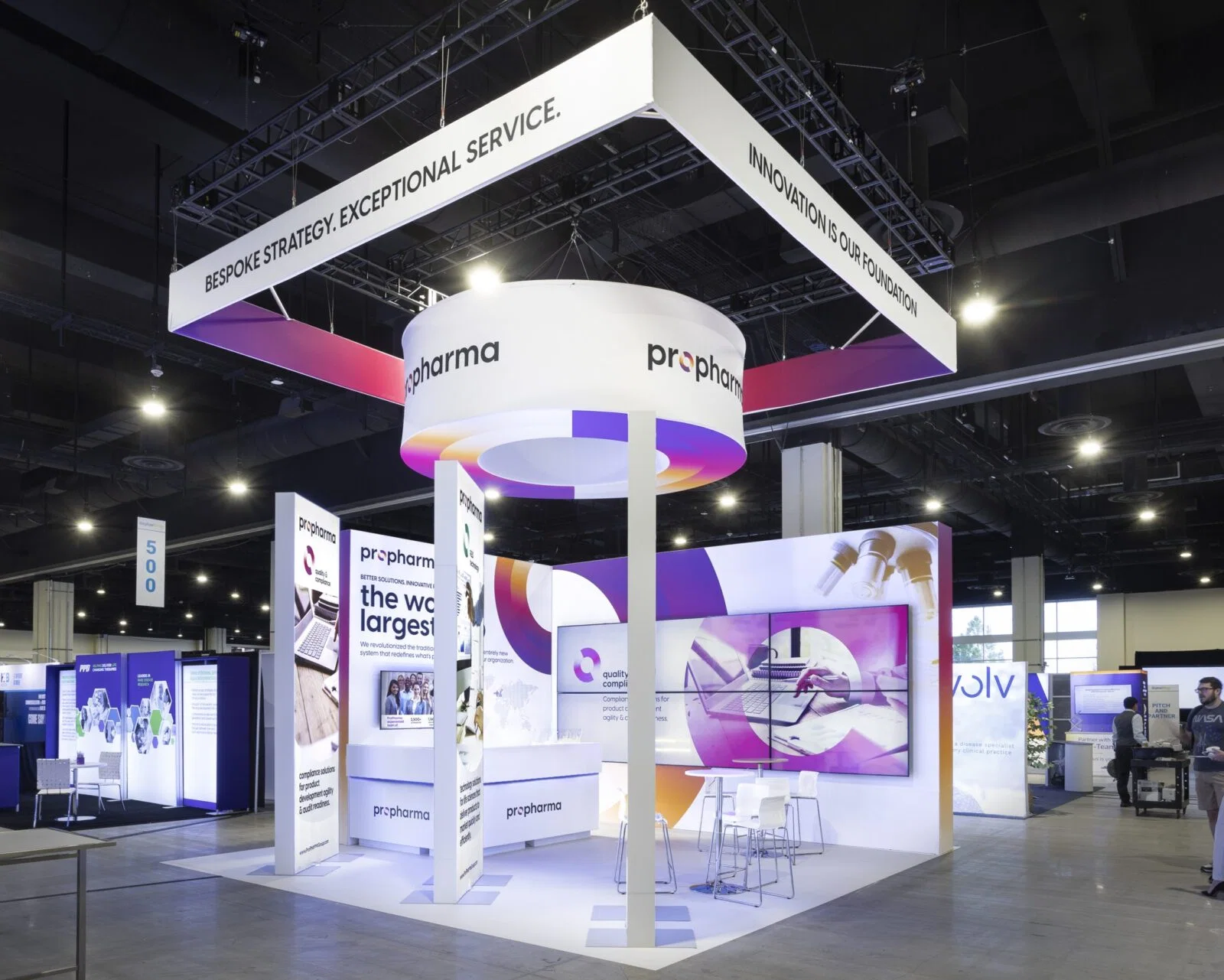
Strong planning covers large-format printing for trade shows, conferences, and public-event programs in the Tempe and Greater Phoenix market. Large-format printing produces graphics at scales beyond desktop output: banners, backlit panels, floor decals, hanging signs, window clings, vehicle wraps, and dimensional elements. The work sits between creative approval and booth installation, and the schedule runs tighter than most exhibitors expect.
Large-format work crosses jurisdictions. A vinyl banner for Phoenix Convention Center goes through different approval, rigging, and flame-retardant workflows than the same banner in a Talking Stick Resort ballroom or on the Equidome floor at WestWorld of Scottsdale. Substrates that work outdoors for an Arizona State Fairgrounds activation may fail venue fire-marshal inspection indoors. The production shop that prints your graphics rarely installs them, and the installer rarely handles freight. Planning large-format printing means coordinating three timelines: creative sign-off, production and finishing, and venue load-in windows.
Large-format printing gives exhibitors, event teams, and show managers a practical production sequence for Valley shows. The work still requires confirmed production partners, venue approvals, and installer availability before materials move. It organizes the sequence exhibitors follow when ordering graphics, verifying venue compliance, coordinating freight, and briefing installation contractors for Tempe, Phoenix, Scottsdale, and Mesa programs.
What Large-Format Printing Covers for Valley Trade Shows and Events
- File preparation and output specs for backlit, opaque, and textile substrates at Phoenix Convention Center and WestWorld exhibit scales
- Substrate selection tied to venue fire-marshal requirements, rigging loads, and environmental conditions at indoor and outdoor Valley venues
- Production timelines from creative approval through finishing, with freight handoff windows for Phoenix, Scottsdale, and Tempe show schedules
- Installation coordination between print shops, riggers, and Exhibitor Appointed Contractors for banner hanging, panel mounting, and floor-graphic application
- Reorder and damage-recovery workflows when graphics arrive damaged, fail venue inspection, or require last-minute creative changes during load-in
File Specs and Output Requirements for Convention-Scale Graphics
Large-format print files require higher resolution and tighter color management than desktop materials. A twenty-foot backlit fabric wall at Phoenix Convention Center looks acceptable at 150 dpi because viewing distance exceeds ten feet, but an inline booth header viewed from three feet shows banding and pixelation below 200 dpi. Color shifts between monitor preview and printed output become obvious on large substrates, especially when backlit panels sit adjacent to opaque vinyl. RGB files sent to a print vendor convert unpredictably; supplying CMYK or spot-color files with embedded ICC profiles keeps color consistent across reprints and between different print shops.
Vector artwork scales without resolution loss, but raster images require size verification before output. A logo that looks sharp on a retractable banner at 72 dpi will fail on a thirty-by-ten-foot hanging sign. Bleed, trim, and safe-area margins matter more at large scale because installers rarely have time to reposition a panel that printed with live text inside the grommet line. The advance order deadline at Phoenix Convention Center is typically fourteen days before move-in; any file revisions that push past that window trigger rush fees and may force the exhibitor to accept whatever the shop can produce by load-in day.
Proofing workflows prevent expensive errors. A small-scale proof printed on the final substrate catches texture and finish issues that a PDF review misses. Backlit graphics need transparency testing under actual LED or fluorescent lighting, not desktop monitors. Venue-specific templates account for rigging hardware, hanging-sign grommets, and weight-distribution reinforcements. At WestWorld of Scottsdale, outdoor graphics endure higher UV exposure and wind load than indoor Phoenix Convention Center panels, so substrate weight, grommet spacing, and hem reinforcement differ between venues even when the creative file is identical.
- CMYK or spot-color files with embedded ICC profiles prevent color shifts between proof, production run, and venue lighting conditions
- Vector logos and text scale cleanly; raster images require resolution checks before committing to output at Phoenix Convention Center or WestWorld banner dimensions
- Bleed and safe-area margins account for grommets, hems, and rigging hardware so live text and logos remain visible after finishing and installation
- Small-scale substrate proofs catch backlight transparency, finish glare, and texture issues that screen previews and paper proofs miss
Substrate Selection and Venue Fire-Marshal Compliance
Phoenix Convention Center and most Valley hotel ballrooms require NFPA 701-compliant substrates for any hanging or freestanding graphics. Vinyl banners, fabric tension walls, and backlit SEG panels must carry flame-retardant certification, and the certificate travels with the freight. Some substrates arrive pretreated from the mill; others require post-production flame-retardant application. An exhibitor who orders a custom fabric wall from an out-of-state vendor and ships directly to the advance warehouse may discover during load-in that the material lacks the required certificate, which halts installation until compliant graphics arrive or the exhibitor accepts empty panel frames.
Substrate weight and stiffness affect rigging and installation labor. Lightweight polyester fabric reduces freight cost and packs smaller than vinyl, but it wrinkles during transit unless rolled on a core with sufficient diameter. A thirty-foot hanging banner in 13-ounce blockout vinyl hangs flat under its own weight; the same banner in 8-ounce mesh vinyl requires bottom weighting or tensioning hardware to prevent billowing under HVAC airflow at Phoenix Convention Center. Backlit graphics on translucent film show hot spots if the lightbox spacing is uneven, so the substrate must diffuse light uniformly or the graphic design must incorporate gradients that mask LED spacing.
Outdoor graphics at Arizona State Fairgrounds and WestWorld of Scottsdale face UV degradation, temperature swings, and dust adhesion that indoor graphics avoid. Solvent-based inks last longer outdoors than water-based latex inks, but solvent inks outgas during the first seventy-two hours, which creates odor complaints if the graphics are installed in an enclosed space immediately after printing. Lamination extends outdoor life and adds scratch resistance, but it increases cost and production time. A mesh banner reduces wind load on outdoor rigging but sacrifices image density. Substrate selection at the planning stage prevents expensive reprints and installation delays when the wrong material arrives at the venue.
- NFPA 701 flame-retardant certificates must accompany graphics into Phoenix Convention Center and hotel ballrooms; missing certificates halt installation during load-in
- Lightweight fabrics reduce freight cost but wrinkle in transit; heavier vinyl hangs flat but adds case count and drayage fees at the advance warehouse
- Backlit substrates require even light diffusion and LED-spacing compatibility; hot spots and banding appear under venue lighting if the graphic was designed for monitor preview only
- Solvent inks outgas for seventy-two hours post-printing, so indoor installation at Talking Stick Resort or Omni Tempe Hotel requires cure time or low-odor alternatives
Production Timelines and Freight Coordination Across Valley Venues
Large-format printing follows a sequence that most exhibitors underestimate. Creative approval and final file delivery occur first, then prepress and color proofing, then printing, then finishing (hemming, grommeting, mounting to substrate boards or frames), then packing and freight handoff. A straightforward twenty-by-ten-foot tension-fabric wall takes three business days to print and finish if the shop has no queue; during peak show season in Greater Phoenix, the same job stretches to seven days or requires overtime fees. Rush production compresses the schedule but increases error risk because proofing steps get shortened or skipped.
Freight timing determines whether graphics ship as exhibitor freight, advance warehouse freight, or direct-to-show-site freight. Phoenix Convention Center advance warehouse accepts materials starting fourteen days before move-in; freight arriving earlier than the window incurs storage fees, and freight arriving after the deadline may sit in the general contractor's dock queue instead of moving directly to the booth space. A print shop in Scottsdale can deliver finished graphics to an exhibitor's Tempe office for self-shipping, or the shop can arrange freight directly to the Phoenix Convention Center advance warehouse. The exhibitor is responsible for filing the bill of lading and confirming the freight label matches the show manual's exact format, or the shipment may be refused or misrouted.
Damage and loss occur between print shop and booth installation. Graphics shipped as rolled goods arrive wrinkled or creased if the tube diameter is too small or the carrier stacks freight on top of the tube. Hard cases protect mounted graphics but add dimensional weight charges. A missing case discovered during load-load-in at WestWorld of Scottsdale requires a reorder, same-day reprinting if a Valley shop has capacity, and a courier delivery to the venue, all of which cascade into compressed installation windows. Exhibitors who order backup copies of high-visibility graphics pay more upfront but avoid show-day panic when a banner is damaged or lost.
- Standard large-format production runs three to seven business days from final file to finished output; rush timelines compress proofing and increase error rates
- Phoenix Convention Center advance warehouse opens fourteen days before move-in; earlier freight incurs storage fees, late freight risks dock-queue delays
- Graphics shipped as rolled goods wrinkle in transit if the tube diameter is too small; hard cases protect panels but trigger dimensional-weight freight surcharges
- Backup copies of high-visibility banners and backlit walls cost more at order time but prevent show-day reprints and courier fees when damage or loss occurs
Installation Coordination and Jurisdiction at Phoenix and Scottsdale Venues
Large-format graphics rarely install themselves. Banner hanging at Phoenix Convention Center requires rigging labor through the official general contractor or an Exhibitor Appointed Contractor with venue credentials. Floor graphics need surface prep, application squeegees, and seam-sealing tools. Backlit panels mount into SEG frames or lightbox extrusions, and the frame assembly itself may require booth builder coordination. The print shop delivers finished graphics; the exhibitor or their EAC handles installation unless the exhibitor orders a turnkey package that bundles printing, freight, and install under one contract.
Jurisdiction varies by venue and service type. At Phoenix Convention Center, rigging any hanging sign above eight feet requires union riggers booked through the general contractor unless the exhibitor holds an EAC agreement and brings credentialed personnel. At Talking Stick Resort ballrooms, the house AV team may handle simple banner hanging as part of the room setup, or they may require the exhibitor to coordinate separately. WestWorld of Scottsdale has outdoor rigging points with weight limits and wind-load engineering requirements; an exhibitor who arrives with a twenty-foot banner and no rigging plan loses installation time waiting for the venue to approve a site-specific plan or for an EAC to source compliant hardware.
Installation timing compresses during load-in. A booth with six backlit SEG frames, two hanging banners, and floor graphics needs at least ninety minutes of focused labor if everything arrives undamaged and the frames assemble cleanly. If the graphics arrive wrinkled, if a SEG panel is miscut and does not fit the frame channel, or if the floor decal adhesive fails on dusty concrete, the install window stretches into the next shift or into overtime. Exhibitors who coordinate a pre-show test fit at the print shop catch frame-compatibility and finishing errors before freight leaves for Phoenix Convention Center. On-site fixes cost more and succeed less often than production corrections.
- Rigging hanging banners at Phoenix Convention Center above eight feet requires union labor or EAC credentials; the print shop delivers graphics but does not hang them
- Talking Stick Resort ballrooms may include simple banner hanging in house AV setup, or they may require separate coordination depending on the event contract
- WestWorld outdoor rigging points have weight limits and wind-load requirements; banners need engineered plans and compliant hardware before installation begins
- Pre-show test fits at the print shop catch SEG frame sizing errors, hem and grommet misalignment, and substrate finish issues before graphics ship to the venue
Reorders, Damage Recovery, and Last-Minute Changes During Load-In
Damage, creative changes, and missing freight happen during load-in despite planning. A backlit panel arrives with a crease that becomes visible when illuminated. A sponsor logo changes two days before the show opens. A banner case is lost in the carrier's Phoenix hub and will not reach Phoenix Convention Center until day two of the event. Each scenario requires a different recovery path. Creased graphics sometimes relax after hanging under heat, but backlit creases rarely disappear and usually require a reprint. Logo changes require new files, rapid proofing, and expedited production, which most Valley print shops can deliver in twenty-four to forty-eight hours if they have press availability and the exhibitor approves rush fees.
On-site printing is not standard at most Valley venues. Phoenix Convention Center does not maintain a print facility inside the building, so any reprint requires coordination with an off-site shop and courier delivery to the loading dock. Scottsdale has several large-format vendors within a fifteen-minute drive of WestWorld, but the exhibitor must arrange pickup or delivery and confirm the new graphics clear venue fire-marshal inspection before installation. Some general contractors maintain relationships with preferred print vendors and can expedite reorders as part of their service package, but this adds cost and requires the exhibitor to accept whatever substrate and finish the contractor sources.
Change orders cost more than original orders. A standard banner that cost three hundred dollars during the advance order phase may cost six hundred dollars as a rush reprint during load-in because the shop prioritizes the job, pulls staff from other work, and arranges same-day delivery. Exhibitors who budget a contingency line item for graphics damage and last-minute changes handle these scenarios without panic. Those who do not often choose between accepting damaged graphics, leaving empty frame panels, or negotiating emergency pricing while the install crew waits. Planning includes acknowledging that not everything arrives perfect, and having a recovery protocol in place before load-in starts reduces stress and cost when problems occur.
- Backlit panel creases rarely relax after hanging; damaged graphics usually require full reprints coordinated with off-site Valley shops and courier delivery to the venue
- Phoenix Convention Center has no on-site print facility; all reorders ship from external vendors in Scottsdale, Tempe, or Phoenix with exhibitor-arranged dock delivery
- Rush reprints during load-in cost two to three times standard pricing because shops prioritize the job, allocate dedicated press time, and arrange same-day freight
- Budgeting a contingency line item for graphics damage and sponsor changes prevents emergency pricing negotiations while the install crew waits at the booth
Frequently Asked Questions About Large-Format Printing for Valley Shows
What file format and resolution should I send for a thirty-foot hanging banner at Phoenix Convention Center?
Supply a CMYK file at 150 to 200 dpi with embedded ICC profiles and at least three inches of bleed beyond the final trim size. Vector logos and text scale cleanly; raster images need resolution verification at full output dimensions. Include safe-area margins inside grommet and hem lines so live text remains visible after finishing.
Do all Valley venues require flame-retardant certification for hanging graphics?
Phoenix Convention Center, hotel ballrooms, and most indoor venues require NFPA 701-compliant substrates with certificates that travel with the freight. Outdoor venues like WestWorld of Scottsdale and Arizona State Fairgrounds may have different requirements depending on the event permit, so confirm with the venue or show manual before ordering substrates.
How far in advance should I order large-format graphics for a Phoenix Convention Center show?
Standard production takes three to seven business days from final file approval through finishing and packing. Add freight transit time and Phoenix Convention Center's advance warehouse window, which opens fourteen days before move-in. Ordering three weeks before the show start date allows time for proofing, revisions, production, and freight without triggering rush fees.
Who installs the graphics once they arrive at the venue?
The print shop delivers finished graphics but does not install them unless you purchase a turnkey package. Rigging hanging banners at Phoenix Convention Center above eight feet requires union labor or an Exhibitor Appointed Contractor with venue credentials. Floor graphics, backlit panel mounting, and other installations are typically handled by your booth builder or EAC during load-in.
What happens if a graphic arrives damaged or a sponsor logo changes during load-in at WestWorld?
Damaged graphics require reprints coordinated with a Valley print shop and courier delivery to the venue, which costs two to three times standard pricing because of rush production and same-day freight. Logo changes need new files, rapid proofing, and expedited output. Budget a contingency line for graphics damage and last-minute revisions so you can respond without panic when issues occur during load-in.